


Pro Tip: Use Ghostreader on this doc 👻 One of the coolest features of Reader is an AI reading assistant called Ghostreader. Ghostreader enables you to define terms, look up encyclopedia entries, simplify complex language, and much more, but one of its most powerful functions is asking a document a question.
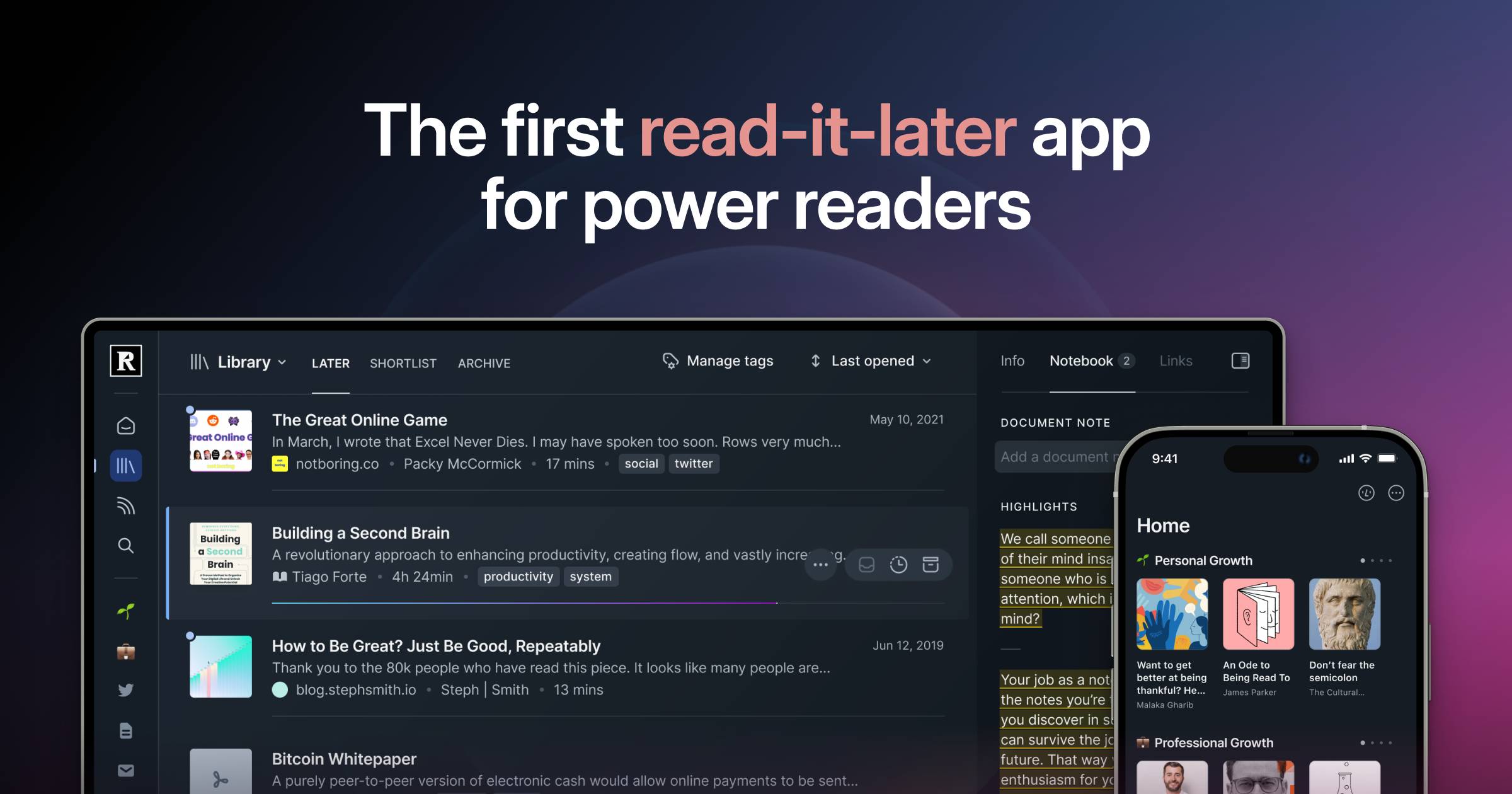
Readwise Reader: The first read-it-later app built for power readers.
Save everything to one place to overcome content overload, search instantly, and highlight like a pro.
Reading List: AI and the Future of Human Autonomy
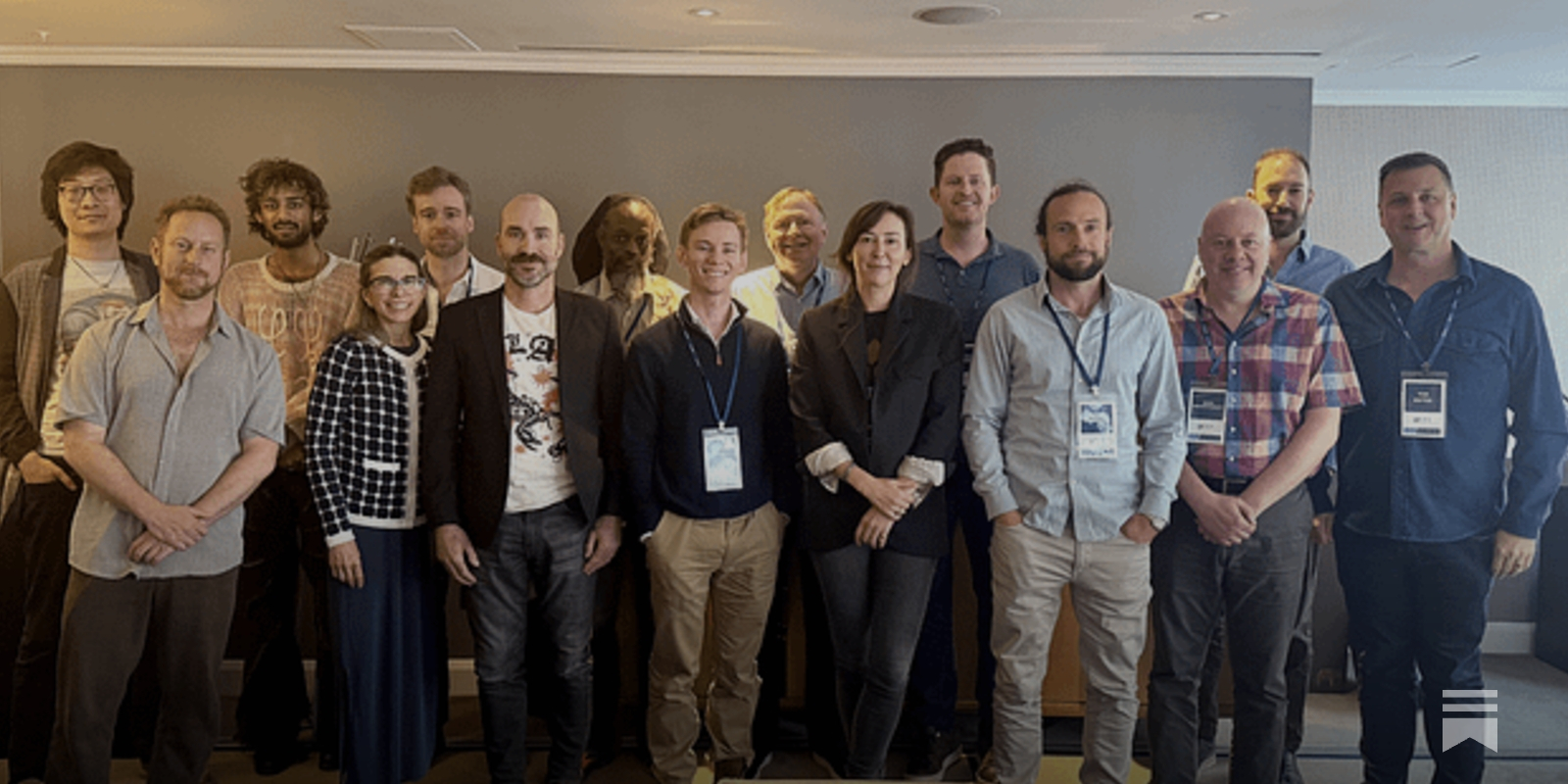
Open-source reading list from a discussion group hosted by the Liberty Fund
Creative Reading: Scaffolding Reading for Transformation
However, recent work on augmenting reading largely focuses on making reading more efficient, especially in knowledge-intensive contexts where people must rapidly make sense of research papers and other complex documents (Lo et al., 2024). These systems often aim to help readers skim, summarize, and synthesize large volumes of information in order to reduce cognitive effort and accelerate document- and corpus-level sensemaking at scale (Gu et al., 2025; Lo et al., 2024; Fok et al., 2023). At one extreme, the form of reading implicitly envisioned by these systems may resemble what we call “reading to discard”: extracting the essential, actionable informational core of a document as quickly and efficiently as possible, so that the rest can be swiftly tossed aside—much like we often process inbound mail. This motivates us to ask what scaffolding approaches might resist “reading to discard,” what alternative forms of reading we might scaffold, and what alternative views and values of reading might guide the conversation.
Writing with AI help can shift your opinions | Cornell Chronicle
Artificial intelligence-powered writing assistants that autocomplete sentences or offer “smart replies” not only put words into people’s mouths, they also put ideas into their heads, according to new research.

Getting Started with Reader
Walkthrough guides can be really boring so we've laced ours with spicy memes to keep those dopamine receptors firing while while we subliminally teach you the basics of our reading software. We hope you don't mind a little fun.

AI Focus
NotebookLM is one of my favorite applications in decades. If you haven’t experienced it before, it’s an application that lets you pull in sources from all around - Google Drive, PDFs, public links - collate them into a notebook, and then query or transform that content. Want to turn five research papers into a podcast? Done. Need to extract key takeaways from a collection of articles? Easy. It’s a fundamentally different way of interacting with information that wasn’t possible before large language models.

The intent pipeline: why most prompt guides miss how people actually use AI
Most prompt guides assume that people interact with AI by carefully authoring prompts. In practice, that is rarely how AI is used. Most…

God Damn AI is making me dumb
It's so god damn tempting to use AI to write. Whether it is articles, code, or documents. I feel like using AI is diminishing my ability to write myself. ...

Writing documentation for AI: best practices | kapa.ai docs
Retrieval-Augmented Generation (RAG) systems like Kapa rely on your
Automatic Against the People: Reading, Writing, and AI

Learning with AI falls short compared to old-fashioned web search
Doing the mental work of connecting the dots across multiple web queries appears to help people understand the material better compared to an AI summary.

Learning with AI falls short compared to old-fashioned web search
Doing the mental work of connecting the dots across multiple web queries appears to help people understand the material better compared to an AI summary.
Reader guide · Standard Reader
How to use Standard Reader — following, reading, listening, and making it yours. No technical knowledge needed.
Readeck: Home
Save interesting articles, long read, pictures, videos. Read or revisit them later.
