Repositories aren’t where code lives anymore—they’re where **knowledge is manufactured**. And increasingly, it’s not humans doing the work—it’s agents, with humans supervising the factory.…
The Transformation of Documents: Repositories Are the New Unit of Knowledge Work
How will documents evolve when AI agents become ubiquitous? In a world of AI agents, does the repository become the source of truth—where humans declare intent, agents turn it into executable artif…

Artifacts: versioned storage that speaks Git
Give your agents, developers, and automations a home for code and data. We’ve just launched Artifacts: Git-compatible versioned storage built for agents. Create tens of millions of repos, fork from any remote, and hand off a URL to any Git client.
OpenWiki: Open Source Repo Documentation for Coding Agents
OpenWiki generates and maintains codebase documentation so coding agents can find the repo context they need without loading everything into one instruction file.
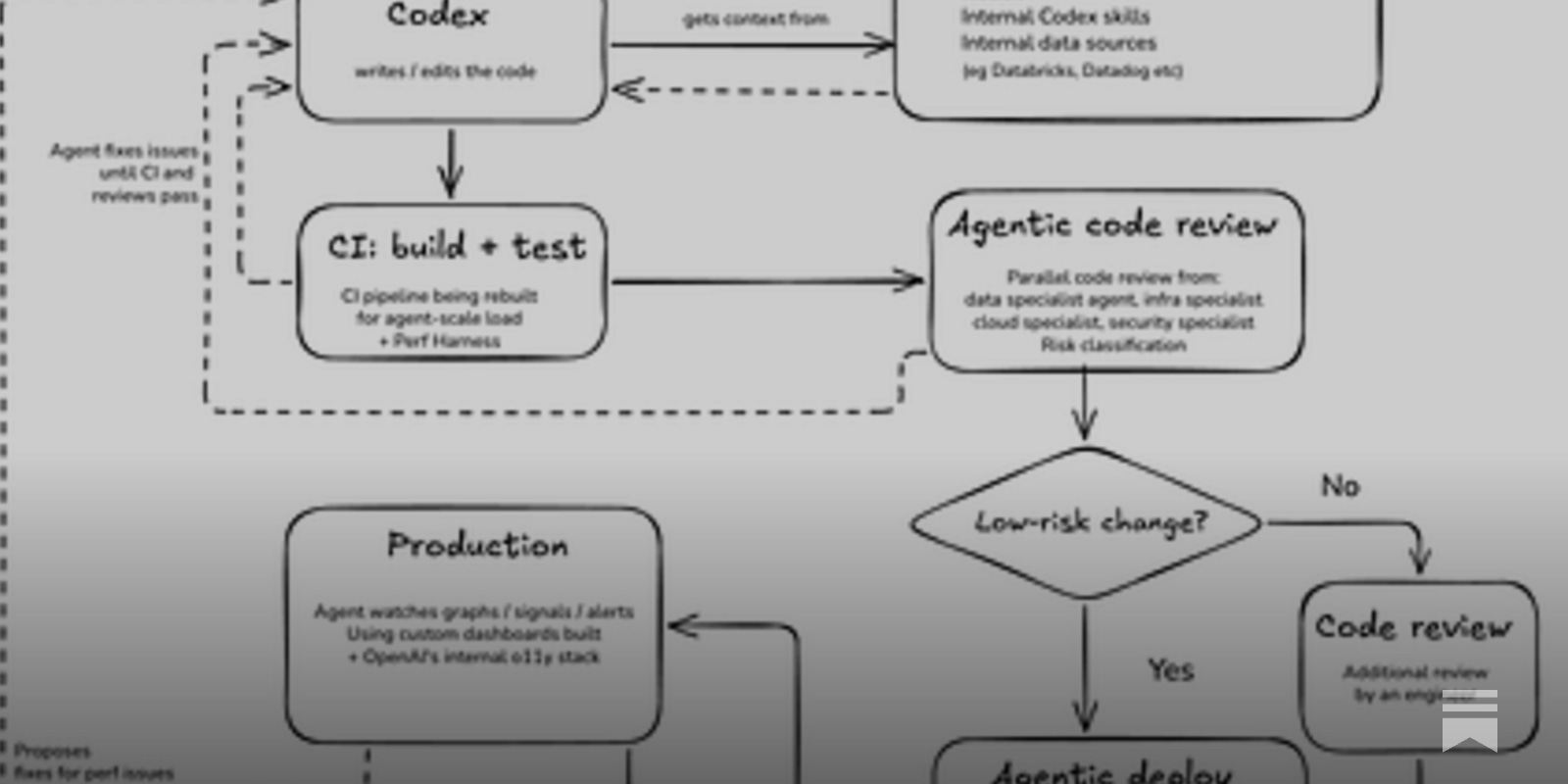
Inside OpenAI’s agentic software factory
A deepdive into how Codex has “taken over” OpenAI, how the frontier lab builds its agentic software factory, and the engineering challenges of one billion users. Details from inside OpenAI
The Agents Are Waking Up
The Intelligence Revolution that swept through the software industry this past winter is coming to knowledge-work next.


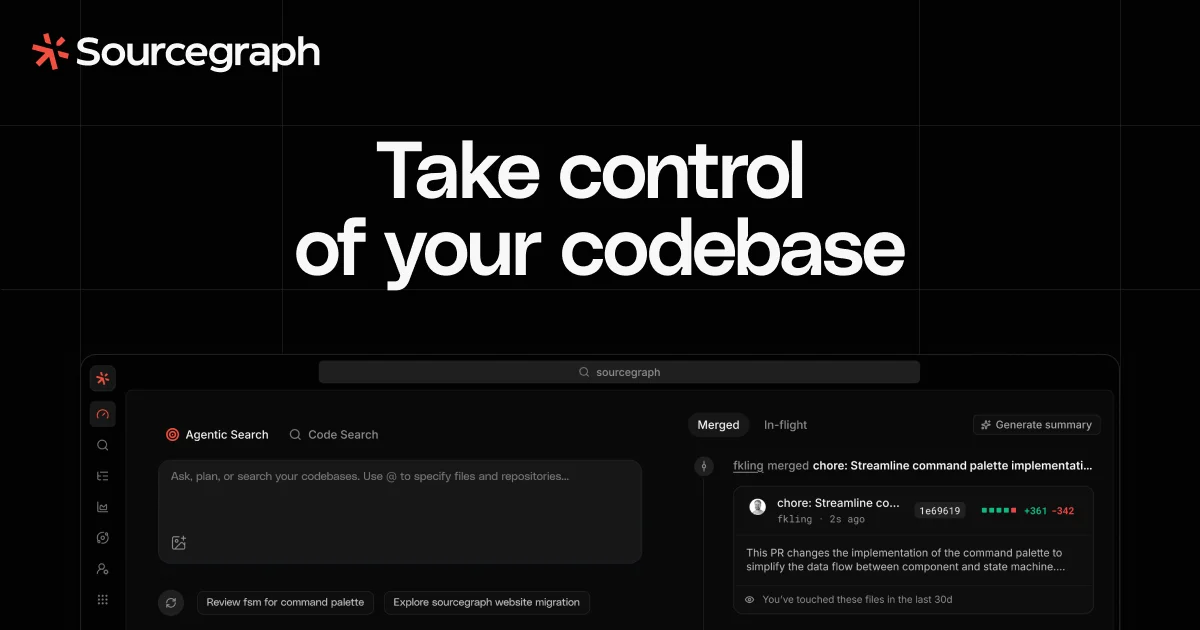
Sourcegraph — Code Understanding, Oversight and Evolution
Give humans and agents complete context to understand, oversee, and evolve the world's largest, most complex codebases.
Why Google Stores Billions of Lines of Code in a Single Repository
Early Google employees decided to work with a shared codebase managed through a centralized source control system. This approach has served Google well for more than 16 years, and today the vast majority of Google’s software assets continues to be stored in a single, shared repository. Meanwhile, the number of Google software developers has steadily increased, and the size of the Google codebase has grown exponentially (see Figure 1). As a result, the technology used to host the codebase has also evolved significantly.

ARCHITECTURE.md
SYSTEM TEMPLATE FOR RAPID CODEBASE COMPREHENSION - HAVE YOUR AGENT TO FILL IN FOR YOUR REPO
Entire Launches Distributed Git Network for the Agent Era
Five months after the largest seed round in developer-tools history, Entire is reimagining version control for agent-scale development, allowing developers to mirror GitHub repositories on a fast, independent Git network built for agents.
Code Repository - Git Source Control | Harness
Host Git repositories in Harness, manage pull requests, and connect every commit to secure CI/CD workflows with source-to-deploy traceability.
Curated skills for AI agents · skilld
A curated registry of agent skills for the npm packages and GitHub repos you actually use. One install command, every agent. Get notified when they change.

Evaluating AGENTS.md: Are Repository-Level Context Files Helpful for Coding Agents?
A widespread practice in software development is to tailor coding agents to repositories using context files, such as AGENTS.md, by either manually or automatically generating them. Although this practice is strongly encouraged by agent developers, there is currently no rigorous investigation into whether such context files are actually effective for real-world tasks. In this work, we study this question and evaluate coding agents' task completion performance in two complementary settings: established SWE-bench tasks from popular repositories, with LLM-generated context files following agent-developer recommendations, and a novel collection of issues from repositories containing developer-committed context files. Across multiple coding agents and LLMs, we find that context files tend to reduce task success rates compared to providing no repository context, while also increasing inference cost by over 20%. Behaviorally, both LLM-generated and developer-provided context files encourage broader exploration (e.g., more thorough testing and file traversal), and coding agents tend to respect their instructions. Ultimately, we conclude that unnecessary requirements from context files make tasks harder, and human-written context files should describe only minimal requirements.

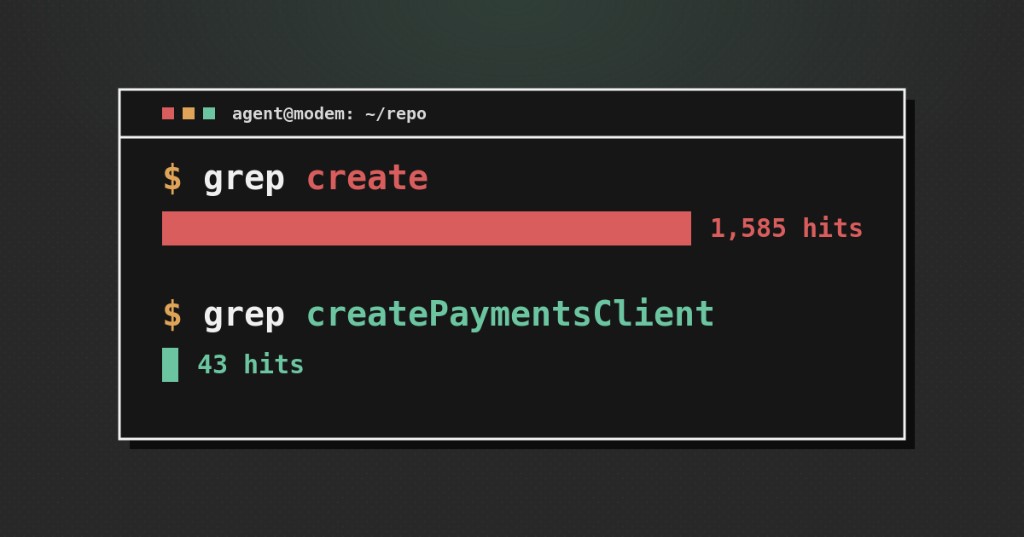
How coding agents read your code (and how to write for them)
Modem's codebase is roughly 99.9% written by AI agents. Here's what that taught us about how agents actually navigate a repo, and the three levers you control: the names you choose, the types you define, and where you put your explanations.