


Today we're excited to announce our cross-industry patnership with Microsoft, Fastly, Google, Mozilla, Amazon and others enabling us to bring WebContainers to all devices, languages, platforms, and runtimes.
Announcing the Bytecode Alliance: Building a secure by default, composable future for WebAssembly
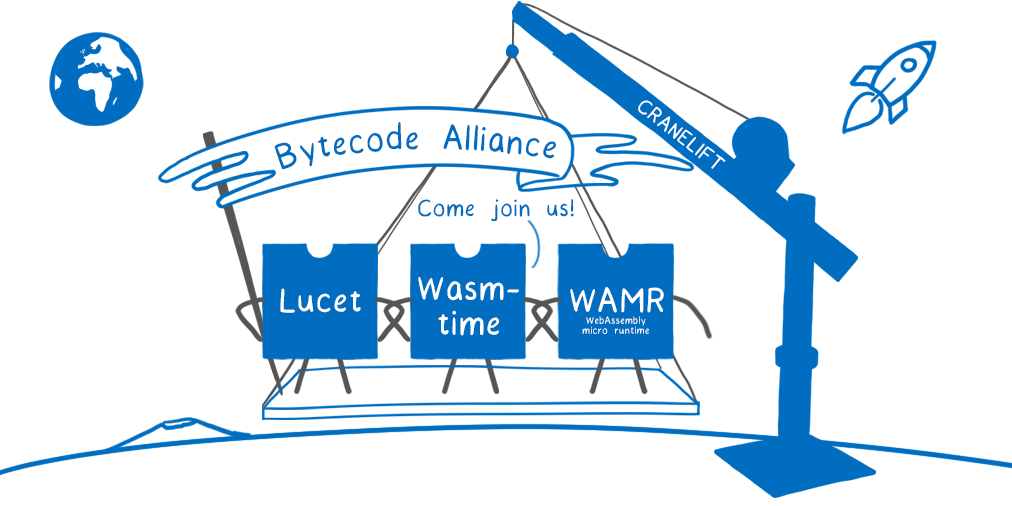
Today we announce the formation of the Bytecode Alliance, a new industry partnership coming together to forge WebAssembly’s outside-the-browser future by collaborating on implementing standards and proposing new ones. Our founding member...
Why is WebAssembly a second-class language on the web? – Mozilla Hacks - the Web developer blog
This post is an expanded version of a presentation I gave at the recent WebAssembly CG meeting in Munich. WebAssembly has come a long way since its first release in 2017. The 1.0 version of WebAssembly was already a great fit for low-level languages like C and C++, and immediately enabled many new kinds of applications to efficiently target the web.

Public view of Bytecode Alliance | Zulip team chat
Browse the publicly accessible channels in Bytecode Alliance without logging in.

WebAssembly Browser Preview – Mozilla Hacks - the Web developer blog
Since the last WebAssembly milestone we reached in March, we’ve been hard at work in the WebAssembly Community Group to define a standard and to implement that standard in our ...
A peek into the WebAssembly Browser Preview
Following the introduction of asm.js, we have been working with other browser vendors including Mozilla, Google, Apple, along with the rest of the WebAssembly community group, to push the performance boundary of the web with WebAssembly. WebAssembly is a new, portable, size- and load-time-efficient binary compiler target, which promises near-native performance on the web. As


Bringing the web up to speed with WebAssembly
As part of the Digital Library's transition to Open Access, new features for researchers are available in the Premium Edition. Click here to learn more.
Exploring Collaboration and Communication with Mozilla Hubs – Mozilla Hacks - the Web developer blog
As we look at advancements in mixed reality like the WebXR API, we are able to explore ways to feel more present with others through technology. Hubs by Mozilla is ...
WebAssembly Interface Types: Interoperate with All the Things! – Mozilla Hacks - the Web developer blog
People are excited about running WebAssembly outside the browser. People are also excited about running WebAssembly from languages like Python, Ruby, and Rust. Lin Clark's Code Cartoons are back, illustrating ...

Why You Should Pay Attention to WebAssembly
There may come a day when the humble web browser – having already yielded enterprise grade server side technologies like Firecracker, Isolates and Node.js – has nothing of interest left for the industry to extract. But that day has certainly not arrived yet, as the increasing chatter around WebAssembly (WASM) proves. The fact that people

WebAssembly’s post-MVP future: A cartoon skill tree – Mozilla Hacks - the Web developer blog
People have a misconception—they think that the WebAssembly that landed in browsers back in 2017—is the final version. In fact, we still have many use cases to unlock, from heavy-weight ...

A cartoon intro to WebAssembly – Mozilla Hacks - the Web developer blog
WebAssembly is a way of taking code written in programming languages other than JavaScript and running that code in the browser. So when people say that WebAssembly is fast, what ...
The State of WebAssembly – 2023 and 2024
Explore the 2023 Milestones and 2024 Predictions for WebAssembly in Our annual wasm Article - Get insights into the latest developments and future trends in WebAssembly, including browser support updates, new features like Tail Calls, Garbage Collection, and SIMD, plus advancements in .NET and WASI. Stay informed about WebAssembly's growing role in AI and more!

Announcing the first Java library to run WebAssembly: Wasmer JNI
We are jazzed to announce that Wasmer has now landed in Java

