

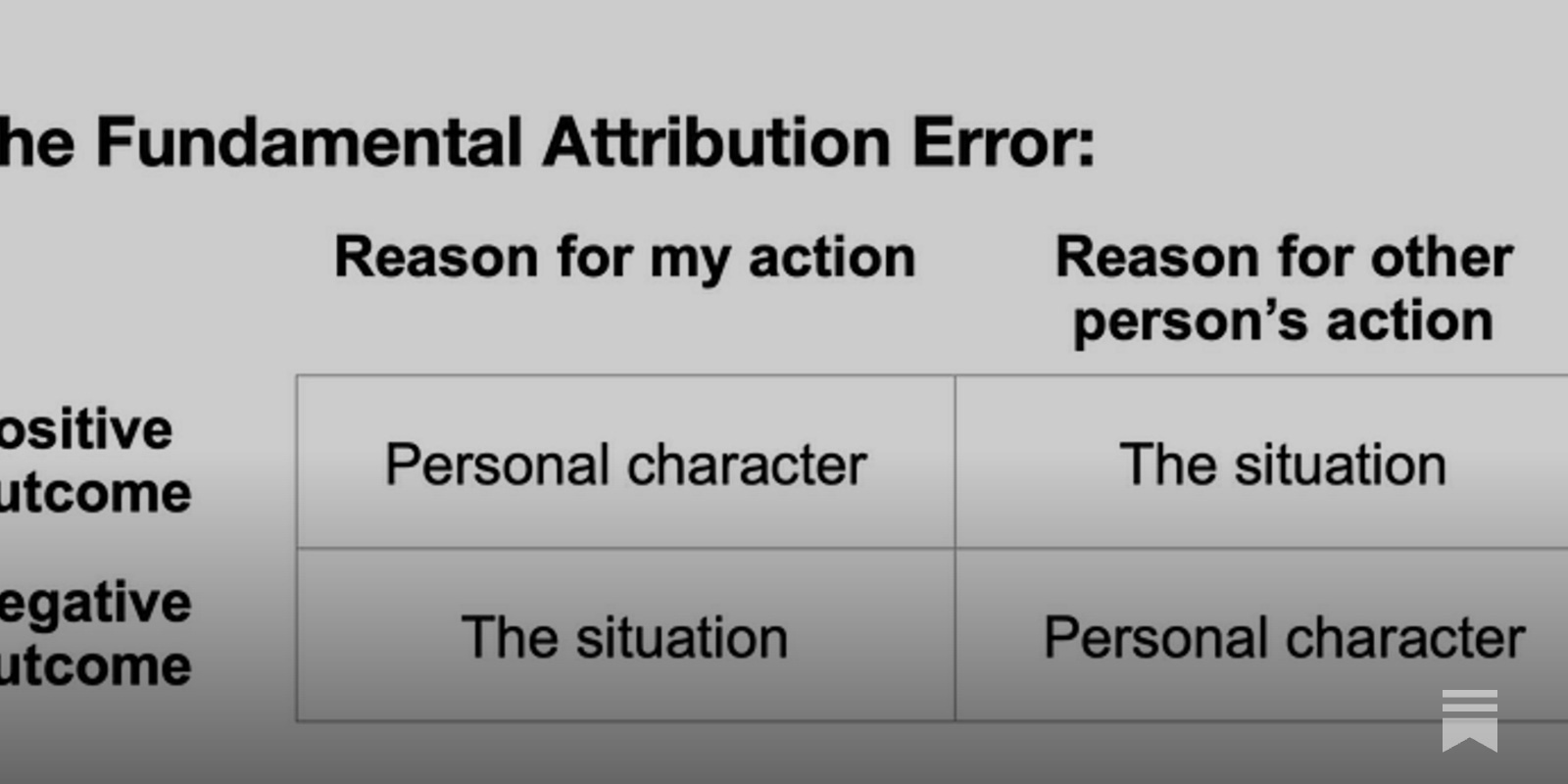
If an AI produces something useful it's because of your own skill in model choice, prompting, and steering. If not, it's because the model is a useless lying machine that can't follow directions.
AI Epistemic Risks: Emerging Mechanisms & Evidence
<p>Advances in artificial intelligence pose risks to humanity's collective capacity to form accurate beliefs, reason well, and maintain a healthy information en

Our minds aren’t equipped to handle AI
AI is junk food for the mind: easy, tempting and ultimately very bad for you.

AI assistants can sway writers’ attitudes, even when they’re watching for bias | Cornell Chronicle
Cornell Tech researchers found that writers who used biased AI auto-suggestions saw their views gravitate toward the AI’s positions without their realizing it — even when they were made aware of the biased AI.

AI FOR EPISTEMICS & COORDINATION
Civilization and technology have radically improved the human condition. Nonetheless, the world sometimes goes in directions which essentially nobody would prefer — e.g., nuclear arms races, unexpected financial crashes, predatory marketing, or ubiquitous political misinformation.
Is AI Reasoning Right for the Wrong Reasons? | Quanta Magazine
The idea that artificial intelligence can “reason” is more intuitive than ever. But intuitions can be wrong, and the science is far from settled.
How to write well with AI
Why people who pledge never to write with AI are telling on themselves

Brands Adopt ‘No AI’ Disclaimers to Stand Out Amid the Slop
Marketers move to get ahead of growing consumer skepticism by labeling content that doesn’t use AI.

Trust and reliance on AI — An experimental study on the extent and costs of overreliance on AI
Decision-making is undergoing rapid changes due to the introduction of artificial intelligence (AI), as AI recommender systems can help mitigate human flaws and increase decision accuracy and efficiency. However, AI can also commit errors or suffer from algorithmic bias. Hence, blind trust in technologies carries risks, as users may follow detrimental advice resulting in undesired consequences. Building upon research on algorithm appreciation and trust in AI, the current study investigates whether users who receive AI advice in an uncertain situation overrely on this advice — to their own detriment and that of other parties. In a domain-independent, incentivized, and interactive behavioral experiment, we find that the mere knowledge of advice being generated by an AI causes people to overrely on it, that is, to follow AI advice even when it contradicts available contextual information as well as their own assessment. Frequently, this overreliance leads not only to inefficient outcomes for the advisee, but also to undesired effects regarding third parties. The results call into question how AI is being used in assisted decision making, emphasizing the importance of AI literacy and effective trust calibration for productive deployment of such systems.

Private inference
When you use an AI service, you’re handing over your thoughts in plaintext. The operator stores them, trains on them, and–inevitably–will monetize them. You get a response; they get everything.
Our minds did not evolve for AI
AI is mental junk food: tasty and tempting, but ultimately unhealthy — a cognitive hot dog

Generative AI’s crippling and widespread failure to induce robust models of the world
LLM failures to reason, as documented in Apple’s Illusion of Thinking paper, are really only part of a much deeper problem

Counterarguments to the basic AI x-risk case
Sixteen weaknesses in the classic argument for AI risk.

I think it’s telling that people very interested in AI (like Eugene and myself) still have no interest in using it as a proxy for human communication. “Being a good writer” is not the same thing as having social agency, and making the models even better at writing won’t change that.

Eugene Vinitsky 🍒
When you deploy heavily LLM text, you currently have no way to prove that you actually read it and therefore cannot convince me to read it
in my imagination of the future, of AIs doing raw research, it was the AIs that had full control over the proofs they wrote--attribution was clear, and so was the choice to disclose it. but as it stands we are in some hybrid situationship where the human prompter still assumes responsibility.


