


Vouching on Tangled!
Fooling AI Agents: Web-Based Indirect Prompt Injection Observed in the Wild
Uncover real-world indirect prompt injection attacks and learn how adversaries weaponize hidden web content to exploit LLMs for high-impact fraud.

Meet the Pirates of the RAG: Adaptively Attacking LLMs to Leak Knowledge Bases
Meet the Pirates of the RAG: Adaptively Attacking LLMs to Leak Knowledge Bases

Browsing your website does not mean I want your spam
I recently fell down a deep dark hole on the internet.

Pushback on use of hidden prompts to snare AI peer reviews
The invisible messages, which instruct LLMs to use telltale phrases in a peer-review report, catch AI misuse but also erode trust, some say.

Guardian Angels: LLM Personalization for Productivity and Security
I propose an approach for highly personalized LLMs, for near-future productivity gains and personal info/cybersecurity against increasingly powerful LLMs: they should, in the spirit of uploading, try to emulate the user’s values and preferences in order to amplify the principal—not replace them. I discuss a package of techniques and proposals to accomplish such ‘guardian angels’; dynamic evaluation of LLMs combined with active learning and elicitation and heavy inner-monologue search/data-augmentation.

If you don't run your own LLM proxy, how the fuck do you even know whats going on?
I think the title captures the idea fully but I'll dig into it because this ain't Twitter. You're working an idea, a piece of code, or a multibillion a year SaaS app which is probably saving the world. Maybe you're automating the cloning process of grabbing
Hey ChatGPT, write me a fictional paper: these LLMs are willing to commit academic fraud
Mainstream chatbots presented varying levels of resistance to deliberate requests for fabrication, study finds.
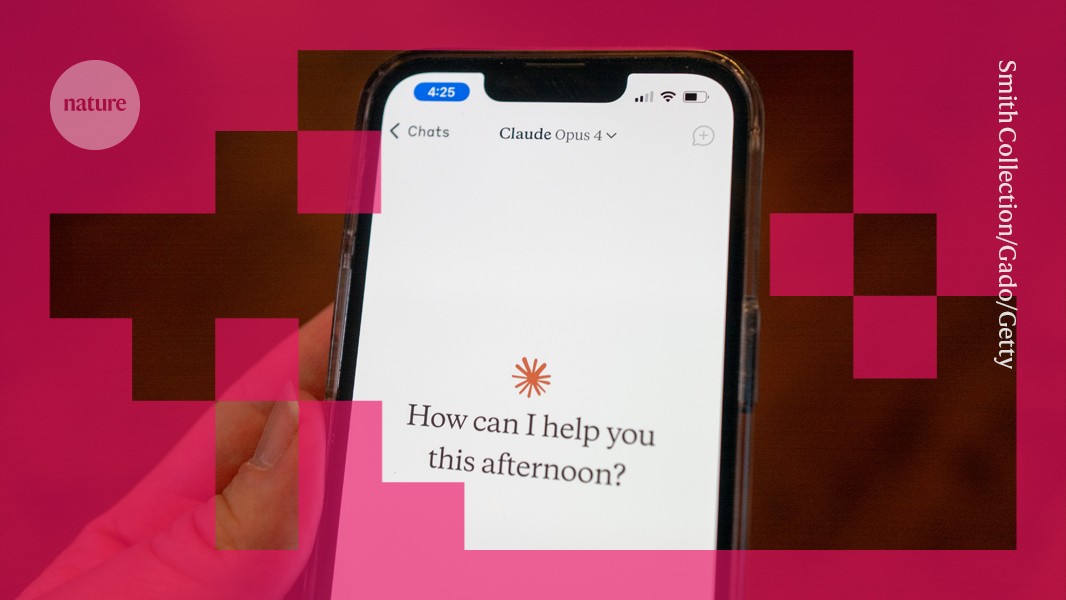
Trust and Faith in Our Web
I’m not Brennan, but I’m very interested in decentralization and a fan of AtProto specifically, so I’d like to weigh in. First I should mention I’ve personally never been able to get into microblogging, so I haven’t touched bluesky myself, despite having an account for ATProto reasons. But I agree it’s concerning that the company chooses to continue to host the content of harmful individuals and calling that act “neutral”. I’m certainly against the idea of the “marketplace of ideas” as it’s cle...

Scaling trust on the web
The Task Force for a Trustworthy Future Web's report on gaps and opportunities for how the next generation of online spaces will be built.

ĐApps: What Web 3.0 Looks Like
As we move into the future, we find increasing need for a zero-trust interaction system. Even pre-Snowden, we had realised that entrusting our information to arbitrary entities on the internet was fraught with danger. However, post-Snowden the argument plainly falls in the hand of those who believe that large organisations and governments routinely attempt to stretch and overstep their authority. Thus we realise that entrusting our information to organisations in general is a fundamentally broken model. The chance of an organisation not meddling with our data is merely the effort required minus their expected gains. Given they tend to have an income model that requires they know as much about people as possible the realist will realise that the potential for convert misuse is difficult to overestimate.
Why “Trusted Publishing” Can’t Save Us from Social Engineering
Unmasking the risky illusion of npm's "trusted publishing" amidst recent cyber attacks.
Trust Infrastructure on ATproto
I agree with Nick that you have noted a big hard problem, with Zooko’s triangle type trade-offs. (For a semi-related example that is “easier” but still crazy difficult, see our “PeerFlow: Secure Load Balancing in Tor” https://doi.org/10.1515/popets-2017-0017 ) As noted or implied already in this thread: in the end, if someone can cheaply spin up indefinite unlinked identities and build good reputations for them, and if trust is based on such reputations, it is hard (impossible?) to avoid them s...

Combat LLM spam by building a web of trust. Vouching is live on Tangled! 🎭 blog.tangled.org/vouching/

combat LLM spam by building a web of trust
blog.tangled.org
