
Following the introduction of asm.js, we have been working with other browser vendors including Mozilla, Google, Apple, along with the rest of the WebAssembly community group, to push the performance boundary of the web with WebAssembly. WebAssembly is a new, portable, size- and load-time-efficient binary compiler target, which promises near-native performance on the web. As
WebAssembly browser preview · V8
WebAssembly or Wasm is a new runtime and compilation target for the web, now available behind a flag in Chrome Canary!
WebAssembly Browser Preview – Mozilla Hacks - the Web developer blog
Since the last WebAssembly milestone we reached in March, we’ve been hard at work in the WebAssembly Community Group to define a standard and to implement that standard in our ...

A Tale of Three WebAssembly Runtimes
Walking through the implementation of three different WebAssembly runtimes from scratch

WebAssembly | MDN
WebAssembly (Wasm) is a low-level assembly-like language that brings near-native performance to the web. It serves as a compilation target for languages like C/C++, C#, and Rust, allowing high-performance code to run directly in the browser.

Why You Should Pay Attention to WebAssembly
There may come a day when the humble web browser – having already yielded enterprise grade server side technologies like Firecracker, Isolates and Node.js – has nothing of interest left for the industry to extract. But that day has certainly not arrived yet, as the increasing chatter around WebAssembly (WASM) proves. The fact that people

Why is WebAssembly a second-class language on the web? – Mozilla Hacks - the Web developer blog
This post is an expanded version of a presentation I gave at the recent WebAssembly CG meeting in Munich. WebAssembly has come a long way since its first release in 2017. The 1.0 version of WebAssembly was already a great fit for low-level languages like C and C++, and immediately enabled many new kinds of applications to efficiently target the web.
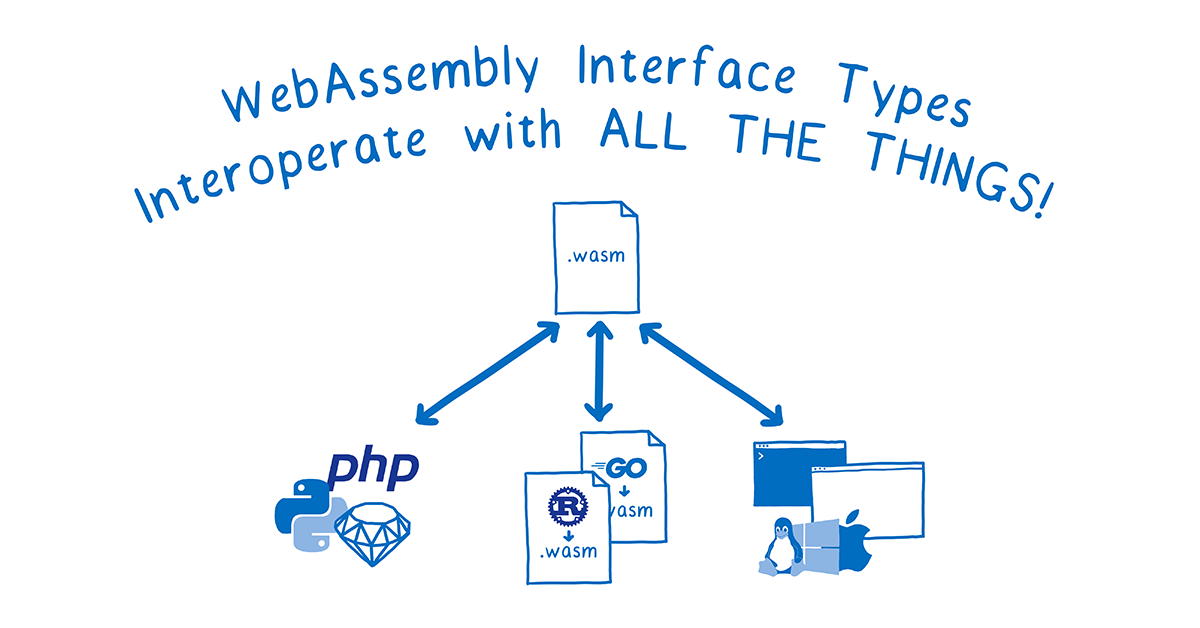
WebAssembly Interface Types: Interoperate with All the Things! – Mozilla Hacks - the Web developer blog
People are excited about running WebAssembly outside the browser. People are also excited about running WebAssembly from languages like Python, Ruby, and Rust. Lin Clark's Code Cartoons are back, illustrating ...
A cartoon intro to WebAssembly – Mozilla Hacks - the Web developer blog
WebAssembly is a way of taking code written in programming languages other than JavaScript and running that code in the browser. So when people say that WebAssembly is fast, what ...
The State of WebAssembly – 2023 and 2024
Explore the 2023 Milestones and 2024 Predictions for WebAssembly in Our annual wasm Article - Get insights into the latest developments and future trends in WebAssembly, including browser support updates, new features like Tail Calls, Garbage Collection, and SIMD, plus advancements in .NET and WASI. Stay informed about WebAssembly's growing role in AI and more!

Instructions — WebAssembly 3.0 (2026-06-03)
WebAssembly computation is performed by executing individual instructions.
WebAssembly
WebAssembly (abbreviated Wasm) is a binary instruction format for a stack-based virtual machine. Wasm is designed as a portable compilation target for programming languages, enabling deployment on the web for client and server applications.
A practical guide to WebAssembly memory | radu's blog
Memory in WebAssembly is one of the topics that creates confusion for newcomers, particularly for those with experience in languages with memory management features like garbage collection, such as JavaScript, Go, or Java. In this article we explore using memory in WebAssembly in various scenarios - passing JavaScript arrays to Rust and AssemblyScript modules, checking for some basic memory leaks using Valgrind, or exchanging strings between runtimes and modules using Wasmtime.
Introducing WebContainers: Run Node.js natively in your browser
Today we're excited to announce WebContainers, a new type of WebAssembly-based operating system that boots instantly and enables Node.js environments to run natively in-browser.

WebAssembly and its platform targets
When talking about WebAssembly, one of the things that often confuses people is the lack of a great analogy for the various platform targets that WebAssembly supports. This ends up being a bit important as it dictates whether your WebAssembly code will (not) work with another bit as it all