




Boris Mann's digital garden and personal site.
Pace Layering: How Complex Systems Learn and Keep Learning · Journal of Design and Science
Pace layers provide many-leveled corrective, stabilizing feedback throughout the system. It is in the contradictions between these layers that civilization finds its surest health. I propose six significant levels of pace and size in a robust and adaptable civilization.

Of Digital Streams, Campfires and Gardens
Building personal learning environments across the different time horizons of information consumption
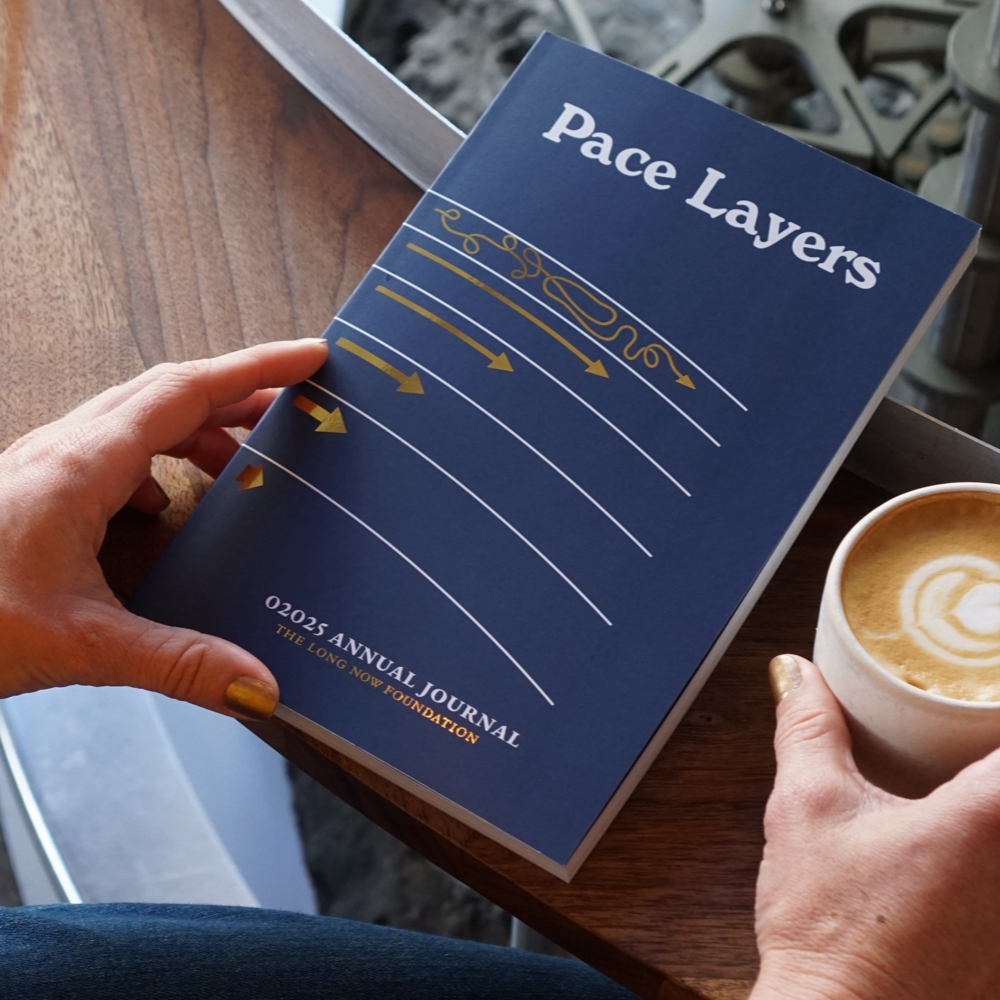
Pace Layers 02025 Annual Journal
Long Now’s annual print journal explores the ancient past and distant future of the present moment through essays, interviews, fiction, poetry, and visual art. The journal takes its name and shape from Long Now cofounder Stewart Brand’s pace layers framework — a tool for thinking about how civilizations work. [Learn more about Pace Layers](https://longnow.org/pacelayers/)
Announcing Pace Layers
The inaugural issue of Long Now’s new annual print journal synthesizes the most important learnings of our first quarter-century.
🌿 Foraging in High-Dimensional Data
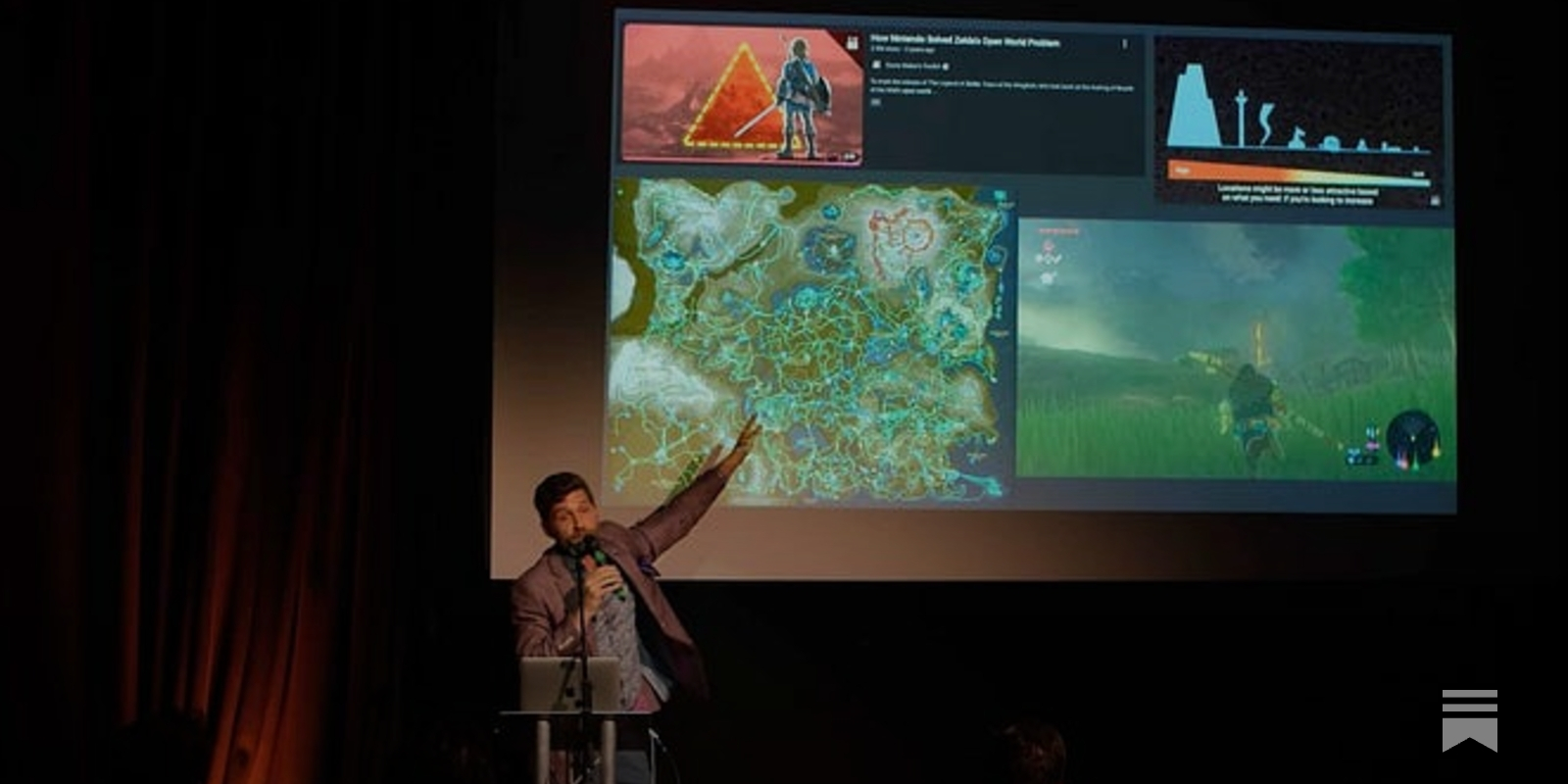
My talk from the Diverse Intelligences Summer Institute 2025 on how we can draw from thinking in complex systems science and game design to heal our relationship to the Web.
Toward Wayfinding Infrastructure for the Living Web · Atlas Research Group
Our world is getting crazier by the day. Our old maps and compasses weren’t made for this complexity. While new tools may open up amazing possibilities, they also make it easier to lose ourselves – especially when they don’t belong to us, and make us vulnerable to other people’s hidden choices and unsavory intentions about what is worth attending to.

Open Source Beyond Licensing - The Evolution Ahead
Boris Mann's digital garden and personal site.
epistemic garden - mapping how ideas spread online
We're building tools to help communities understand their information landscape and protect against harmful coordinated narratives.
Everything is miscellaneous : the power of the new digital disorder
Includes bibliographical references (p. [235]-257) and index; Prologue : information in space -- The new order of order -- Alphabetization and its discontents -- The geography of knowledge -- Lumps and splits -- The laws of the jungle -- Smart leaves -- Social knowing -- What nothing says -- Messiness as a virtue -- The work of knowledge -- Coda : misc; Philosopher Weinberger shows how the digital revolution is radically changing the way we make sense of our lives. Human beings constantly collect, label, and organize data--but today, the shift from the physical to the digital is mixing, burning, and ripping our lives apart. In the past, everything had its one place--the physical world demanded it--but now everything has its places: multiple categories, multiple shelves. Everything is suddenly miscellaneous. Weinberger charts the new principles of digital order that are remaking business, education, politics, science, and culture. He examines how Rand McNally decides what information not to include in a physical map (and why Google Earth is winning that battle), how Staples stores emulate online shopping to increase sales, why your children's teachers will stop having them memorize facts, and how the shift to digital music stands as the model for the future.--From publisher description; From A to Z, Everything Is Miscellaneous will completely reshape the way you think - and what you know - about the world. Includes information on alphabetical order, Amaxon.com, animals, Aristotle, authority, Bettmann Archive, blogs (weblogs), books, broadcasting, British Broadcasting Corporation (BBC), business, card catalog, categories and categorization, clusters, companies, Colon Classification, conversation, Melvil Dewey, Dewey Decimal Classification system, Encyclopaedia Britannica, encyclopedia, essentialism, experts, faceted classification system, first order of order, Flickr.com, Google, Great Books of the Western World, ancient Greeks, health and medical information, identifiers, index, inventory tracking, knowledge, labels, leaf and leaves, libraries, Library of Congress, links, Carolus Linnaeus, lumping and splitting, maps and mapping, marketing, meaning, metadata, multiple listing services (MLS), names of people, neutrality or neutral point of view, New York Public Library, Online Computer Library Center (OCLC), order and organization, people, physical space, everything having place, Plato, race, S.R. Ranganathan, Eleanor Rosch, Joshua Schacter, science, second order of order, simplicity, social constructivism, social knowledge, social networks, sorting, species, standardization, tags, taxonomies, third order of roder, topical categorization, tree, Uniform Product Code (UPC), users, Jimmy Wales, web, Wikipedia, etc
