


Assessing risks of bias in randomized controlled trials (RCTs) is an important but laborious task when conducting systematic reviews. RobotReviewer (RR), an open-source machine learning (ML) system, semi-automates bias assessments. We conducted a user study of RobotReviewer, evaluating time saved and usability of the tool.
RobotReviewer: evaluation of a system for automatically assessing bias in clinical trials
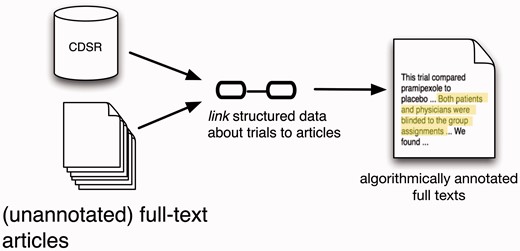
Abstract. Objective To develop and evaluate RobotReviewer, a machine learning (ML) system that automatically assesses bias in clinical trials. From a (PDF-
Automating risk of bias assessment in systematic reviews: a real-time mixed methods comparison of human researchers to a machine learning system
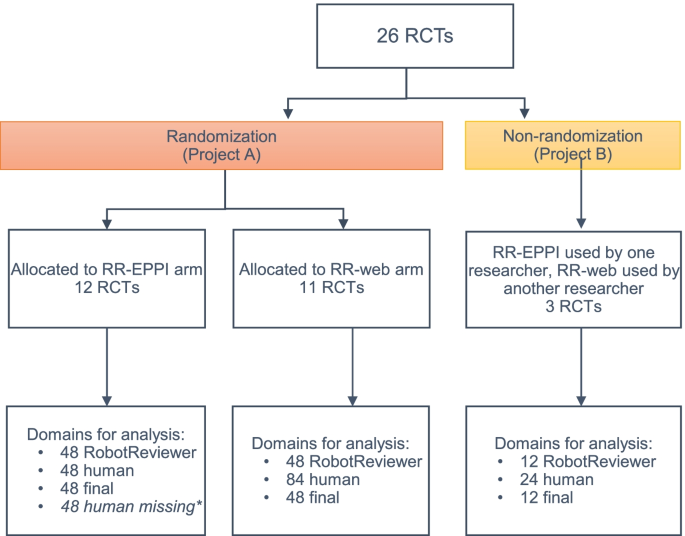
Machine learning and automation are increasingly used to make the evidence synthesis process faster and more responsive to policymakers’ needs. In systematic reviews of randomized controlled trials (RCTs), risk of bias assessment is a resource-intensive task that typically requires two trained reviewers. One function of RobotReviewer, an off-the-shelf machine learning system, is an automated risk of bias assessment.
Agreement in Risk of Bias Assessment Between RobotReviewer and Human Reviewers: An Evaluation Study on Randomised Controlled Trials in Nursing‐Related Cochrane Reviews
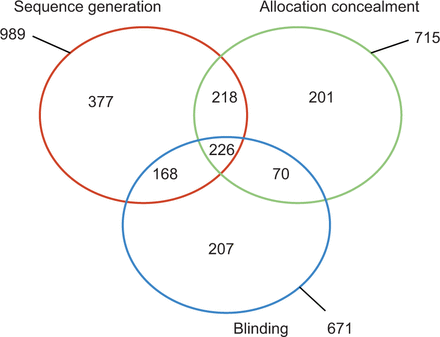
Abstract Purpose RobotReviewer is a machine learning system for semi‐automated assistance in risk of bias assessment. The tools’s performance in randomized controlled trials (RCTs) in the field of nursing remains unknown. We aimed therefore to evaluate the agreement in risk of bias assessment between RobotReviewer and human reviewers. Design Evaluation study using a retrospective diagnostic design. Methods We used RobotReviewer as the index test and human reviewers’ risk of bias assessment reported in Cochrane reviews as the reference test. A convenience sample of electronically available English‐language full texts of RCTs included in Cochrane reviews with nurs* in the title were eligible for inclusion. In this context, we assessed random sequence generation, allocation concealment, and blinding (personnel or participants and assessors) corresponding to Cochrane risk of bias version 2011. Two independent research teams performed and double‐checked data extraction and analysis. We calculated sensitivity, specificity, receiver operating characteristic (ROC) curve, the area under the ROC curve, predictive values, observed percentage of agreement, and Cohen’s kappa (including confidence intervals, if applicable). Findings The selection process yielded 190 RCTs published between 1958 and 2016 in 23 Cochrane reviews published between 2000 and 2018. Missing assessments of risk of bias domains in Cochrane reviews or RobotReviewer yielded varying sample sizes per risk of bias domain. Sensitivity ranged from 0.44 to 0.88 and specificity from 0.48 to 0.95. Positive predictive value was highest for allocation concealment (0.79) and lowest for blinding assessors (0.25). Cohen’s kappa was moderate for randomization (0.52), allocation concealment (0.60), and for blinding of personnel/patients (0.43). Blinding of outcome assessors had only slight agreement (0.04). Conclusions This is the first evaluation of risk of bias assessment by RobotReviewer in RCTs included in nursing‐related Cochrane reviews. It yielded a moderate degree of agreement with human reviewers for randomization and allocation concealment, and an adequate sensitivity for detecting low risk of selection bias. Clinical Relevance Based on our results, using the RobotReviewer for risk of bias assessment in RCTs can be supportive in some risk of bias domains. However, human reviewers should supervise the semi‐automated assessment process.

Machine learning to assist risk-of-bias assessments in systematic reviews
Abstract. Background: Risk-of-bias assessments are now a standard component of systematic reviews. At present, reviewers need to manually identify relevant
ChatGPT for assessing risk of bias of randomized trials using the RoB 2.0 tool: A methods study
Abstract Background Internationally accepted standards for systematic reviews necessitate assessment of the risk of bias of primary studies. Assessing risk of bias, however, can be time- and resource-intensive. AI-based solutions may increase efficiency and reduce burden. Objective To evaluate the reliability of OpenAI’s ChatGPT for performing risk of bias assessments of randomized trials using the revised risk of bias tool for randomized trials (RoB 2.0). Methods We sampled recently published Cochrane systematic reviews of medical interventions (up to October 2023) that included randomized controlled trials and assessed risk of bias using the Cochrane-endorsed RoB 2.0. From each eligible review, we collected data on the risk of bias assessments for the first three reported outcomes. Using ChatGPT-4, we assessed the risk of bias for the same outcomes using three different prompts: a minimal prompt including limited instructions, a maximal prompt with extensive instructions, and an optimized prompt that was designed to yield the best risk of bias judgements. The agreement between ChatGPT’s assessments and those of Cochrane systematic reviewers was quantified using weighted kappa statistics. Results We included 34 systematic reviews with 157 unique trials. We found the agreement between ChatGPT and systematic review authors for assessment of overall risk of bias to be 0.16 (95% CI: 0.01 to 0.3) for the maximal ChatGPT prompt, 0.17 (95% CI: 0.02 to 0.32) for the optimized prompt, and 0.11 (95% CI: −0.04 to 0.27) for the minimal prompt. For the optimized prompt, agreement ranged between 0.11 (95% CI: −0.11 to 0.33) to 0.29 (95% CI: 0.14 to 0.44) across risk of bias domains, with the lowest agreement for the deviations from the intended intervention domain and the highest agreement for the missing outcome data domain. Conclusion Our results suggest that ChatGPT and systematic reviewers only have “slight” to “fair” agreement in risk of bias judgements for randomized trials. ChatGPT-4 cannot be relied upon to judge risk of bias and should not be used for this purpose. Since this study was completed, ChatGPT has advanced and OpenAI has released newer models with different capabilities. These may prove more adept at risk of bias evaluation. There may also be opportunities to use ChatGPT to streamline other aspects of systematic reviews, such as screening of search records or collection of data.
A new peer reviewer? Comparing AI with human performance in randomized controlled trial risk-of-bias assessment
Title abbreviation: Adv Clin Exp MedJournal Impact Factor (JIF 2025) – 2.5Journal Citation Indicator (JCI 2025) – 0.40Scopus CiteScore (2025) – 4.2Index Copernicus Value (ICV 2025) – 162.75MNiSW – 70 ptsISSN 1899–5276 (print), ISSN 2451-2680 (online)Periodicity – monthly
RAPID: Reliable and efficient Automatic generation of submission rePorting checklists with Large language moDels
Importance Medical reporting guidelines are significant in improving the transparency, quality, and integrity of medical research, particularly in randomized clinical trials; adherence to these guidelines supports research interpretability and has direct implications for downstream applications, such as patient treatment. However, with over 600 distinct reporting guidelines, manual assessments are often time-consuming and labor-intensive. Objective To evaluate an automated reporting checklist generation tool using large language models and retrieval augmentation generation technology, called RAPID. Design, Setting, and Participants This study used large language models to design a retrieval augmentation generation architecture and collected published journal articles as training and validation sets to optimize prompts within the framework and comprehensively evaluate the performance of the framework. Medical reporting experiments were collected from 50 randomized controlled trials without the intervention of AI tools and 41 randomized controlled trials with the intervention of AI tools. Main Outcomes and Measures For effective evaluation of the performance of this tool, a classification accuracy metric (Reported/Not Reported) defined as the number of correct judgments divided by all judgments and a content consistent score metric defined as the number of contents retrieved by the tool that are the same as those retrieved by researchers divided by the total number of judgments were calculated. Results The RAPID tool uses the widely used Word document and Portable Document Format as an input file. Fifty published journal articles without the intervention of AI tools and 41 published journal articles with the intervention of AI tools were collected as CONSORT and CONSORT-AI datasets. All of the CONSORT reporting items (37) were included in the tool. RAPID achieved a high average accuracy rate of 92.11% and a content consistency score of 81.14% on the CONSORT dataset. Of the CONSORT-AI reporting items, 11 items related to the intervention of AI tools were included in the tool. RAPID achieved an average accuracy of 83.81% with a content consistency score of 72.51% on the CONSORT-AI dataset. For these two reporting guidelines, a training set of 5 articles was selected from each dataset to refine the prompts used in the tools for CONSORT and CONSORT-AI reporting checklist. The validation set of the remaining articles was used to assess the performance of the RAPID. The RAPID tool used the Word document and Portable Document Format of the articles as input files. A RAPID graphical user interface was built using JavaScript and Vue. Conclusions and Relevance The RAPID tool is designed to assist in the reporting of various types of trials. RAPID has strong scalability, which can be easily adapted to different medical reporting guidelines without transfer learning on a large dataset. RAPID may effectively save time and improve working efficiency for different user groups, for example, 1) simplifying the submission process and improving report quality by verifying manuscript completeness for medical authors; 2) facilitating evaluation of report quality for medical researchers; 3) expediting manuscript distribution for medical editors; and 4) identifying reporting deficiencies and providing deeper insights for review comments for reviewers. Question Can large language model tools automatically generate medical reporting checklists for manuscripts of different types of clinic trials?Findings An automated reporting checklist generation tool using large language models and retrieval augmentation generation technology, RAPID, was developed. RAPID was fully evaluated on all items across two separate datasets related to the Consolidated Standards of Reporting Trials (CONSORT) and CONSORT-AI reporting guidelines. In the first dataset corresponding to CONSORT, RAPID achieved an average accuracy of 92.11%, while in the second dataset associated with CONSORT - AI, it reached an average accuracy of 83.81%. Additionally, RAPID is highly scalable. It can be easily and smoothly adapted to different medical reporting guidelines without transfer learning on a large dataset.Meaning RAPID can effectively save time and improve working efficiency for different user groups such as medical authors, researchers, editors, and reviewers.
General-purpose large language models outperform specialized clinical AI tools on medical benchmarks
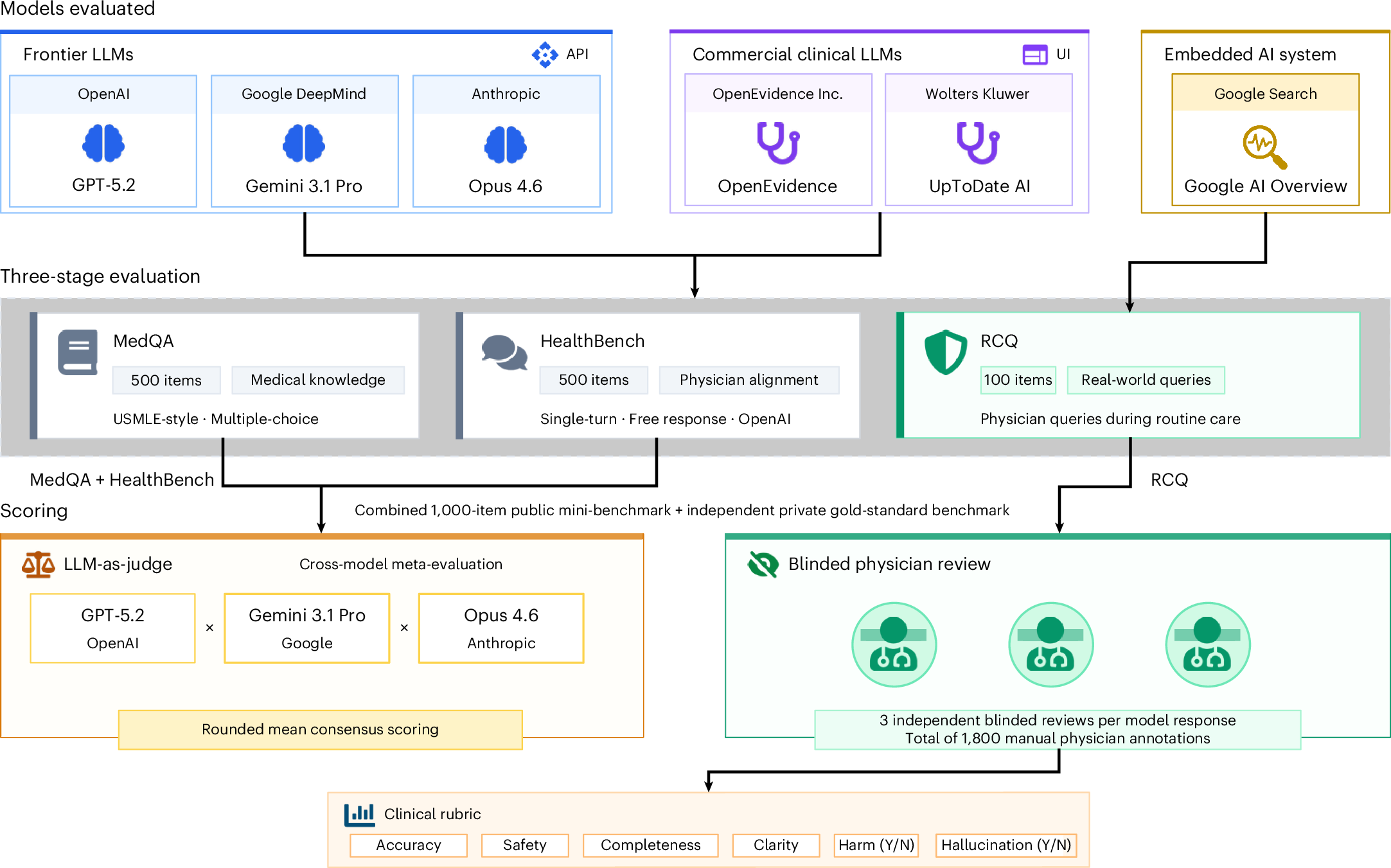
Specialized clinical artificial intelligence (AI) tools are entering medical practice despite scarce independent evaluation. We quantitatively evaluate two clinical AI tools, OpenEvidence and UpToDate Expert AI, built on large language models (LLMs) against three frontier LLMs: GPT-5.2, Gemini 3.1 Pro and Claude Opus 4.6. Our evaluation has three stages: (1) 500 MedQA questions testing medical knowledge, (2) 500 HealthBench items measuring alignment with clinicians and (3) the real clinical queries (RCQ) benchmark, built from 100 de-identified queries from physicians to a general-purpose language model in a live clinical environment. For the RCQ benchmark, 12 US clinicians performed randomized, blinded review of model outputs, producing 1,800 model–question annotations. Frontier LLMs outperformed clinical AI tools in all three evaluations. Clinical AI tools performed comparably to auto-enabled Google Search AI Overview on the RCQ. These findings highlight the need for independent, real-world evaluation of AI tools before they enter clinical settings.
Measuring the Impact of Early-2025 AI on Experienced Open-Source...
Despite widespread adoption, the impact of AI tools on software development in the wild remains understudied. We conduct a randomized controlled trial (RCT) to understand how AI tools at the...

Evaluating the Ability of Large Language Models to Identify Adherence to CONSORT Reporting Guidelines in Randomized Controlled Trials: A Methodological Evaluation Study
The Consolidated Standards of Reporting Trials statement is the global benchmark for transparent and high-quality reporting of randomized controlled trials. Manual verification of CONSORT adherence is a laborious, time-intensive process that constitutes a significant bottleneck in peer review and evidence synthesis. This study aimed to systematically evaluate the accuracy and reliability of contemporary LLMs in identifying the adherence of published RCTs to the CONSORT 2010 statement under a zero-shot setting. We constructed a golden standard dataset of 150 published RCTs spanning diverse medical specialties. The primary outcome was the macro-averaged F1-score for the three-class classification task, supplemented by item-wise performance metrics and qualitative error analysis. Overall model performance was modest. The top-performing models, Gemini-2.5-Flash and DeepSeek-R1, achieved nearly identical macro F1 scores of 0.634 and Cohen's Kappa coefficients of 0.280 and 0.282, respectively, indicating only fair agreement with expert consensus. A striking performance disparity was observed across classes: while most models could identify compliant items with high accuracy (F1 score > 0.850), they struggled profoundly with identifying non-compliant and not applicable items, where F1 scores rarely exceeded 0.400. Notably, some high-profile models like GPT-4o underperformed, achieving a macro F1-score of only 0.521. LLMs show potential as preliminary screening assistants for CONSORT checks, capably identifying well-reported items. However, their current inability to reliably detect reporting omissions or methodological flaws makes them unsuitable for replacing human expertise in the critical appraisal of trial quality.
Benchmarking agreement between large language models and published clinical trial conclusions across four artificial intelligence platforms
Advanced large language models (LLMs) such as ChatGPT, Gemini, Grok3, and Claude offer new possibilities for medical research interpretation and clinical decision support. While these models demonstrate remarkable natural language processing capabilities, their ability to independently reason through clinical trial data and produce conclusions consistent with published trial interpretations remains underexplored. The objective was to evaluate the reliability of LLMs in interpreting numerical and statistical healthcare data. For this study, landmark randomized controlled trials (RCTs) were selected as a standardized domain to minimize bias from poor-quality research designs. Twenty landmark RCTs from the New England Journal of Medicine were analyzed in neurosurgical and cardiovascular intervention domains. Four AI platforms were evaluated using a structured prompt covering five domains: evidence interpretation, statistical understanding, clinical relevance, limitation recognition, and practical applicability. Two independent raters scored all AI outputs on a 0–5 scale per domain, and interobserver reliability was assessed. Primary outcomes included concordance with published trial conclusions, accuracy of primary outcome identification, and appropriateness of recommendations. Secondary outcomes included output pattern analysis, recognition of limitations, and handling of confounding factors. ChatGPT demonstrated the highest concordance with published conclusions at 100.0%, followed by Gemini at 84%, Grok3 at 72%, and Claude at 68%. However, these concordance scores should be interpreted cautiously, as the LLMs may have been trained on these published trials, potentially inflating alignment with published conclusions. ChatGPT and Gemini accurately identified limitations and confounding factors, while Grok3 and Claude struggled in these secondary outcomes. Interobserver reliability between raters was good (Cronbach’s α = 0.868), supporting the consistency of scoring. Certain LLMs, particularly ChatGPT and Gemini, can reliably interpret clinical trial data and align closely with human conclusions, suggesting a potential role in data summarization and evidence synthesis. These findings highlight the importance of selecting AI tools carefully and highlight potential applications in research and clinical workflows.

Verification in the Age of AI Scientists
AI Scientists now operate at a scale that outpaces human capacity for manual review. Systems such as Sakana’s AI Scientist write entire workshop papers end-to-end. Lila Sciences runs autonomous ``AI Science Factories’’ that hypothesize, experiment, and iterate without human guidance. FutureHouse’s Kosmos and Robin generate thousands of candidate hypotheses in a single run, and Google’s Co-Scientist proposes testable experiments at a rate no laboratory can fully evaluate. Each of these systems emphasizes verified results, yet that standard ranges from near-perfect formal proof in mathematics to decade-long clinical trials in medicine, with no shared framework for judging sufficiency across domains. As outputs scale beyond what humans can manually inspect, the question of which results to trust becomes as hard as generating them. The bottleneck for AI for Science is no longer hypothesis generation, it is verification.
Machine Bias — ProPublica
There’s software used across the country to predict future criminals. And it’s biased against blacks.

DeSpin: a prototype system for detecting spin in biomedical publications
Improving the quality of medical research reporting is crucial to reduce avoidable waste in research and to improve the quality of health care. Despite various initiatives aiming at improving research reporting – guidelines, checklists, authoring aids, peer review procedures, etc. – overinterpretation of research results, also known as spin, is still a serious issue in research reporting. In this paper, we propose a Natural Language Processing (NLP) system for detecting several types of spin in biomedical articles reporting randomized controlled trials (RCTs). We use a combination of rule-based and machine learning approaches to extract important information on trial design and to detect potential spin. The proposed spin detection system includes algorithms for text structure analysis, sentence classification, entity and relation extraction, semantic similarity assessment. Our algorithms achieved operational performance for the these tasks, F-measure ranging from 79,42 to 97.86% for different tasks. The most difficult task is extracting reported outcomes. Our tool is intended to be used as a semi-automated aid tool for assisting both authors and peer reviewers to detect potential spin. The tool incorporates a simple interface that allows to run the algorithms and visualize their output. It can also be used for manual annotation and correction of the errors in the outputs. The proposed tool is the first tool for spin detection. The tool and the annotated dataset are freely available.
Position: The ML Community Must Build an AI-Augmented Peer-Review Ecosystem
Peer review, the bedrock of scientific advancement in machine learning (ML), is strained by a crisis of scale. Exponential growth in manuscript submissions to premier ML venues such as NeurIPS, ICML, and ICLR is outpacing the finite capacity of qualified reviewers, leading to concerns about review quality, consistency, and reviewer fatigue. This position paper argues that AI-assisted peer review must become an urgent research and infrastructure priority. We advocate for a comprehensive AI-augmented ecosystem, leveraging Large Language Models (LLMs) not as replacements for human judgment, but as sophisticated collaborators for authors, reviewers, and Area Chairs (ACs). We propose specific roles for AI in enhancing factual verification, guiding reviewer performance, assisting authors in quality improvement, and supporting ACs in decision-making. Crucially, we contend that the development of such systems hinges on access to more granular, structured, and ethically-sourced peer review process data. We outline a research agenda, including illustrative experiments, to develop and validate these AI assistants, and discuss significant technical and ethical challenges. We call upon the ML community to proactively build this AI-assisted future, ensuring the continued integrity and scalability of scientific validation, while maintaining high standards of peer review.
Large Language Models and the Analyses of Adherence to Reporting Guidelines in Systematic Reviews and Overviews of Reviews (PRISMA 2020 and PRIOR)
In the context of Evidence-Based Practice (EBP), Systematic Reviews (SRs), Meta-Analyses (MAs) and overview of reviews have become cornerstones for the synthesis of research findings. The Preferred Reporting Items for Systematic Reviews and Meta-Analyses (PRISMA) 2020 and Preferred Reporting Items for Overviews of Reviews (PRIOR) statements have become major reporting guidelines for SRs/MAs and for overviews of reviews, respectively. In recent years, advances in Generative Artificial Intelligence (genAI) have been proposed as a potential major paradigm shift in scientific research. The main aim of this research was to examine the performance of four LLMs for the analysis of adherence to PRISMA 2020 and PRIOR, in a sample of 20 SRs and 20 overviews of reviews. We tested the free versions of four commonly used LLMs: ChatGPT (GPT-4o), DeepSeek (V3), Gemini (2.0 Flash) and Qwen (2.5 Max). Adherence to PRISMA 2020 and PRIOR was compared with scores defined previously by human experts, using several statistical tests. In our results, all the four LLMs showed a low performance for the analysis of adherence to PRISMA 2020, overestimating the percentage of adherence (from 23 to 30%). For PRIOR, the LLMs presented lower differences in the estimation of adherence (from 6 to 14%) and ChatGPT showed a performance similar to human experts. This is the first report of the performance of four commonly used LLMs for the analysis of adherence to PRISMA 2020 and PRIOR. Future studies of adherence to other reporting guidelines will be helpful in health sciences research.
