

We are building the ecosystem, technology, and infrastructure that make it possible to solve the world's challenges using synthetic cells.
For the First Time, a Cell Built From Scratch Grows and Divides | Quanta Magazine
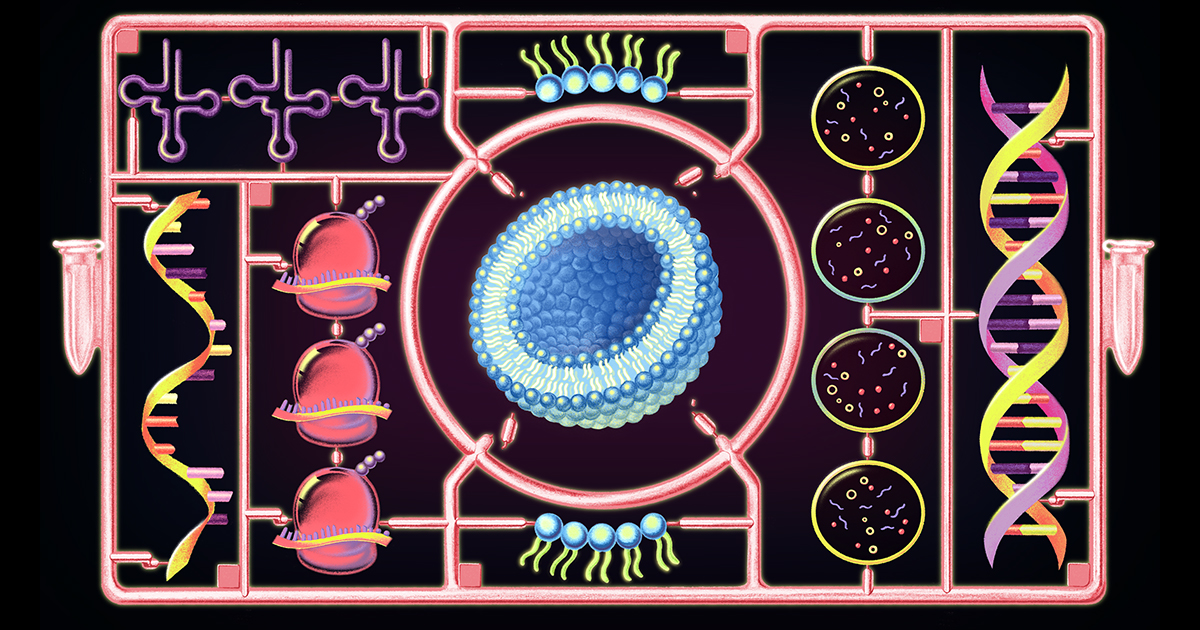
Scientists built a synthetic cell that combines more lifelike properties than ever before — proof of concept that it’s possible to bring nonliving materials to life, or something close to it, in the lab.
For the First Time, a Cell Built From Scratch Grows and Divides | Quanta Magazine
Scientists built a synthetic cell that combines more lifelike properties than ever before — proof of concept that it’s possible to bring nonliving materials to life, or something close to it, in the lab.
Synthetic Biology of Plants and Microbes for Agriculture, Environment, and Future Applications
Agriculture is under pressure to provide food for a growing population and the feedstock required to drive the bioeconomy. Methods to breed and genetically modify plants are inadequate to keep pace. When engineering crops, traits are painstakingly introduced into plants one-at-a-time, combine unpredictably, and are continuously expressed. Synthetic biology is changing these paradigms with new genome construction tools, computer aided design (CAD), and artificial intelligence (AI). “Smart plants” contain circuits that respond to environmental change, alter morphology, or respond to threats. Further, the plant and associated microbes (fungi, bacteria, archaea) are now being viewed by genetic engineers as a holistic system. Historically, plant health has been enhanced by many natural and laboratory-evolved soil microbes marketed to enhance growth or provide nutrients, or pest/stress resistance. Synthetic biology has expanded the number of species that can be engineered, increased the complexity of engineered functions, controlled environmental release, and can assemble stable consortia. New CAD tools will manage genetic engineering projects spanning multiple plant genomes (nucleus, chloroplast, mitochondrion) and the thousands of genomes of associated bacteria/fungi. This review covers advanced genetic engineering techniques to drive the next agricultural revolution, as well as push plant engineering into new realms for manufacturing, infrastructure, sensing, and remediation.

Summary of "Improvising to cellular playgrounds in Realtalk", Aug 2023
FF26 – This is not the tech I signed up for! – An approach to permacomputing - Darío Gutiérrez Mori
Dean W. Ball on Twitter / X
Ok two more:1. AI will enable the design of custom enzymes that can catalyze industrial processes and chemical manufacturing faster than existing methods. In some cases this will make existing chemicals cheap enough that it becomes possible to use them for totally new use… https://t.co/jL3bNm0s9w— Dean W. Ball (@deanwball) October 9, 2026
Accelerating life sciences research
Discover how a specialized AI model, GPT-4b micro, helped OpenAI and Retro Bio engineer more effective proteins for stem cell therapy and longevity research.

Google DeepMind CEO Demis Hassabis: The Path To AGI, Deceptive AIs, Building a Virtual Cell
How Life Works: A User’s Guide to the New Biology
“Bold and intriguing.”—Wall Street Journal • “Penetrating. . . . Provocative and profound.”—Publishers Weekly (starred review) • “Offers plenty of food for thought.”—Kirkus Reviews (starred review) “Ball’s marvelous book is both wide-ranging and deep. . . . I could not put it down.”—Siddhartha Mukherjee, author of The Song of the Cell and the Pulitzer Prize–winning The Emperor of All Maladies A new, cutting-edge vision of biology that revises our understanding of what life itself is, how to enhance it, and what possibilities it offers. Biology is undergoing a quiet but profound transformation. Several aspects of the standard picture of how life works—the idea of the genome as a blueprint, of genes as instructions for building an organism, of proteins as precisely tailored molecular machines, of cells as entities with fixed identities, and more—have been exposed as incomplete, misleading, or wrong. In How Life Works, Philip Ball explores the new biology, revealing life to be a far richer, more ingenious affair than we had guessed. Ball explains that there is no unique place to look for an answer to this question: life is a system of many levels—genes, proteins, cells, tissues, and body modules such as the immune system and the nervous system—each with its own rules and principles. How Life Works explains how these levels operate, interface, and work together (most of the time). With this knowledge come new possibilities. Today we can redesign and reconfigure living systems, tissues, and organisms. We can reprogram cells, for instance, to carry out new tasks and grow into structures not seen in the natural world. As we discover the conditions that dictate the forms into which cells organize themselves, our ability to guide and select the outcomes becomes ever more extraordinary. Some researchers believe that ultimately we will be able to regenerate limbs and organs, and perhaps even create new life forms that evolution has never imagined. Incorporating the latest research and insights, How Life Works is a sweeping journey into this new frontier of the life sciences, a realm that will reshape our understanding of life as we know it.
Edison Scientific Assembles Millennium Problems for Biology | Samuel G. Rodriques posted on the topic | LinkedIn
In light of the progress in mathematics, we at Edison Scientific and FutureHouse have assembled a set of Millennium Problems for Biology. They are chosen to be very hard to solve but very easy to validate in a simple laboratory environment. Any of these, if solved, would mark a major advance in biotechnology, and most of them would contribute materially towards curing disease. These are, in some sense, the “last reasonable eval” for AI in biology. This was work primarily by Michaela Hinks and myself, with contributions from many others. Short descriptions below. The full descriptions of the problems with acceptance criteria are at millenniumproblems.bio. Share more if you have ideas. If they meet our criteria, we’ll add them to our list (with attribution and permission). A few notes on exclusion/inclusion criteria: -We placed a major emphasis on ease of validation, so challenges like “solve aging” are omitted. These should all be validatable in a standard wet lab in a short period of time (days, maybe a week or two.) -We placed a major emphasis on ensuring grading would be as objective as possible, so many great basic science mysteries are also omitted, because it would be very challenging to tell when the mystery was “solved.” (E.g., “uncover the function of the Vault protein,” or “explain how the Oxytricha genome works.”) -We placed a major emphasis on ensuring the problems would be understandable to anyone with a basic biology background, so some highly technical but very important challenges were also omitted. Finally, we anticipate that some problems may require edits in response to community feedback. If you think we got them wrong, please send the feedback, and we will collate and update. Thanks to Adam Marblestone, Michael Baym, Erika DeBenedictis, and Tony Kulesa for reviews. | 52 comments on LinkedIn

Emerging Tech: Navigating the Risks and Opportunities of Synthetic Data for AI Solutions
Gartner Research on Emerging Tech: Navigating the Risks and Opportunities of Synthetic Data for AI Solutions

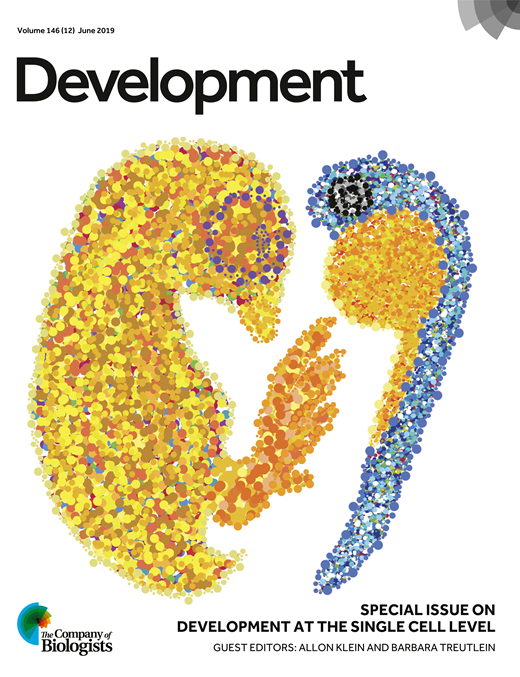
The evolving concept of cell identity in the single cell era
Summary: This Spotlight explores emerging technologies that are enabling the systematic and unbiased quantification of cell identity, and how these efforts will enable the construction of high-resolution, dynamic cell atlases.
How to be a wise optimist about science and technology?
I believe the central problem of the 21st century is how civilization co-evolves with science and technology. As our understanding of the world deepens, it enables technologies that confer ever more power to both improve and damage the world. There's currently much public discussion of this in the context of artificial superintelligence (ASI). However, it's a fundamental recurring challenge, affecting areas including climate change, genetic engineering, nanotechnology, geoengineering, brain-computer interfaces, and many more. How can we best benefit from science and technology, while supplying safety sufficient to ensure a healthy, flourishing civilization?
How Open Protocols Are a Key Part of Regenerative Technology - Identity Woman
TLDR Infographic: What does it actually take for digital technology to be regenerative? The question matters because most of the digital tools being adopted right now in bioregional movements, community organizing, regenerative finance, and the broader systemic-change ecosystem are being chosen without anyone asking it carefully. The slide decks are beautiful. The intentions are sincere. […]

📚 STEM - Tech

Deep dives in technology
Neurotech (by Teon) — Semble
Women in Tech (by Bee 🐝) — Semble
AI (+ nuance) (by Bee 🐝) — Semble