

/pic6548992.jpg)
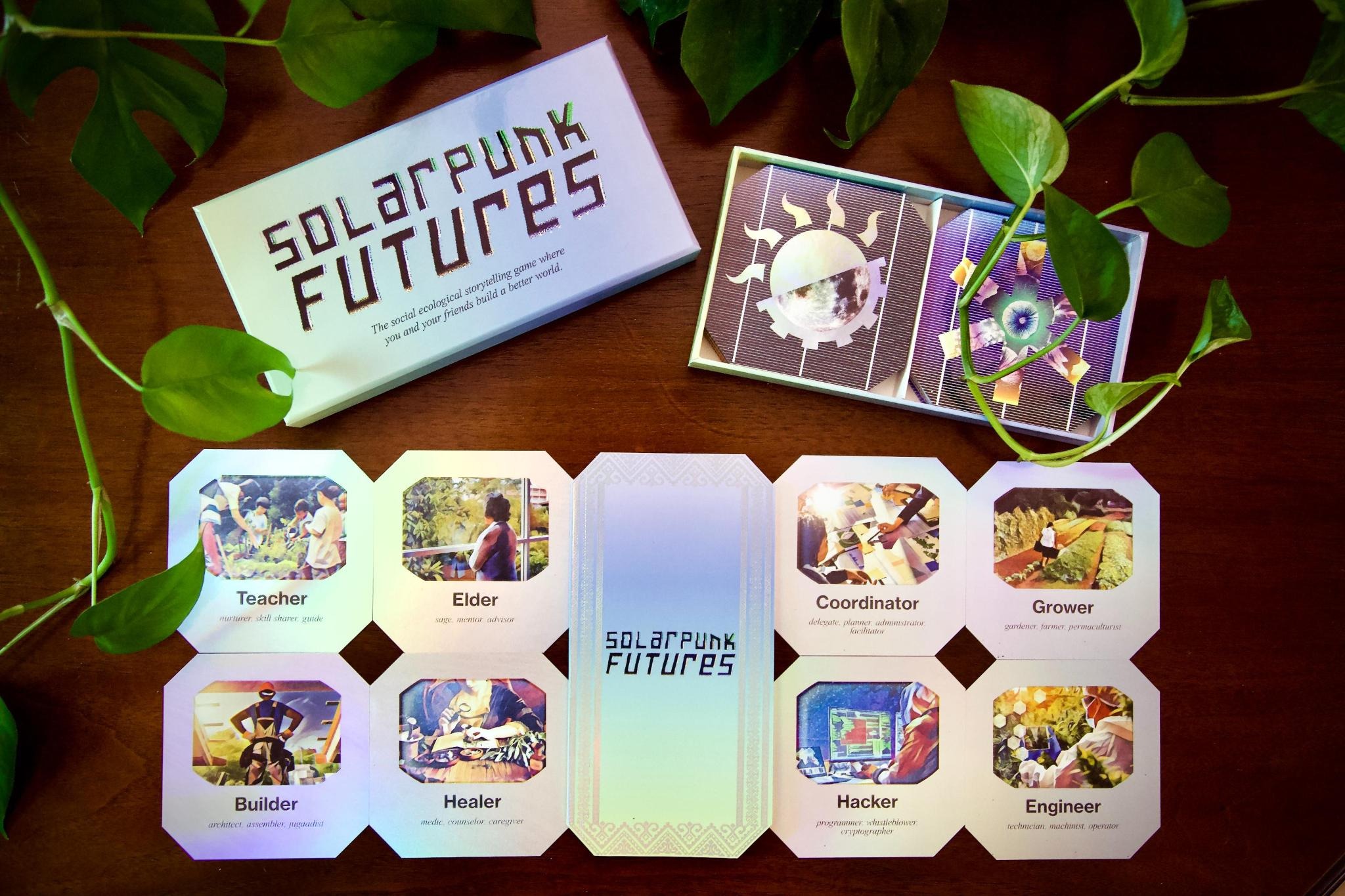
Players remember the stories of how their Ancestors built a Utopia.
Solarpunk Futures
The social ecological storytelling game where you and your friends build a better world.

A Solarpunk Manifesto
William Joseph Gillam A Solarpunk Manifesto Turning Imaginary into Reality 10 August 2023
Solarpunk, realism, dystopia: a rant – @the-lemonaut on Tumblr
💬 81 🔁 6317 ❤️ 9266 · Solarpunk, realism, dystopia: a rant · Hopefully this is helpful to someone out there 🌸 You can find the Prompts podcast here, I drew some of the covers :D Also check out…

Utopian media studies: Introduction
This introduction to the special issue ‘Utopian Media Studies’ sketches a framework for how media studies can become a site of utopian praxis, research and experimentation. It first addresses three apprehensions media scholars might have about the notion of utopian media studies and its appeal to a loaded concept like ‘utopia’. The introduction then outlines five sensibilities to explicate the nature and significance of this special issue’s contribution to the field: a utopian media studies must adopt an ecological approach to media; recognize and be invigorated by limits; work toward the technological liberation of time; connect imagination with practice; and emphasize and enable conditions for transmitting hope. Lastly, the introduction considers Ruth Levitas’s distinction between utopia’s archaeological, ontological, and architectural mode to map some of the concrete ways in which existing media studies research is doing utopian work that aligns with these sensibilities. In connecting work that operates in these modes with the various contributions to this special issue, the introduction reveals the utopian currents that already run through media studies as a discipline and opens up new conceptual and methodological approaches to studying and modeling digital utopias.
Utopian media studies: Introduction
This introduction to the special issue ‘Utopian Media Studies’ sketches a framework for how media studies can become a site of utopian praxis, research and experimentation. It first addresses three apprehensions media scholars might have about the notion of utopian media studies and its appeal to a loaded concept like ‘utopia’. The introduction then outlines five sensibilities to explicate the nature and significance of this special issue’s contribution to the field: a utopian media studies must adopt an ecological approach to media; recognize and be invigorated by limits; work toward the technological liberation of time; connect imagination with practice; and emphasize and enable conditions for transmitting hope. Lastly, the introduction considers Ruth Levitas’s distinction between utopia’s archaeological, ontological, and architectural mode to map some of the concrete ways in which existing media studies research is doing utopian work that aligns with these sensibilities. In connecting work that operates in these modes with the various contributions to this special issue, the introduction reveals the utopian currents that already run through media studies as a discipline and opens up new conceptual and methodological approaches to studying and modeling digital utopias.

Why We Need the Jetsons and Solarpunk
“We wanted flying cars, instead we got 140 characters.” Peter Thiel’s famous lament captures the disappointment of those of us raised on mid-20th-century technological optimism.
Roblox Dream Diary
A series of microgames made over the course of one year. Walk through a lit doorway to be transported to that dream. Some dreams have buttons in the lower right corner that will transport you back; those that do not will do so automatically. In order of construction; Shell Museum Atrium Tornadoes Toro Cany## ###es Pluto Boat in the Cottonwoods Neon Industrial Channel Train It's Time (cw: themes of death of ##### ####) Herons If you want a place to start I'd suggest; Pluto, Train, It's Time, Herons, or Domes.
Does Silicon Valley dream of Philip K Dick?
[FREE TO READ] His 1960s science-fiction visions are a guide to our age of erratic billionaires, wild space fantasies and glitchy, invasive technology

Trust — Utopian conspiracy
A network of utopian conspirators, a sandbox for their creative, technical and critical projects, and a site of experimentation for new ways of learning together.

Culture x Capital: The end of forgetting
Comprehensive life logging, federated recall, and the promise (and peril) of remembering everything.
Tarot Based Narrative Generation - Anne Sullivan [PROCJAM 2018]
Who Owns the Future? Ways to Understand Power, Technology, and the Moral Commons
Thomas Meier and Kristina Khutsishvili argue for a reorientation to revive the democratic lifeblood of shared meaning, moral cultivation, and civic agency.

Pace Layers 02025 Annual Journal
Long Now’s annual print journal explores the ancient past and distant future of the present moment through essays, interviews, fiction, poetry, and visual art. The journal takes its name and shape from Long Now cofounder Stewart Brand’s pace layers framework — a tool for thinking about how civilizations work. [Learn more about Pace Layers](https://longnow.org/pacelayers/)

forum.secondrenaissance.net/t/developmental-spaces-yet-an… Discussing Solarpunk games and developmental spaces #solarpunk #games

Developmental Spaces Yet Another Perspective
forum.secondrenaissance.net