How roleplaying games and fantasy fiction confounded the FBI, confronted the law, and led to a more open web
How the FBI Stumbled in the War on Cybercrime — ProPublica
In this excerpt from “The Ransomware Hunting Team: A Band of Misfits’ Improbable Crusade to Save the World From Cybercrime,” the authors reveal how unprepared the nation’s top federal law enforcement agency was to combat online crime.

Opinion | An Online Loophole That Promotes Violence
Section 230 shouldn’t preclude liability for algorithms that push harmful content.
Frontiers | Cyber-mobbing, technology-facilitated abuse and online violence
This article collection will explore the pressing issues of cyber-mobbing, technology-facilitated abuse and online violence, including online abuse, stalking...

The Essential Cyberpunk Reading List
It’s now been over three decades since cyberpunk first exploded, and in that time we’ve seen gorgeous movies, read fascinating books, and seen dozens of

The Essential Cyberpunk Reading List
It’s now been over three decades since cyberpunk first exploded, and in that time we’ve seen gorgeous movies, read fascinating books, and seen dozens of
#cybersafety #ageverification #privacy #minors #ai | Parry Aftab
Internet Age-Verification Causing More Risks than It’s Worth This is not a new issue. Regulators and policymakers have raised it for the last 28 years as the way the keep kids safer online. They compare it to having to flash an ID to purchase regulated content or items (porn, cigarettes, alcohol, restricted medications, age-restricted movies, amusement rides, etc.) But verification online is very different and vastly riskier than flashing an ID in real life. For one, it’s collecting personally-identifiable information about our kids. For two, it puts that information in the too-often untrustworthy digital hands of tech companies. For three, while porn, alcohol and regulated drugs may be a clear-cut case for restricting access to adults, access to the Internet is very different. Yet, regulations begun in the UK and adopted globally have begun a weighted cybersafety approach that, in my humble opinion, prefers excluding young people from digital technology over teaching the cybersafety and digital life skills. That, in my 32 years of work in the fields of cybersafety and protection of minors online, was and remains a mistake. One of my best known quotes, repeated in Congressional and state legislative testimony and in the media is: “The greatest single risk our children face online is being denied access. We have solutions for everything else.” (my testimony before the FTC) Some proponents of age-verification have opted to denying them access unless they give up confirmable personally-identifiable info, such as selfies, feeding AI with PII, and govt or school credentials. I argue that this gives social networks, game providers and digital app operators a wealth of PII to be used for profiling, marketing and collecting far too much. With their privacy at stake, too often incompetent, malicious and greedy producers and mega-tech industry players, can’t and shouldn’t be trusted with the personal info of our most vulnerable - our kids. And AI will now be tasked with collecting everything it can find about our kids to be able to “age-verify.” (It’s ability to age-verify is less reliable with youth as their data-sets are more limited.) I served on a task force appointed by 49 state attorneys general, charged to research and weigh-in on this issue. We concluded that age-verification wasn’t feasible. While this task force was formed many years ago, with the exception of a fortified AI, not much as changed. Our children’s privacy remains, or should remain, paramount. We have robust filtering and blocking technologies. The adult industry has adopted an age-gated model. And parents can restrict access using device-specific tools. And, many well-intentioned age-verification laws were adopted too quickly for thoughtful discourse. Or by governments more prone to censorship/content restrictions. I fear in our quest to protect our kids we have thrown our babies out with the bath water. #cybersafety #ageverification #privacy #minors #AI

How I Hacked Into One of the Most Popular Dating Websites
A story of poor backend security in midst of scandals and new regulations.

How AI is exacerbating technology-facilitated violence against women and girls
This paper examines how artificial intelligence is accelerating technology-facilitated violence against women and girls—from deepfakes and automated hate to sextortion, impersonation, and large-scale disinformation. It outlines emerging risks, legal and ethical challenges, and opportunities for prevention, while calling for urgent regulation, safety-by-design, and coordinated global action to ensure that AI technologies advance, rather than undermine, women’s rights and safety.

Surveilling the Gamers: Privacy Impacts of the Video Game Industry
With many million users across all age groups and income levels, video games have become the world’s leading entertainment industry. Behind the fun experience t


AI Therapy Bots Are Conducting 'Illegal Behavior,' Digital Rights Organizations Say
Exclusive: An FTC complaint led by the Consumer Federation of America outlines how therapy bots on Meta and Character.AI have claimed to be qualified, licensed therapists to users, and why that may be breaking the law.

How the Government Quietly Silenced the Internet (And Got Away With It) (ft Siri Dahl)
Temporarily Offline
A slightly unerving game on technological violence induced by pseudosimplicity and increasingly awful UI.
Online brothels, sex robots, simulated rape: AI is ushering in a new age of violence against women | Laura Bates
When social media first exploded, we missed our chance to protect women and girls. Now history is repeating itself, says Laura Bates of Everyday Sexism

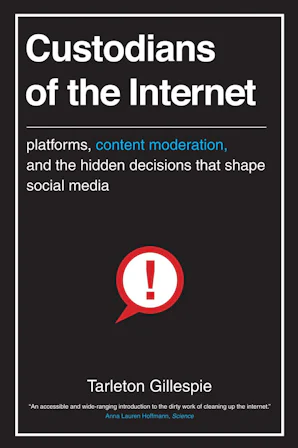
Custodians of the Internet
A revealing and gripping investigation into how social media platforms police what we post online—and the large societal impact of these decisions Most use...
Unpacking the Public Health Turn in Internet Regulation
Measures designed to protect children from digital harms are ushering in a public health approach to internet regulation, writes Ramiro Álvarez Ugarte.