


Anna Merlan has made a distinguished journalistic career out of covering conspiracy theories, particularly far-right ones, for Gizmodo Media; her book-length account of conspiratorial thinking, Republic of Lies: American Conspiracy…
The Plot to Subvert an Election: Unraveling the Russia Story So Far (Published 2018)
For two years, Americans have tried to absorb the details of the 2016 attack: spies, leaked emails, social media fraud — and President Trump’s claims that it’s all a hoax. The Times explores what we know and what it means.

When Do Parties Lie? Misinformation and Radical-Right Populism Across 26 Countries - Petter Törnberg, Juliana Chueri, 2026
The spread of misinformation has emerged as a global concern. Academic attention has recently shifted to emphasize the role of political elites as drivers of mi...

The Invention of the Conspiracy Theory on Biden and Ukraine
How a conservative dark-money group that targeted Hillary Clinton in 2016 spread the discredited story that may lead to Donald Trump’s impeachment.

Elizabeth Warren, the Democrats and the real problem with the "fake news media"
Mainstream media's vacuous, sexist and false responses to Warren makes clear how thoroughly it's been hacked

Elena Rossini 🌈 (@_elena@mastodon.social)
🚨 New post alert 📝 A deep dive into #WSocial with some fascinating findings: candid statements about their motives, a Greta Thunberg connection, potential AI plans (!!!) Why write about it again? I still had so many questions after publishing my first article. I spent 3 weeks watching every interview I could find and connecting the dots. I hope you'll enjoy this piece: 🔗 : https://blog.elenarossini.com/the-untold-story-about-w-social-unconventional-beginnings-strategic-pitches-conflicting-signals/ #blog #longread #privacy #DataMining #Europe
On Western Terrorism: From Hiroshima to Drone Warfare
In On Western Terrorism Noam Chomsky, world renowned dissident intellectual, discusses Western power and propaganda with filmmaker and investigative journalist Andre Vltchek. The discussion weaves together a historical narrative with the two men's personal experiences which led them to a life of activism. The discussion includes personal memories, such as the New York newsstand where Chomsky began his political education, and broadens out to look at the shifting forms of imperial control and the Western propaganda apparatus. Along the way the discussion touches on many countries of which the authors have personal experience, from Nicaragua and Cuba, to China, Chile, Turkey and many more. A blast of fresh air which blows away the cobwebs of propaganda and deception, On Western Terrorism is a powerful critique of the West's role in the world which will inspire all those who read it to think independently and critically.
Debunking the smear campaign against the Cornell Jane Doe
Authorities, media outlets, and pundits are lying about this woman. But only her credibility is getting judged.

CFP: Religion, Politics, and Cognitive Warfare: Information, Interpretation, Conspiracy, and the Struggle for Reality
The Journal for Cultural and Religious Theory (JCRT) invites proposals for an online conference entitled Religion, Politics, and Cognitive Warfare: Information, Interpretation, Conspiracy, and the Struggle for Reality. The proceedings will be considered for publication in a special issue of the JCRT. This conference investigates how beliefs, paranoia, and conspiratorial modes of knowing shape a contemporary cognitive battlespace in which actors struggle to define truth, authority, and reality itself. Drawing on Michel Foucault's Lectures on the Will to Know and Julia Kristeva's This Incredible Need to Believe (2024), we focus on practices of selective fact use and "truth-selecting" that construct alternative epistemic orders while claiming privileged access to what is "really" going on. Rather than treating conspiracy thinking as merely political or psychological, the conference foregrounds its religious dimensions: faith in hidden powers, moral dualism, apocalyptic expectation, and hermeneutical struggle over revelatory access to the real. Conspiracy cultures routinely reproduce theological structures of knowing—visions of salvation and corruption, truth and deception, initiation and blindness. At the same time, new forms of "cognitive warfare" reframe these religious energies within state and platform attempts to govern perception, attention, and trust. Artificial intelligence, algorithmic media, and strategic information campaigns do not only deliver messages; they create digital ecologies in which suspicion becomes faith-like and revelation is continual. The conference organizers are seeking proposals of high academic quality that take a reflective and analytical approach to both general and specific topics with international appeal or focus. We encourage contributions from scholars of religious studies, philosophy, communication, sociology, security studies, psychology, media, and related fields. Submissions should engage religion as a dynamic force—conceptually, historically, or materially—within the cognitive battlespaces of our time. We encourage contributions from a spectrum of perspectives, approaches, and methodologies. We are not interested in papers that simply rehearse or promote particular conspiracies, or that use the conference as a platform for calling out disliked groups. We are not interested in polemics, jeremiad, or de facto advocacy pieces. Instead, we welcome theoretically informed and methodologically rigorous work that takes the religious and epistemic dimensions of cognitive conflict seriously as objects of critical inquiry.
Journalists still wrongly think the U.S. is different
"Political journalism needs to wean itself from right-wing agitators and call this period what it is: an erosion of democracy and attempts to radicalize large chunks of the electorate."
America’s Right-Wing Propaganda Problem Might Be Terminal - Dame Magazine
America’s descent into mass delusion isn’t happenstance. The demise of courageous journalism isn’t a happy accident. Its replacement with engagement-chasing infotainment and propaganda isn’t an error. It’s a global assault on reason and informed consensus, and corporations and authoritarian bullies like Donald Trump are both architects and benefactors. For decades, academics warned anybody who’d listen
Deep Storytelling: Collective Sensemaking and Layers of Meaning in U.S. Elections
Misinformation and disinformation about elections remain pressing concerns for researchers, policymakers, and the public. Critics, however, argue that fears surrounding these issues are exaggerated due to a lack of evidence of impact. This debate highlights the challenges inherent in assessing the impacts of misinformation, as the drivers of false and misleading content often exist in the context of a specific claim. To address this issue, we examined false and misleading information surrounding the 2020 and 2022 U.S. national elections, focusing on the contextual features of online conversations that fueled various rumors. We developed two qualitative codebooks, creating the second after realizing that the first, which labeled individual tweets, failed to capture broader rumoring dynamics. By integrating multi-layered qualitative coding with thematic analysis and quantitative visualizations, we show how influencers, political elites, and audiences collaboratively told deep stories from 2020 through 2022. As these stories were told, audiences interpreted events in 2022 through the lens of the 2020 story, guided by influencers' cues, leading to an evolution in storytelling style between the two election cycles. This ongoing performance was tailored to align with the incentive structures, affordances, and attention economy of social media. We combine deep stories with theories of collective sensemaking and rumoring, creating a framework to better assess the contextual features surrounding false and misleading information.

Deepfakes, Elections, and Shrinking the Liar’s Dividend
Heightened public awareness of the power of generative AI could give politicians an incentive to lie about the authenticity of real content.
The Strange and Terrifying Ideas of Neoreactionaries
Author Elizabeth Sandifer explains the dangerous ideas of the far-right neoreactionaries, who have ties to Silicon Valley and a hostility toward democracy.

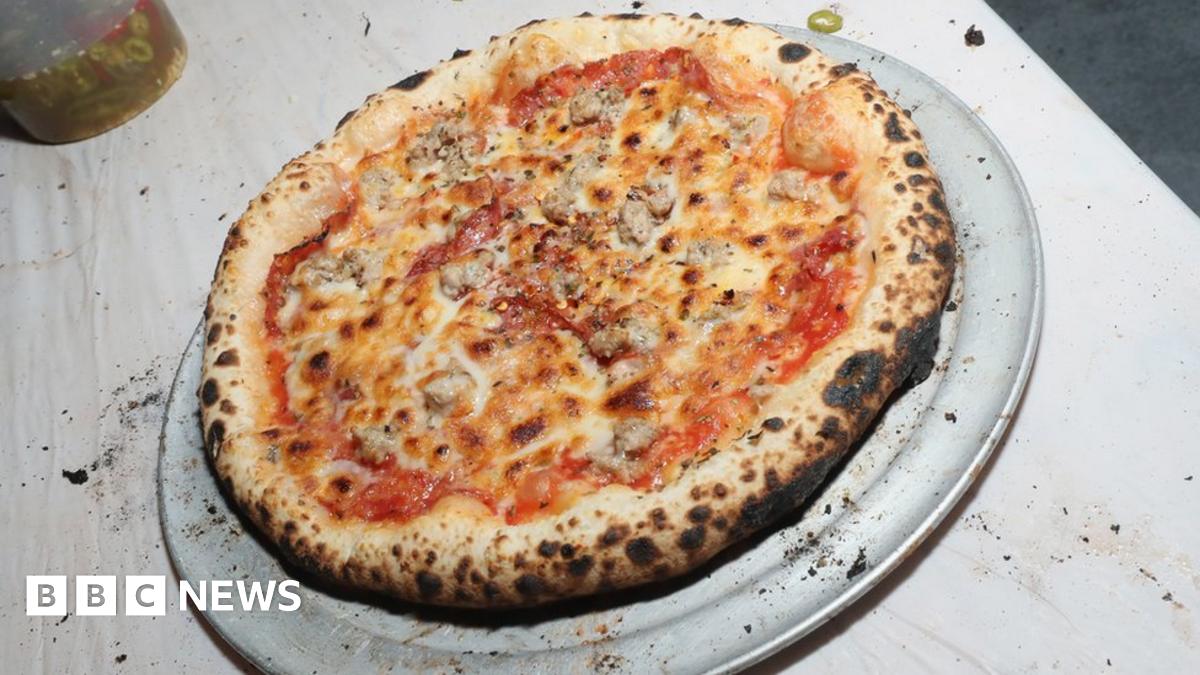
The saga of 'Pizzagate': The fake story that shows how conspiracy theories spread
Thousands of people are spreading a false rumour about a Washington pizza restaurant and a child sex ring. But why?
Leveraging Motivations to Curb Misinformation: Self-Affirmation Reduces the Appeal of Political Conspiracy Theories
Abstract: In an era where digital misinformation poses significant challenges to societal well-being, this study explores a novel approach to preserving information integrity by addressing the motivational underpinnings of conspiracy theory engagement. As conspiracy theories proliferate online, traditional fact-checking and debunking strategies often prove ineffective due to the self-reinforcing nature of conspiracy theories. This research investigates whether a priori self-affirmation interventions can reduce individuals’ propensity to engage with conspiracy theories by preemptively fulfilling the ego-protective function these theories often serve. Using a randomized experiment ( N = 451), this study finds that participants who completed a self-affirmation task were less likely to read politicized conspiracy theories, and those who chose to read a conspiracy theory reported greater feelings of affirmation than those who did not. Thus, bolstering individuals’ self-integrity may offer an opportunity to mitigate the appeal of politicized conspiracy theories.

Convention leaders find out that lying to cover up a PR problem makes a bigger PR problem. #MephitZooGate dogpatch.press/2026/06/29/anthroverse-resign…

Anthroverse Vice Chair forced to resign, retract false claims in Mephit Furmeet zoophile coverup.
dogpatch.press