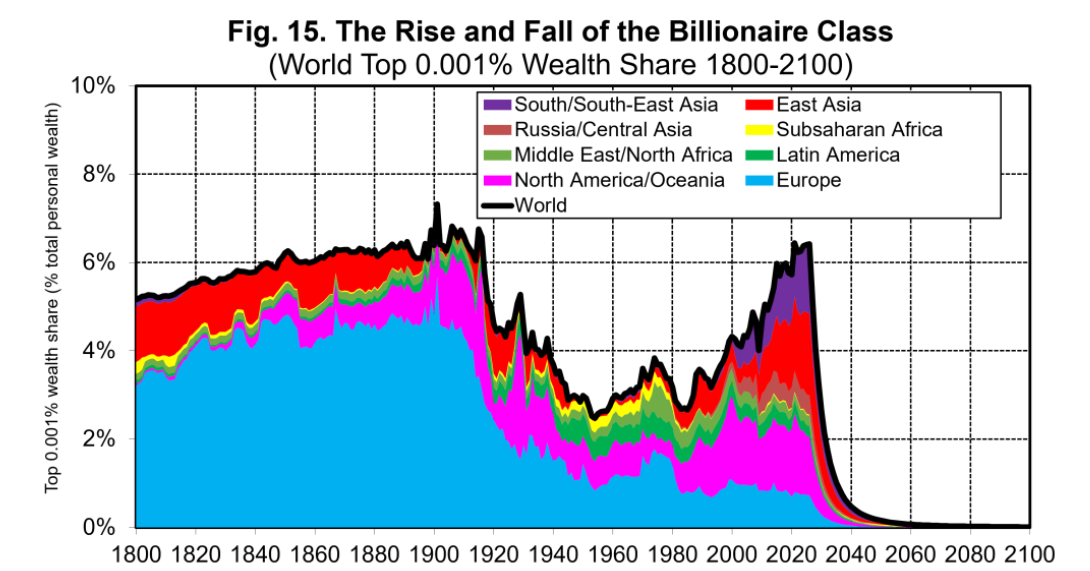


le World Inequality Lab (WIL) a lancé le « Global Justice Project », un programme destiné à « stimuler la recherche, l'élaboration des
The Divide — Jason Hickel
The Divide: A Brief Guide to Global Inequality and its Solutions Penguin Random House UK, 2017

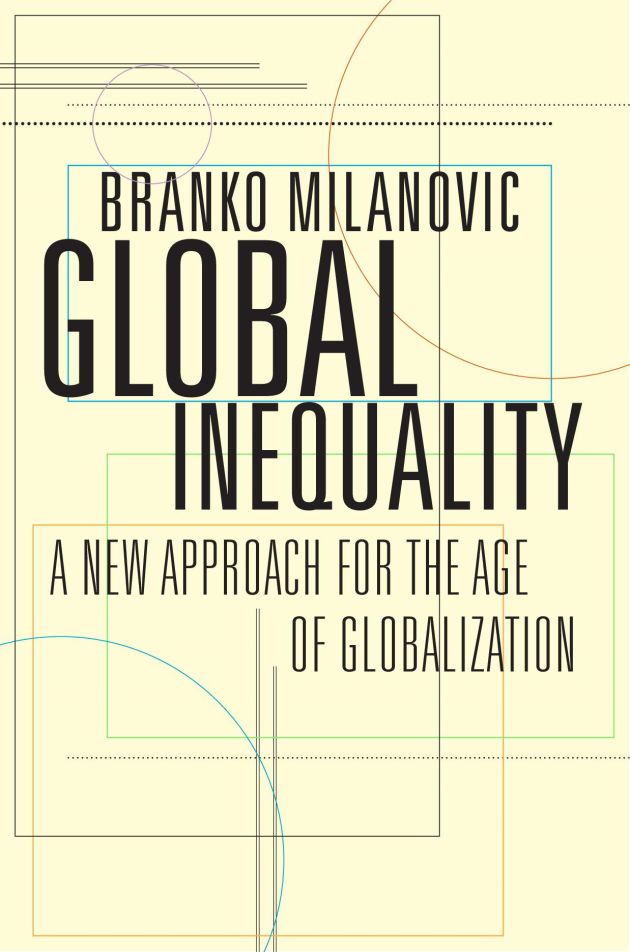
Global Inequality — Harvard University Press
Winner of the Bruno Kreisky Prize, Karl Renner InstitutA Financial Times Best Economics Book of the Year An Economist Best Book of the Year A Livemint Best Book of the YearOne of the world’s leading economists of inequality, Branko Milanovic presents a bold new account of the dynamics that drive inequality on a global scale. Drawing on vast data sets and cutting-edge research, he explains the benign and malign forces that make inequality rise and fall within and among nations. He also reveals who has been helped the most by globalization, who has been held back, and what policies might tilt the balance toward economic justice.“The data [Milanovic] provides offer a clearer picture of great economic puzzles, and his bold theorizing chips away at tired economic orthodoxies.”—The Economist“Milanovic has written an outstanding book…Informative, wide-ranging, scholarly, imaginative and commendably brief. As you would expect from one of the world’s leading experts on this topic, Milanovic has added significantly to important recent works by Thomas Piketty, Anthony Atkinson and François Bourguignon…Ever-rising inequality looks a highly unlikely combination with any genuine democracy. It is to the credit of Milanovic’s book that it brings out these dangers so clearly, along with the important global successes of the past few decades.—Martin Wolf, Financial Times
Design Justice: Community-Led Practices to Build the Worlds We Need
An exploration of how design might be led by marginalized communities, dismantle structural inequality, and advance collective liberation and ecological su
Design Justice
An exploration of how design might be led by marginalized communities, dismantle structural inequality, and advance collective liberation and ecological survival.

Design Justice
An exploration of how design might be led by marginalized communities, dismantle structural inequality, and advance collective liberation and ecological survival.

IDS Annual Lecture 2026 with Jason Hickel
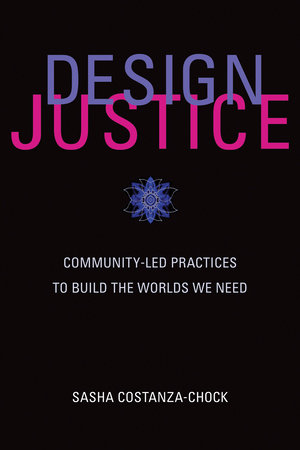
Design Justice: Community-Led Practices to Build the Worlds We Need
An exploration of how design might be led by marginalized communities, dismantle structural inequality, and advance collective liberation and ecological survival. What is the relationship between design, power, and social justice? “Design justice” is an approach to design that is led by marginalized communities and that aims expilcitly to challenge, rather than reproduce, structural inequalities. It has emerged from a growing community of designers in various fields who work closely with social movements and community-based organizations around the world. This book explores the theory and practice of design justice, demonstrates how universalist design principles and practices erase certain groups of people—specifically, those who are intersectionally disadvantaged or multiply burdened under the matrix of domination (white supremacist heteropatriarchy, ableism, capitalism, and settler colonialism)—and invites readers to “build a better world, a world where many worlds fit; linked worlds of collective liberation and ecological sustainability.” Along the way, the book documents a multitude of real-world community-led design practices, each grounded in a particular social movement. Design Justice goes beyond recent calls for design for good, user-centered design, and employment diversity in the technology and design professions; it connects design to larger struggles for collective liberation and ecological survival. The open access edition of this book was made possible by generous funding from Knowledge Unlatched and the MIT Press Frank Urbanowski Memorial Fund.

IDS Annual Lecture 2026 with Jason Hickel
The Origin and Future of Economic Inequality
Re-enchanting the world : feminism and the politics of the commons
xviii, 227 pages ; 23 cm; "Silvia Federici is one of the most important contemporary theorists of capitalism and feminist movements. In this collection of her work spanning over twenty years, she provides a detailed history and critique of the politics of the commons from a feminist perspective. In her clear and combative voice, Federici provides readers with an analysis of some of the key issues and debates in contemporary thinking on this subject. Drawing on rich historical research, she maps the connections between the previous forms of enclosure that occurred with the birth of capitalism and the destruction of the commons and the "new enclosures" at the heart of the present phase of global capitalist accumulation. Considering the commons from a feminist perspective, this collection centers on women and reproductive work as crucial to both our economic survival and the construction of a world free from the hierarchies and divisions capital has planted in the body of the world proletariat. Federici is clear that the commons should not be understood as happy islands in a sea of exploitative relations but rather autonomous spaces from which to challenge the existing capitalist organization of life and labor"--; Foreward by Peter Linebaugh; Includes bibliographical references (pages198-216) and index; On primitive accumulation, globalization, and reproduction -- Introduction to the new enclosures -- The debt crisis, Africa, and the new enclosures -- China: breaking the iron rice bowl -- From commoning to debt: financialization, microcredit, and the changing architecture of capital accumulation -- Beneath the United States, the Commons -- Commons against and beyond Capitalism -- The University: a knowledge common? -- Feminism and the politics of the commons in an era of primitive accumulation -- Women's struggles for land in Africa and the reconstruction of the commons -- Women's struggles for land and the common good in Latin America -- Marxism, feminism, and the commons -- From crisis to commons: reproductive work, affective labor and technology, and the transformation of everyday life -- Re-enchanting the world: technology, the body, and the construction of the commons

The De|Center | Justice, Human Rights, and Tech
The De|Center is the home of the Design from the Margins methodology. We do deep work with decentered communities to make concrete changes to technology tools that address systemic injustice and advance human rights.

Impact environnemental de l’IA : le secrétaire général de l’ONU réclame la transparence
Le secrétaire général de l’ONU inaugure une initiative sur la transparence environnementale de l’IA et appelle globalement les secteurs polluants et les…

Féminisme en ligne : recherche, activisme et néolibéralisme. Entret...
Présentation Christina Scharff est professeure d’études culturelles (Culture and Subjectivity) et vice-doyenne des études doctorales en Arts & Humanités du King’s College London. Soutenue en 2009, ...

‘Self-termination is most likely’: the history and future of societal collapse
An epic analysis of 5,000 years of civilisation argues that a global collapse is coming unless inequality is vanquished

Eco-Furieuxses on Instagram: "BASTILLE DAY – RÉVOLUTION CLIMATIQUE 14 juillet – 15 h • Place de la Bastille, Paris Signe de ralliement : une couverture de survie sur les épaules en écho à la super initiative de @faiteslabriller Le 14 juillet, TOUT CHANGER SAUF LE CLIMAT rejoint la @marchedesolidarités internationaliste aux côtés de @laveritepouradama , @urgencepalestine et de dizaines d'autres collectifs pour affirmer une évidence : la justice climatique ne peut exister sans justice sociale, antiraciste et décoloniale. Face à l'effondrement climatique, aux inégalités, aux guerres, au racisme, au colonialisme, à l'autoritarisme et aux violences de l'appareil répressif, il est temps de reprendre le pouvoir. Nous refusons que les populations les plus vulnérables paient une crise provoquée par les industries fossiles et un modèle économique fondé sur l'exploitation du vivant. Nous exigeons des mesures immédiates pour protéger les travailleuses, les travailleurs et les personnes les plus exposées aux canicules, ainsi qu'un plan climatique ambitieux : sortie des énergies fossiles, réduction massive des émissions, accès universel à l'eau, au logement, à une alimentation saine : la mise en sécurité sociale des communs, avec un transfert réel du pouvoir vers les quartiers populaires, les territoires et les habitantes et habitants. Parce que la catastrophe climatique est aussi sociale et migratoire, nous défendons la liberté de circulation, le droit d’habiter dignement. Comme l'écrit @fatima_ouassak dans "Écologie pirate", il n'y aura pas d'écologie sans justice décoloniale. Le 14 juillet, faisons tomber les Bastilles du XXIᵉ siècle : le capital fossile, le racisme, le colonialisme, les frontières meurtrières, la répression et les privilèges. Vous ne pouvez pas être à Paris ? Rejoignez une mobilisation locale, participez aux rassemblements organisés près de chez vous le soir devant les préfectures via @alternatiba_ , ou engagez une "grève des achats". Construisons un rendez-vous chaque 14 du mois sous des formes complémentaires : rassemblements, marchés, grève des achats avec @les14sansachat Faisons de ce 14 juillet le début de la révolution du XXIe siècle. Graphisme par @eco.lolo"
831 likes, 68 comments - toutchangersaufleclimat on July 9, 2026: "BASTILLE DAY – RÉVOLUTION CLIMATIQUE 14 juillet – 15 h • Place de la Bastille, Paris Signe de ralliement : une couverture de survie sur les épaules en écho à la super initiative de @faiteslabriller Le 14 juillet, TOUT CHANGER SAUF LE CLIMAT rejoint la @marchedesolidarités internationaliste aux côtés de @laveritepouradama , @urgencepalestine et de dizaines d'autres collectifs pour affirmer une évidence : la justice climatique ne peut exister sans justice sociale, antiraciste et décoloniale. Face à l'effondrement climatique, aux inégalités, aux guerres, au racisme, au colonialisme, à l'autoritarisme et aux violences de l'appareil répressif, il est temps de reprendre le pouvoir. Nous refusons que les populations les plus vulnérables paient une crise provoquée par les industries fossiles et un modèle économique fondé sur l'exploitation du vivant. Nous exigeons des mesures immédiates pour protéger les travailleuses, les travailleurs et les personnes les plus exposées aux canicules, ainsi qu'un plan climatique ambitieux : sortie des énergies fossiles, réduction massive des émissions, accès universel à l'eau, au logement, à une alimentation saine : la mise en sécurité sociale des communs, avec un transfert réel du pouvoir vers les quartiers populaires, les territoires et les habitantes et habitants. Parce que la catastrophe climatique est aussi sociale et migratoire, nous défendons la liberté de circulation, le droit d’habiter dignement. Comme l'écrit @fatima_ouassak dans "Écologie pirate", il n'y aura pas d'écologie sans justice décoloniale. Le 14 juillet, faisons tomber les Bastilles du XXIᵉ siècle : le capital fossile, le racisme, le colonialisme, les frontières meurtrières, la répression et les privilèges. Vous ne pouvez pas être à Paris ? Rejoignez une mobilisation locale, participez aux rassemblements organisés près de chez vous le soir devant les préfectures via @alternatiba_ , ou engagez une "grève des achats". Construisons un rendez-vous chaque 14 du mois sous des formes complémentaires : rassemblements, marchés, grève des achats avec @les14sansachat Faisons de ce 14 juillet le début de la révolution du XXIe siècle. Graphisme par @eco.lolo".

Un démantèlement d’ampleur des lois environnementales est en cours en Europe, alerte un collectif d’ONG
Vingt mesures de dérégulation ou d’affaiblissement du droit de l’environnement ont été adoptées depuis 2024 au niveau de l’Union européenne ; trente nouveaux reculs sont en cours de discussion, ont comptabilisé les organisations non gouvernementales.