Strategies and tactics for staying productive.
Successful People With ADHD Superpowers
Explore stories of successful people who have harnessed their ADHD superpowers to achieve greatness.

How the hypercuriosity of ADHD may have helped humans thrive | Aeon Essays
ADHD isn’t merely a dysfunction. It’s best understood as an impulsive motivational drive for novel information

How the hypercuriosity of ADHD may have helped humans thrive | Aeon Essays
ADHD isn’t merely a dysfunction. It’s best understood as an impulsive motivational drive for novel information
ADHD and Entrepreneurship: Unlocking the Potential of Those Who Break the Mold
Having symptoms related to the hyperactive-impulsive presentation of ADHD can spur innovativeness, proactiveness and risk-taking.

Richard D. Bartlett on Twitter / X
I absolutely don't know what I'm talking about but I'm forming a theory of ADHD. consequence of an absence of parental leadership in training the kid how to pay attention— Richard D. Bartlett (@RichDecibels) October 28, 2026
ADHD and the Alexander Technique
Some people with ADHD have reported benefits in applying some of the ideas from my materials. What could be going on here? My interest in Alexander Technique’s potential relevance to ADHD arose because quite a few people with ADHD who have engaged with my materials have reported improvement in

Entrepreneurship and ADHD: Fast Brain, Fast Company?
Entrepreneurship and ADHD are connected in research — and the anecdotal success of businesses ranging from JetBlue to Kinko’s and beyond. Here, entreprene…

Treating Allergic Rhinitis Improves Symptoms of ADHD - ENTtoday
Children with allergic rhinitis and attention-deficit/hyperactivity disorder (ADHD) should initially be treated for their allergic rhinitis and then monitored for improvement in ADHD symptoms

Attention Deficit/Hyperactivity Disorder (ADHD) and Entrepreneurship
Several empirical papers have reported an association between attention deficit/hyperactivity disorder (ADHD) and facets of entrepreneurship. While much research has documented that adults with ADHD often are impaired in the occupational domain and have difficulties maintaining full-time employment, these recent papers intimate that entrepreneurship may represent an attractive occupational option for adults with ADHD. Indeed, adults with ADHD who are entrepreneurs anecdotally report benefiting in their entrepreneurial endeavors from their ADHD. From this perspective, symptoms and traits associated with ADHD might be beneficial, not impairing. This paper discusses ADHD theory and clinical characteristics of adults with ADHD and how both may translate to entrepreneurship, then reviews the existing data that have been published on the association between ADHD and entrepreneurial intention and entrepreneurial orientation. These data suggest that hyperactivity symptoms (and not inattentive symptoms) may be more responsible for the reported associations between ADHD and aspects of entrepreneurship. At this point, the research on ADHD and entrepreneurship is too nascent to propose practical implications, but this paper suggests potential directions for future research and policy.
The association between attention-deficit/hyperactivity (ADHD) symptoms and self-employment
Attention-deficit/hyperactivity (ADHD) symptoms have been associated with the decision to become self-employed. Although these symptoms are generally regarded as disadvantageous, there may also be a bright side. To our knowledge, however, there has been no systematic, epidemiological evidence to support this claim. This paper examines the association between ADHD symptoms and self-employment in a population-based sample from the STAGE cohort of the Swedish Twin Registry (N = 7208). For replication, we used a sample of Dutch students who participated in the Global University Entrepreneurial Spirit Students' Survey (N = 13,112). In the Swedish sample, we found a positive association with self-employment for both general ADHD symptoms [odds ratio (OR) 1.13; 95 % confidence intervals (CI) 1.04-1.23] and hyperactivity symptoms [OR 1.19; 95 % CI 1.08-1.32], whereas no association was found for attention-deficit symptoms [OR 0.99; 95 % CI 0.89-1.10]. The positive association between hyperactivity and self-employment was replicated in the Dutch student sample [OR 1.09; 95 % CI 1.03-1.15]. Our results show that certain aspects of ADHD, in particular hyperactivity, can have a bright side, as they are positively associated with self-employment.
How I got to 200 productive hours a month
A tested approach to improve your focus and productivity

ADHD and giftedness: a neurocognitive consideration of twice exceptionality
Current models of cognition and behavioral diagnosis emphasize categorical classification over continuous considerations of function and promote the "differential diagnosis" of various conditions according to observational criteria. However, an overemphasis on a purely behavioral, categorical approach to understanding human function fails to address the comorbidity of different disorders and does not include a consideration of overlapping levels of function, from "pathological" through "normal," to "gifted" or exceptional. The frequent co-occurrence of "gifted" and "pathological" function is thus difficult to understand from a corticocentric and purely behavioral and observational point of view. This article reviews "giftedness" in relation to the diagnosis of attention-deficit hyperactivity disorder, coexistence of which is termed "twice exceptional." It additionally considers problems in assessing these functions using current neuropsychological tests and methodologies that are presumably based upon a corticocentric model of cognition.
How to be more productive without forcing yourself
Imagine you could work more and be wildly productive. And you wouldn’t need to force yourself to work.
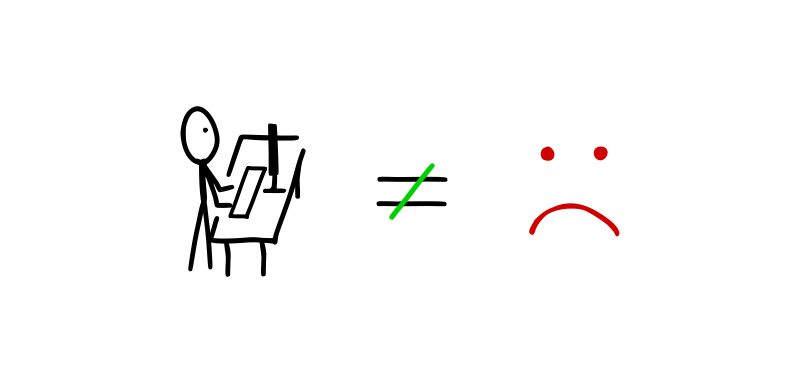
Why I Procrastinate
A look into me, my awful procrastination habit, and how I fixed it. (spoiler alert: it was ADHD)

ADHD symptoms, entrepreneurial passion, and entrepreneurial performance
Recent studies have substantially enhanced our understanding of attention deficit and hyperactivity disorder (ADHD) in entrepreneurship—articulating the theoretical relevance of ADHD-type traits in entrepreneurship and confirming the positive linkages between ADHD symptoms/diagnosis and entrepreneurial intentions and behavior. However, how and why some people with ADHD symptoms run successful ventures, while other entrepreneurs fail to perform well, is still not well established. Our study builds on a Gestalt perspective that integrates person–environment fit and broaden-and-build theorizing, and proposes that strong positive emotions enable entrepreneurs with ADHD symptoms (at the subclinical level) to mitigate/reinforce the effect of ADHD’s trait-specific weaknesses/strengths to achieve entrepreneurial performance. Relying on fuzzy-set methodology, our findings indicate that for entrepreneurs with ADHD symptoms, entrepreneurial performance occurs when they simultaneously experience passion for founding and developing. This passion configuration is unique to successful ADHD-type entrepreneurs. As such, this study offers novel theoretical and empirical insights as well as implications for practitioners.