Lately, I've been talking websites into existence. Not metaphorically, but actually sitting in important meetings with people — clients, collaborators, my wife, friends, neighbors — watching real websites materialize in front of us as we converse. I've been half-jokingly call it mouth coding, and
Disquiet – Listening to culture. Playing with audio. Sounding out technology. Composing in code.
At the end of each week, I usually collate a lightly edited collection of recent comments I’ve made on social media, which I think of as my public scratch pad. I tag on what books I may have finished reading. Knowing I’ll revisit my social media posts, I’ve found, serves as a positive and mellowing influence on my online activity. I mostly hang out on Mastodon (at post.lurk.org/@disquiet), and I’m also trying out a few others. And I generally take weekends off social media.
From Space, to Time
This post is the text version of a talk I’ve been giving at several conferences (and I plan to give it a couple more times). I have spent many years observing and building things on the web and this is one of the main trends I’ve been…
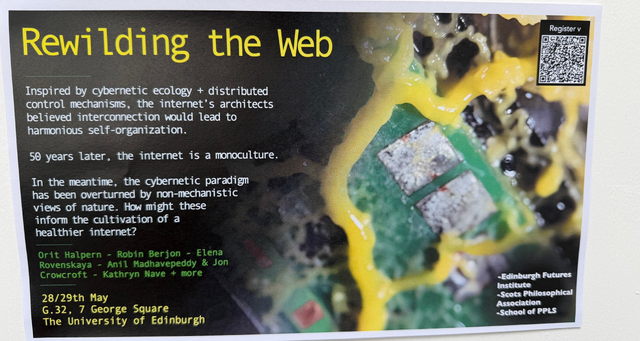
Rewilding the Web: my workshop report from Edinburgh
Notes from a wonderfully interdisciplinary Edinburgh workshop on 'Rewilding the Web', ranging coopetition and biological variety through the philosophy of self-organisation, polycrisis governance, protopian science fiction, and moderation seen through the lens of artisanal cheese.

AI code and software craft - alex wennerberg
Much has been said about audio, video and text "slop": low-quality, AI-generated content that has proliferated on the internet since the release of publicly-accessible AI models. Garbage content has always existed online, but the novelty of AI is that it has made its generation orders of magnitude less labor-intensive. For anyone who lacks a discerning eye, or is doing some task where discernment simply does not matter, AI has become a sufficient replacement for human hands.
Social Media Is Now Parasocial Media
When practitioners used the term “social media” to describe the internet tools that emerged in the mid-aughts, they were giving a name to the kinds of platforms and protocols that allowed people to socialize with friends and communities of interest by using digital technologies. Twenty years later, users of social media are far more likely to scroll than post – and the content that they consume is often strategically produced and algorithmically curated. In this essay, I argue that the very essence of social media has changed. To more effectively interrogate what we are witnessing, we need to stop presuming that these tools are “social media” and begin recognizing that they are now “parasocial media.” Doing so raises new questions about digitally mediated sociality, not to mention the politics and governance of these platforms.

Embracing the Atmosphere
A decentralized web would give power back to the people online | TechCrunch
Recently, Google launched a video calling tool (yes, another one). Google Hangouts has been sidelined to Enterprise, and Google Duo is supposed to be the
Speakeasy
Social media as it should be. Find your community among millions of users, unleash your creativity, and have some fun again.

Ambient Co-presence
Creating a subtle, peripheral, and synchronous sense of shared space and context on the web
Ambient Co-presence
Creating a subtle, peripheral, and synchronous sense of shared space and context on the web
A Theory of Messaging Styles & Ghosting.
Online communication tools serve many purposes. So does silence.