On how software that survives first encounter with production tends to live longer than we think it should.
Your tech stack is not the product
Early stage technology decisions must be, uncomfortably, a means to an end.

The End of Software
To understand how software will change, we can benefit from studying how technology has changed other industries. History tends to rhyme, if you listen. Before the internet, media behaved very differently—it was expensive to create. You had to pay people to make content, edit it, and distribute ...

Where Did Software Go Wrong? | Jesse Li
Software is broken, but it's not because of NPM, startups, AI, or venture capitalists. A deep dive into how we think about and produce code, and how our software systems reflect the manic state of the modern world.
Death of a Software Developer
The software developer is a type of guy, and his decline will be cultural as well as economic
Death of a Software Developer
The software developer is a type of guy, and his decline will be cultural as well as economic
Death of a Software Developer
The software developer is a type of guy, and his decline will be cultural as well as economic
planned longevity
Planned longevity is the opposite of planned obsolescence: the way of designing systems, especially hardware, so that it supports lifespan maximization.
Code Is Cheap Now. Software Isn’t.
The barrier to entry for building software has collapsed. The barrier to building something that matters hasn’t moved an inch.
How software engineering is changing: a tale of two eras
We invited readers to write about how building software changed, in an essay challenge. Many of you took part, and today we’re sharing the winning piece from a strong set of entries
The Case for Software Craftsmanship in the Era of Vibes
From the Zed Blog: Working toward genuine, quality software in an era where code production is not the constraint anymore.

Open Sources: Voices from the Open Source Revolution
The typical computer user owns lots of software that he bought years ago and no longer uses today. He may have upgraded his computer or changed brands, and then the program wouldn't work any longer. The software might have become obsolete. The program may simply not do what he needs. He may have bought two or more computers, and doesn't want to pay for a second copy of the software. Whatever the reason, the software that he paid for years ago isn't up to the task today. Does that really need to happen?
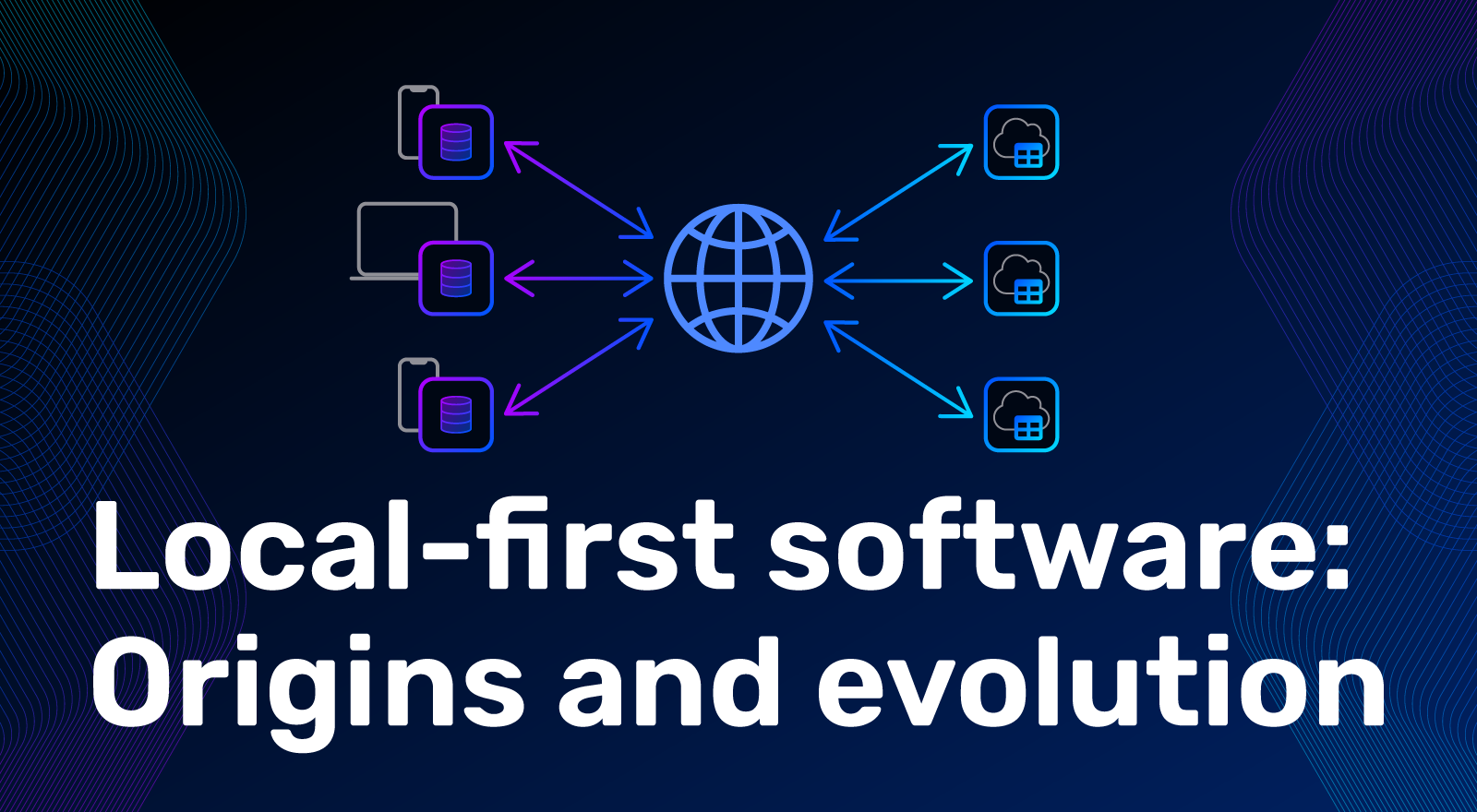
Local-First Software: Origins And Evolution
Developer interest in local-first software is continuing to grow rapidly in 2024. At the same time, it’s also apparent that developers currently have different views on what they consider to be ‘local-first software’, ranging from narrower to broader definitions. This prompted us to take a closer look at the origins and evolution of local-first.
“We should be more ambitious with the software we build”
The Software We Haven’t Invented Yet, discussion and dinner hosted by Boxd and BlueYard · Luma
If this is such a big moment for software, why are we mostly imagining faster versions of what we already do? Better coding tools are the obvious part. The…
You have to beat the models at something
In 2025, I wrote that software engineers ought to be assessed by “value over replacement”: not how much money they made for their company, but how much they…
Balancing “If it ain’t broke, don’t fix it” vs. “Release early and often”
Every organization faces a war between two schools of thought, with “If it ain’t broke, don’t fix it” on one side and “release early and often” on the other. This blog post looks for a way for enterprise consumers to embrace fast-paced changes in the software industry.