

This week, a number of Mozillians attended the annual Game Developers Conference in San Francisco to demonstrate how the Web is a competitive platform for gaming and game development.
Game Platforms | Game Developer
Explore the latest news and expert commentary on Game Platforms, brought to you by the editors of Game Developer

Game Platforms | Game Developer
Explore the latest news and expert commentary on Game Platforms, brought to you by the editors of Game Developer
Game Platforms | Game Developer
Explore the latest news and expert commentary on Game Platforms, brought to you by the editors of Game Developer
Game Platforms | Game Developer
Explore the latest news and expert commentary on Game Platforms, brought to you by the editors of Game Developer
Web Platform: What are we working on?
Web Platform What are we working on? Simone Onofri WebEngineHackFest 2025

a world to win: webassembly for the rest of us — wingolog
wingolog: article: a world to win: webassembly for the rest of us
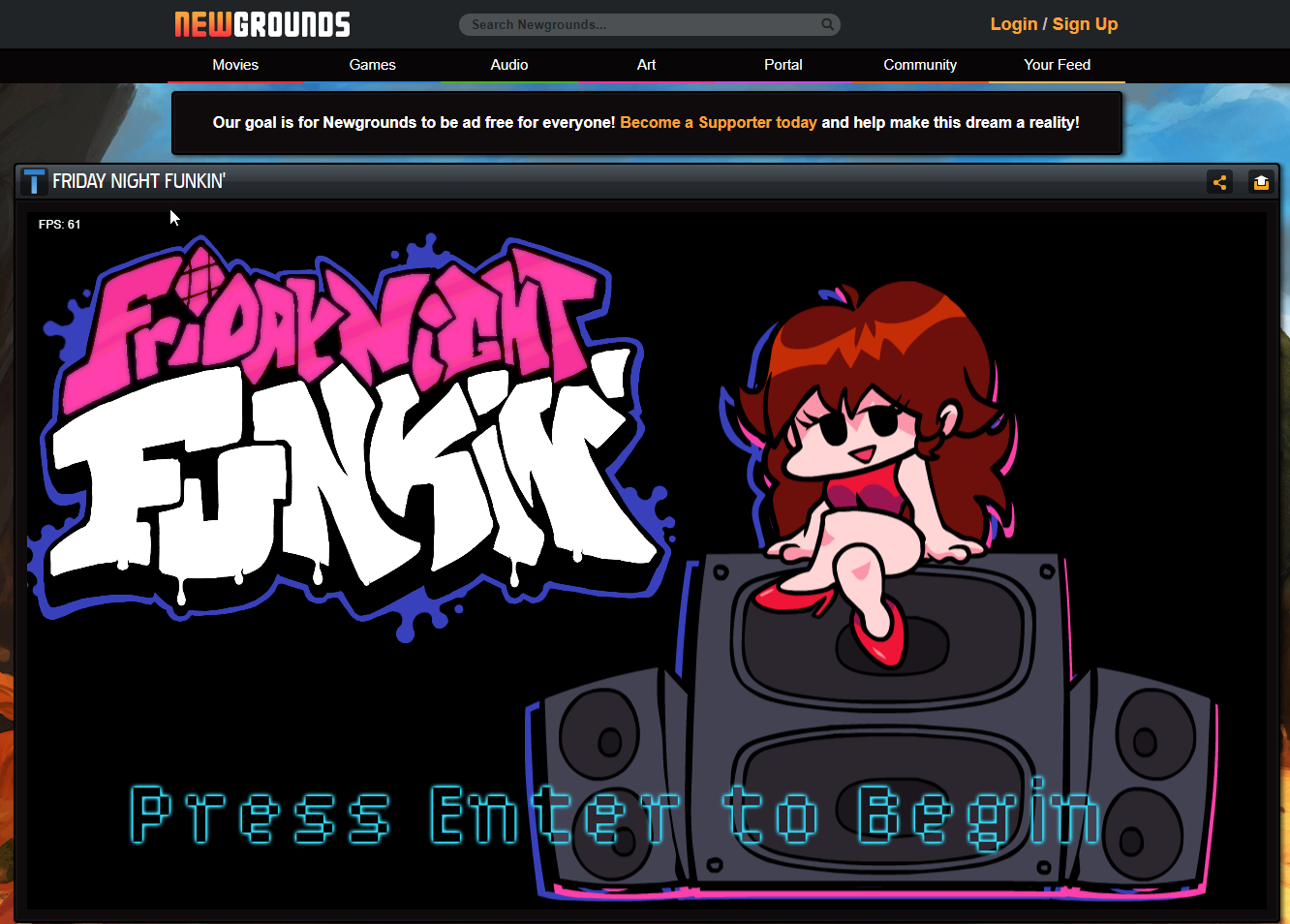
The Future of Games is an Instant Flash to the past
The success of an open source browser game called Friday Night Funkin tells us where "instant games" might go. Hint: we've been here before.
Open Gaming Collective | The Future of Linux Gaming
A collaborative working group building a unified set of gaming-focused components for the Linux ecosystem. Focused on upstream-first development.

The Web Can't Survive a Monoculture
Many developers work on the “web platform” because they believe in the model of competing and interoperable implementations (i.e. browsers). These folks (of which I am one) believe that competing and interoperable implementations is what makes the web fundamentally stronger than other platforms. Unlike Windows, iOS, or Android (for example), the web’s users have choice about how they participate. If they disagree with how their chosen browser is being managed, they can switch to another.

Platform Studies
The Platform Studies book series has been established to promote the investigation of underlying computing systems and how they enable, constrain, shape and support the creative work that is done on them. The series investigates the foundations of digital media — the computing systems, both hardware and software, that developers and users depend upon for artistic, literary, and gaming development. Books in the series will certainly vary in their approaches, but they will all also share certain features: A focus on a single platform or a closely related family of platforms; Technical rigor and in-depth investigation of how computing technologies work; An awareness of and discussion of how computing platforms exist in a context of culture and society, being developed based on cultural concepts and then contributing to culture in a variety of ways — for instance, by affecting how people perceive computing.
Home
A gaming platform built on the open social web. Your identity, your scores, your data - all portable.
The Web Is For User Agency
We take the Web for granted as that thing that's there and we talk of things being good or bad for the Web, but we don't ever sit down and really say what the Web is for. I take a look at this question with an eye towards understanding what it is we need to do to build a Web that's actually better.

Web Dev Conf 2027
A conference about creativity and delight on the web for developers and designers. October 8th, 2027 in Bristol, UK.

[FOSDEM] Browser and Web Platform Devroom at FOSDEM 2026: Call for Participation
The web is for everyone: Our vision for the evolution of the web | The Mozilla Blog
Over the last two decades, the web has woven itself into the fabric of our lives. What began as a research project has become the world’s most important

Pluralistic: The (open) web is good, actually (13 Nov 2023) – Pluralistic: Daily links from Cory Doctorow
The great irony of the platformization of the internet is that platforms are intermediaries, and the original promise of the internet that got so many of us excited about it was disintermediation – getting rid of the middlemen that act as gatekeepers between community members, creators and audiences, buyers and sellers, etc.