


Responding to readers who invoke Christianity to defend exclusion, I argue that the Gospels consistently welcome lepers, foreigners, sinners, and gender-no…
Masculist pushback: the threatened extinction of the great, white Judeo-Christian male
A political ideology rooted in fear is remaking the world in its own image and dragging us with it

Footnotes by Jemar Tisby | Substack
Truth-telling at the intersection of faith, history, and justice Focus on white Christian nationalism + the Black Christian tradition. Click to read Footnotes by Jemar Tisby, by Jemar Tisby, PhD, a Substack publication with tens of thousands of subscribers.
On Enchanted Flatland: Iain McGilchrist & the Problem of Romantic Liberalism
A follow-up to my contribution to Rosy Cross: Question of Right & Truth of Christianity
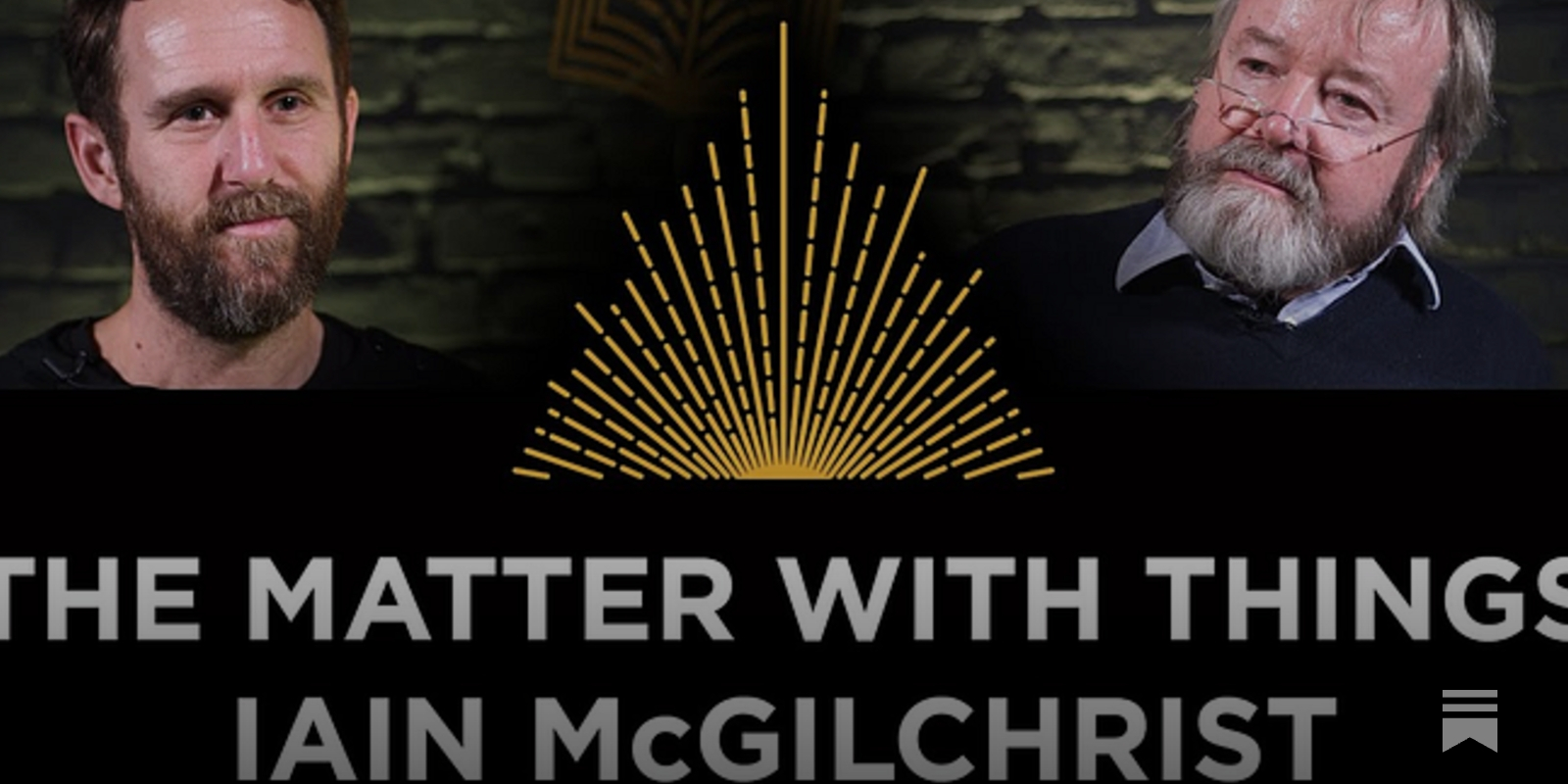
Yet Again, The Data Shows Migrants Are More Law-Abiding Than US Citizens
This has always been the truth. And it has always been ignored by people like Donald Trump, who combine “if it bleeds, it leads” media narratives with the always-exploitable fear of …

The Anti-Trans Playbook
The current crusade against trans people imperils not just their rights but the survival of the legal doctrine built to protect all women from discrimination.

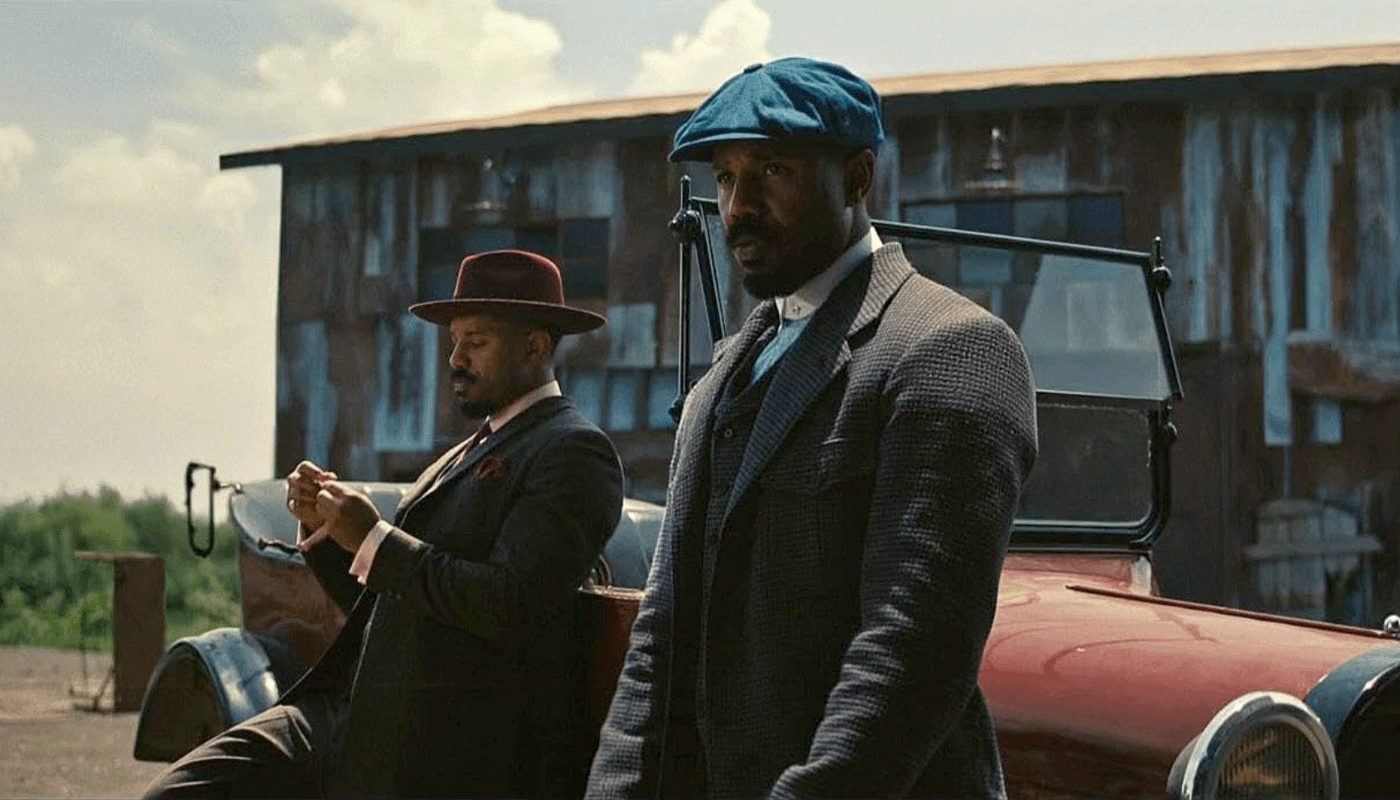
Beyond Afrofuturism: Sinners, the Great Migration, and Rust Belt Gothik - Reactor
"Sinners" is a particular kind of story about migration, spirituality, and Black speculative survival skills
Epiphany • Ephesians 3:1–12 • January 6, 2013 - Concordia Theology
By Francis C. Rossow Comments on the Text Lulled either by the familiarity of our text or by its complex sentence structure, we may not at first be aware of the surprise—even the shock—it contains. Verse 6 drops a bomb: “This mystery is that through the gospel the Gentiles are heirs together with Israel, members […]
Sacralizing Dominion: The Doctrine of Christian Discovery and the Religious Nationalist Imagination
White Christian nationalism presents itself as restoration—of a Christian nation, a moral order, a rightful hierarchy. This article argues that what it restores is the world-making rhetoric of the Doctrine of Christian Discovery (DoCD). Reading the fifteenth-century papal bulls, their sedimentation into United States law, culture, religion, and contemporary dominionist discourse as a single rhetorical formation, we show that the bulls’ vocabulary of discovery, vacancy, and civilization did not describe a world but constituted one: a moral-legal order in which Christian identity conferred sovereignty and racialized peoples appeared as obstacles to salvation and property. That order persists as hegemonic common sense, carried by legal precedent, curricula, and popular culture, and it is re-performed today in the territorial rhetoric of the New Apostolic Reformation and white Christian nationalism. Following Steven T. Newcomb (Shawnee/Lenape), repudiating the doctrine’s documents without dismantling its embeddedness within language and cognition leaves religious nationalism’s deepest resource intact. Against the discovery template, we set three counter-rhetorics—Indigenous theologies, Black theology, and womanism—and argue that desanctifying dominion requires conciliation, not reconciliation.
Transfiguration of Jesus
The Transfiguration of Jesus is an event described in the New Testament where Jesus is transfigured and becomes radiant in glory upon a mountain. The Synoptic Gospels recount the occasion, and the Second Epistle of Peter also refers to it. Ancient Christian texts considered non-canonical by Catholic and Eastern Orthodox doctrine, such as the Treatise on the Resurrection from the Nag Hammadi corpus, refer to the scene as well.

When We're Born We Forget Everything: A Memoir
From the creator of the internationally acclaimed singer-songwriter project Girls in Trouble, a memoir following her journey from a secular Jewish childhood to becoming a modern queer woman owning ancient teachings and finding her own meanings in them, refracted through feminist interpretations of the lives of Biblical women.“Alicia Jo Rabins writes as if she’s in conversation with the divine itself. . . .This isn’t merely a book to be read—it’s a scripture for the searching heart, a reminder that the border between the human and the holy is, and always has been, porous.” —Reza Aslan, author of Zealot: The Life and Times of Jesus of NazarethAs a self-described ‘90s suburban high school weirdo, Alicia Jo Rabins spent her time practicing violin and smoking cigarettes behind the mall while secretly dreaming of setting out on a spiritual quest no one around her seemed to understand. She often found herself drawn to the more ritualistic and rigorous Judaism that her parents had abandoned to assimilate and “become American.” In college, a chance meeting led her on a pilgrimage to Jerusalem to study rabbinical texts (and play bluegrass fiddle on the street for cash). But that two years of immersing herself in traditional observance was only the start of a journey full of twists and turns.When We’re Born We Forget Everything follows Alicia’s relentless, often embarrassing, sometimes enlightening search for the sacred in everyday life as she tours America playing with a klezmer-punk band, falls in and out of love, scrapes through the initiations of motherhood, and witnesses the beauty—and danger—of mysticism. Rabins braids this personal narrative with the hidden stories of biblical women, uncovering a path of queer identity, feminist awakening, and spiritual self-invention. This lyrical, searching memoir is a meditation on longing, lineage, and what it takes to find meaning in a fractured world.
The Final Christian Generation? - Mockingbird
What we can learn from the century that saw the sun set on the “final” pagan generation
Restorative Justice in the Bible | The Paper Pilot
The Paper Pilot's digital garden of thoughts on philosophy, politics, and sociology
Why some young Black Christians are practicing hoodoo
The ancestral religious practices of the African diaspora were forced underground by the White...

#761: Not every brother is a bro
Plus: Oppressive praise, baby names and the American exodus

Reading Wars
Read online or download for free Reading Wars explores heated, even murderous, political struggles over who gets to read and what they get to read. Those conflicts, once again in the news, stretch back centuries. In this book, Don Herzog examines the history and politics of anxieties about readers and reading, spanning both the United States and Britain, from the 1500s right up to contemporary battles over banning library books and freedom of speech. In these pages, Herzog deftly interweaves episodes from Reformation England, when first Catholics and then Protestants cracked down on unsupervised Bible-reading, with the deadly campaigns in pre-Civil War America to keep black people – both free and enslaved – illiterate. Drawing on a wealth of primary sources, he reconstructs arguments insisting that ordinary men and women could not be trusted to read what they liked – indeed, that some of them ought not read at all. And he charts struggles to promote literacy. Herzog argues that at stake in these battles is whether some people – those banned from reading – are perceived as not fully human, or lesser persons than others. The radical campaign to let more or less everyone read more or less everything is ultimately, therefore, a campaign for equality. Click here to read praise for Reading Wars "In characteristically engaging and straight-forward language Don Herzog explores the debates past and present, largely in Britain and America, about whether or not to suppress reading. By taking seriously the arguments for suppressing or restricting books and their readers, Herzog suggests that those arguments turn on the claim that for some people reading is dangerous. This assumption, Herzog compellingly argues, ignores the fact that literacy is largely a social activity. In Reading Wars, Herzog develops a powerful liberal argument for literacy and reading. An argument, Herzog shows, that has incompletely triumphed." — Steve Pincus, Thomas Donnelly Professor of History, University of Chicago "Knowledge is power - which is why efforts to acquire knowledge through reading have been outlawed, suppressed through violence, and remain targets today. Don Herzog's Reading Wars tells the astonishing history behind the wars on reading in a readable, clever style, underscoring the stakes of many of the current fights over censorship and book bans." — Leah Litman, cohost of the podcast Strict Scrutiny and New York Times bestselling author of Lawless "A rich yet accessible introduction to the many ways in which society has attempted to restrict reading materials throughout British and United States history. Equal parts illuminating and horrifying, it lays the groundwork for the 21st century’s own shameful dabbles with censorship through its careful consideration of the key concerns and prejudices that structure each generation’s literacy battles." — Alison Hicks, Associate Professor in Library and Information Studies, UCL "Political theory, historical sense, worrisome texts, unheralded documents, and great storytelling join forces in Herzog’s virtuoso investigation of the brutal fighting over who gets to learn to read (and what) in early and late modern America and Britain. The bloodshed may have lessened, but we are still fighting, and Herzog shows the deeper stakes involved in reading’s relation to equality and personhood." — Mary G Dietz, John Evans Professor Emerita of Political Theory, Northwestern University , Reading Wars explores heated, even murderous, political struggles over who gets to read and what they get to read. Don Herzog examines the history and politics of anxieties about readers and reading, spanning the United States and Britain, from the 1500s right up to contemporary battles over banning library books and freedom of speech.

