

The Curious About Everything Newsletter #63
The many interesting things I read in May 2026


The Curious About Everything Newsletter #65
The many interesting things I read in July 2026

Sharing without clicking on news in social media
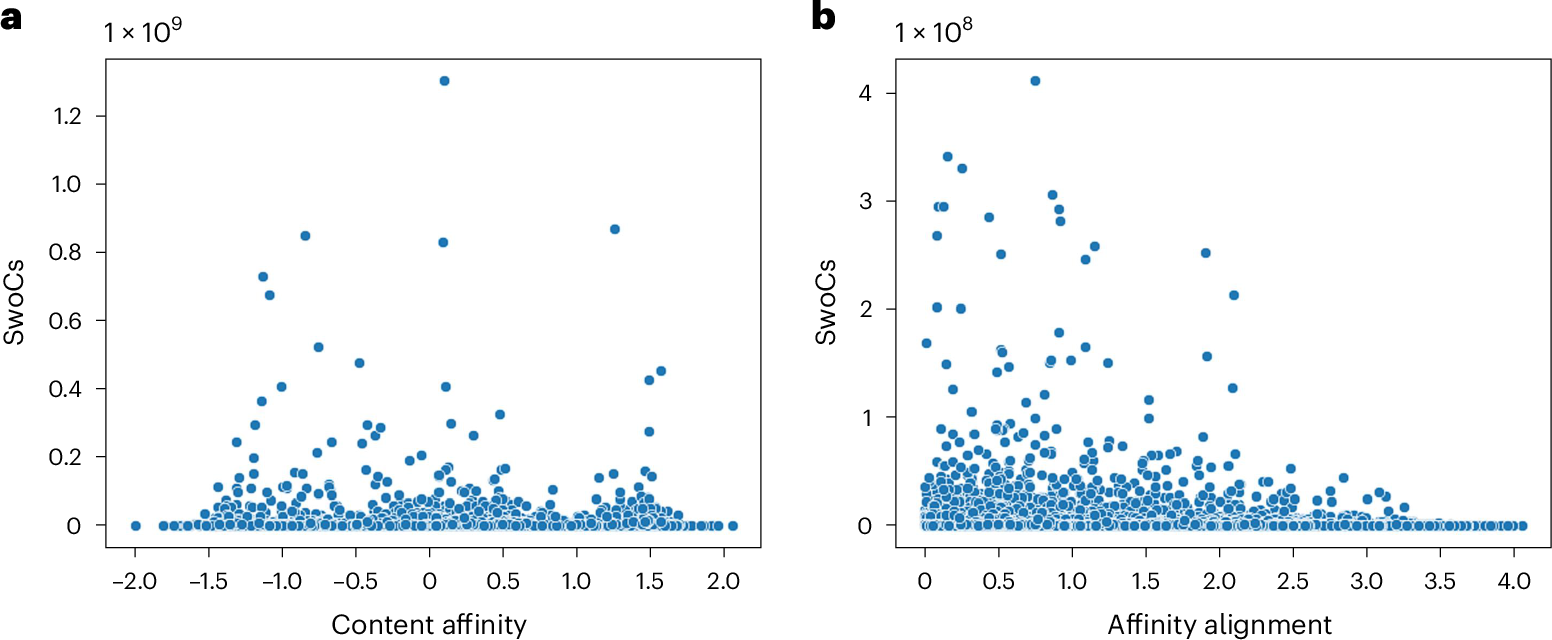
Social media have enabled laypersons to disseminate, at scale, links to news and public affairs information. Many individuals share such links without first reading the linked information. Here we analysed over 35 million public Facebook posts with uniform resource locators shared between 2017 and 2020, and discovered that such ‘shares without clicks’ (SwoCs) constitute around 75% of forwarded links. Extreme and user-aligned political content received more SwoCs, with partisans engaging in it more than politically neutral users. In addition, analyses with 2,969 false uniform resource locators revealed higher shares and, hence, SwoCs by conservatives (76.94%) than liberals (14.25%), probably because, in our dataset, the vast majority (76–82%) of them originated from conservative news domains. Findings suggest that the virality of political content on social media (including misinformation) is driven by superficial processing of headlines and blurbs rather than systematic processing of core content, which has design implications for promoting deliberate discourse in the online public sphere.
The New York Times helped fuel an anti-trans panic in 2022. Will 2023 be any better?
Perhaps no mainstream publication did more in 2022 than the New York Times to shift the mainstream conversation around transgender equality away from obstacles to access in housing, employment, and health care and toward the idea that the most pressing issue facing the trans community is actually too much medical care. The paper’s venerable pages featured profile after profile that platformed anti-trans extremists, fearmongered about the price of transgender acceptance, and framed rising trans identification as a social contagion. A recent article that centers the concerns of parents calling for the forced outing of transgender students shows why in 2023, the Times must improve its coverage.
The Curious About Everything Newsletter #60
The many interesting things I read in February 2026

Beating the drums for independent press, publishers, and writers
Whose news? Whose story? Who gets to tell it?


Local U.S. TV News Will Soon Be Entirely Right Wing Propaganda
Thanks to the destruction of media consolidation limits, Republicans will soon enjoy propaganda and market domination over what's left of local U.S. news.

What Liberal Media? Axios Thinks Being Neutral Means Kissing Trump’s Ass
The news org Axios launched in 2017, just as the first Trump administration began, created by some ex-Politico folks, claiming that they would be “an antidote to this madness” and talking about how…

Spinning on His Axel: The Right-Wing Politics of the Billionaire Businessman Taking Over the Telegraph
Julian Petley investigates what really motivates the German media mogul taking over Britain's leading conservative broadsheet

No Opinion — The New York Times: Boycott, Divest, Unsubscribe
Over the past few years, the Times has increasingly turned to “guest essayists” to help repair its crumbling reputation. Opinion editors recruit respected subject matter experts to lend their diverse — often tokenized — perspectives as a countervailing force to the paper’s in-house conservatism. Without the voices, expertise, and freelance labor of these guest essayists, the Opinion section would be utterly worthless.

There is no fresh air: A problem with the concept of echo chambers
Standardly, echo chambers are thought to be structures that we should avoid. Agents should keep away from them, to be able to assess a fuller range of evidence and avoid having their confidence in that information manipulated. This paper argues against that standard view. Not only can echo chambers be neutral or good for us, but the existing definitions apply so widely that such chambers are unavoidable. We are all in large numbers of echo chambers at any time – they can be found not just on social media or in political groups, but in almost every social or epistemic group we could categorise ourselves into. Because we are finite and fallible, we cannot escape them and need to exist in them just to get by. The concept, then, does not actually capture something as structurally problematic as the paradigmatic cases would suggest. Our way of using the term in social epistemology needs to change.
NYT Misses What’s True and Important About an Anti-Trans School Resolution
Like most New York Times articles about trans politics that FAIR has analyzed, the piece marginalized the voices of those most impacted.

Exposure to ideologically diverse news and opinion on Facebook
Join The Onion
Don’t just read the news. Feel it. Be among the first to feel the news.


Listen carefully and you'll hear a new set of controversialist columnists starting to hatch.