

Web browsers are ubiquitous, but how do they work? This book explains, building a basic but complete web browser, from networking to JavaScript, in a couple thousand lines of Python.
web browser
A web browser is a client program for accessing the World Wide Web. Its main feature is the loading of HTML pages over HTTP(S) connections and rendering them. There are moderate-sized web browsers as well as huge and bloated ones.
Downloading Web Pages | Web Browser Engineering
A web browser displays information identified by a URL. And the first step is to use that URL to connect to and download information from a server somewhere on the internet.
Why build a new browser? From intuition to reality - Blog | Lightpanda
Three years ago when we started Lightpanda, we asked ourselves a seemingly simple question what would a browser look like if it were built specifically for automation?


Running Interactive Scripts | Web Browser Engineering
The first web applications were like the previous chapter’s guest book, with the server generating new web pages for every user action. But in the early 2000s, JavaScript-enhanced web applications, which can update pages dynamically and respond immediately to user actions, took their place. Let’s add support for this key web technology to our browser.
How might a browser be developed?
There’s a confluence of things that have happened recently that have made me question how browsers might be developed: On January 8th 2026, Simon Willison predicted that someone will build a browser using mainly AI-assisted tools within 3 years On January 27th 2026, one human and one agent built a browser from scratch (great experiments) On the 19th February 2026, news came out that Taalas had a chip that can spit out nearly 17,000 tokens per second by baking a model onto the chip. I would like to indulge in a little bit of projection and in my case, some science fiction of my own.

Making Content Accessible | Web Browser Engineering
So far, we’ve focused on making the browser an effective platform for developing web applications. But ultimately, the browser is a user agent. That means it should assist the user in whatever way it can to access and use web applications. Browsers therefore offer a range of accessibility features that take advantage of declarative UI and the flexibility of HTML and CSS to make it possible to interact with web pages by touch, keyboard, or voice.
High Performance Browser Networking (O'Reilly)
What every web developer must know about mobile networks, protocols, and APIs provided by browser to deliver the best user experience.

Paul Klein IV on Twitter / X
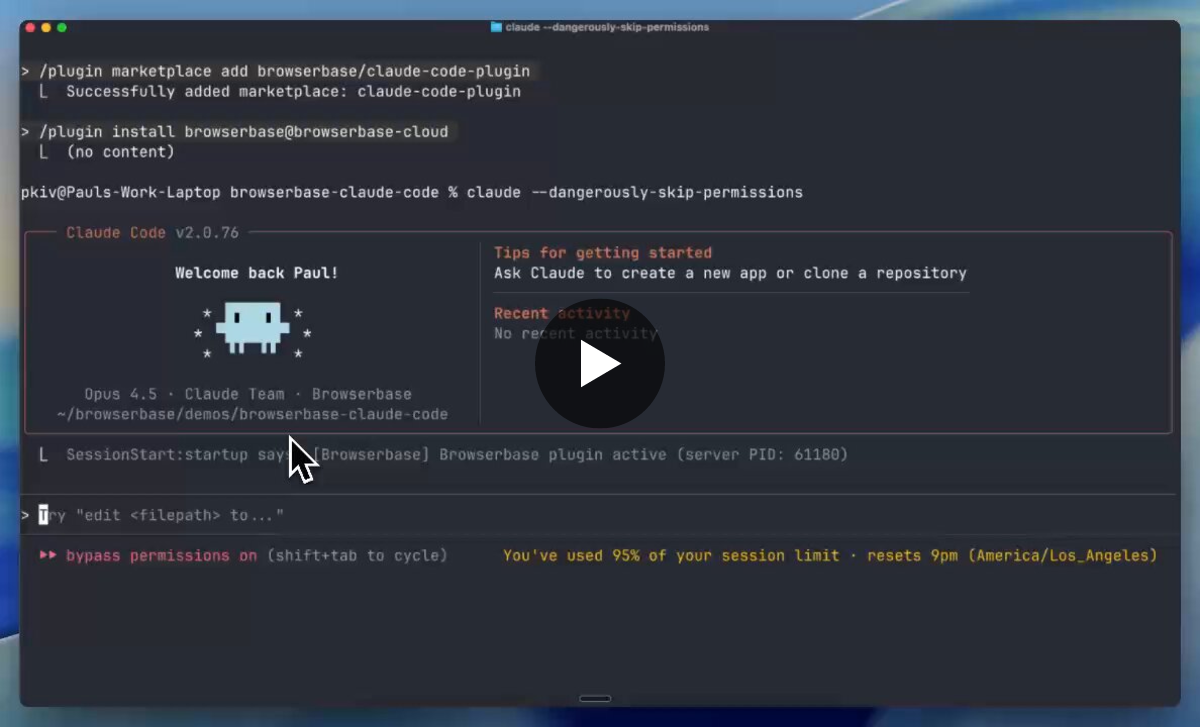
I spent all of Christmas reverse engineering Claude Chrome so it would work with remote browsers. Here's how Anthropic taught Claude how to browse the web (1/7) pic.twitter.com/kBJA1DUWxA— Paul Klein IV (@pk_iv) December 29, 2025
What is a Browser?

Stop Ignoring the Browser: The Biggest Frontend Shift in a Decade
Native browser APIs now provide powerful alternatives for routing, state management, and components. Never mind the frameworks, use the browser.

BrowserEngineKit | Apple Developer Documentation
Create a browser that renders content using an alternative browser engine.
Stripped Down Browsers
I started learning programming in High School by using a toy language with graphics.
Close to the metal: web design and the browser
Websites have evolved over the years, but in the name of evolution, there seems to be mistaken thinking that the process of building a website needs to get more complex, using Javascript frameworks and modern backend systems; when at the end of the day, browsers still only need static HTML content to interpret.
Launch HN: Browser Use (YC W25) – open-source web agents | Hacker News
Check out this video to see it in action: https://preview.screen.studio/share/r1h4DuAk. There are lots more demos at https://github.com/browser-use/browser-use on how we control the web with prompts.