

🧵New preprint: Adults often agree with their ingroup even when evidence says otherwise. Why? To find out, we studied kids, who show the same tendency but *before* political identities take hold. With developmental data, we can see the basic psychological ingredients. doi.org/10.31234/osf.io/gf38p_v1 1/11
OSF
doi.orgJan 6, 2026 at 3:03 PM
The Illusion of Asymmetric Insight
The Misconception: You celebrate diversity and respect others’ points of view. The Truth: You are driven to create and form groups and then believe others are wrong just because they are oth…

So It Is, So It Shall Be: Group Regularities License Children's Prescriptive Judgments
Abstract When do descriptive regularities (what characteristics individuals have) become prescriptive norms (what characteristics individuals should have)? We examined children's (4–13 years) and adults' use of group regularities to make prescriptive judgments, employing novel groups (Hibbles and Glerks) that engaged in morally neutral behaviors (e.g., eating different kinds of berries). Participants were introduced to conforming or non‐conforming individuals (e.g., a Hibble who ate berries more typical of a Glerk). Children negatively evaluated non‐conformity, with negative evaluations declining with age (Study 1). These effects were replicable across competitive and cooperative intergroup contexts (Study 2) and stemmed from reasoning about group regularities rather than reasoning about individual regularities (Study 3). These data provide new insights into children's group concepts and have important implications for understanding the development of stereotyping and norm enforcement.

Misplaced Divides? Discussing Political Disagreement With Strangers Can Be Unexpectedly Positive
Differences of opinion between people are common in everyday life, but discussing those differences openly in conversation may be unnecessarily rare. We report three experiments ( N = 1,264 U.S.-based adults) demonstrating that people’s interest in discussing important but potentially divisive topics is guided by their expectations about how positively the conversation will unfold, leaving them more interested in having a conversation with someone who agrees versus disagrees with them. People’s expectations about their conversations, however, were systematically miscalibrated such that people underestimated how positive these conversations would be—especially in cases of disagreement. Miscalibrated expectations stemmed from underestimating the degree of common ground that would emerge in conversation and from failing to appreciate the power of social forces in conversation that create social connection. Misunderstanding the outcomes of conversation could lead people to avoid discussing disagreements more often, creating a misplaced barrier to learning, social connection, free inquiry, and free expression.

Groupthink
Groupthink is a psychological phenomenon that occurs within a group of people in which the desire for harmony or conformity in the group results in an irrational or dysfunctional decision-making outcome. Cohesiveness, or the desire for cohesiveness, in a group may produce a tendency among its members to agree at all costs.[1] This causes the group to minimize conflict and reach a consensus decision without critical evaluation.[2][3]
Children's Acquisition and Application of Norms
All human societies are permeated by collectively shared entities that govern daily social interactions and promote coordination and cooperation: norms. While the study of norm development is not new to developmental psychology, it has only recently been the target of an interdisciplinary wave of research using new methodologies and (often) complementary theoretical accounts to describe and explain the origins and potentially species-unique aspects of human norm psychology. Here we review recent developmental research showing that young children swiftly acquire and infer norms in a variety of social contexts. Moreover, children actively enforce these norms, even as unaffected bystanders, when third parties do things the wrong way. This research suggests that the foundations of human norm psychology can be found in early childhood. Deeper insights into the ontogenetic roots of norm psychology may contribute to understanding the evolutionary emergence of human cooperation and its maintenance in the contemporary world.
Children’s Sense of Fairness as Equal Respect
One influential view holds that children’s sense of fairness emerges at age 8 and is rooted in the development of an aversion to unequal resource distributions. Here, we suggest two amendments to this view. First, we argue and present evidence that children’s sense of fairness emerges already at age 3 in (and only in) the context of collaborative activities. This is because, in our theoretical view, collaboration creates a sense of equal respect among partners. Second, we argue and present evidence that children’s judgments about what is fair are essentially judgments about the social meaning of the distributive act; for example, children accept unequal distributions if the procedure gave everyone an equal chance (so-called distributive justice). Children thus respond to unequal (and other) distributions not based on material concerns, but rather based on interpersonal concerns: they want equal respect.
Left & Right: The Psychological Significance of a Political Distinction
This book brings together for the first time an updated, revised collection of influential essays and articles that capture some of the most exciting scientific and scholarly contributions to the topic ...

The power imbalance between parent and child leaves a trace | Aeon Essays
Nobody quite recovers from being a child: the asymmetry of power between parents and children always leaves a trace

10Groups
10Groups is a political compass test that examines one's political beliefs on a varity of coordinate charts. The test is based on different parts from SapplyValues and 8values. You will be presented by a statement, and then you will answer with your opinion on the statement, from Strongly Agree to Strongly Disagree, with each answer slightly affecting your scores. At the end of the quiz, your answers will be displayed on a political compass. There are 83 questions in the test.
10Groups
10Groups is a political compass test that examines one's political beliefs on a varity of coordinate charts. The test is based on different parts from SapplyValues and 8values. You will be presented by a statement, and then you will answer with your opinion on the statement, from Strongly Agree to Strongly Disagree, with each answer slightly affecting your scores. At the end of the quiz, your answers will be displayed on a political compass. There are 83 questions in the test.
Sciences perceived as precise and consensual are more trusted
Research focused on the United States shows that people’s trust in science varies considerably between disciplines. Existing explanations of these trust gaps stress the role of ideology: when people perceive scientists of a particular discipline to be ideologically like-minded, they tend to trust them more. Here, we report two findings: first, trust gaps between disciplines also exist in France—a representative sample of the French population (N = 1012) trusted researchers in biology and physics more than researchers studying climate science, economics, or sociology. Second, the more precise and consensual participants perceive scientific findings to be, the more they tend to trust the scientists (across and within disciplines). While these findings are correlational, they align with a non-ideological explanation of trust in science: the rational impression account. This account proposes that people can come to trust scientists by relying on basic cognitive inference processes, which tend to be generally rational.
Out-group homogeneity
The out-group homogeneity effect is the perception of out-group members as more similar to one another than are in-group members, i.e. "they are alike; we are diverse".[1] Perceivers tend to have impressions about the diversity or variability of group members around those central tendencies or typical attributes of those group members. Thus, outgroup stereotypicality judgments are overestimated, supporting the view that out-group stereotypes are overgeneralizations.[2] The term "outgroup homogeneity effect", "outgroup homogeneity bias" or "relative outgroup homogeneity" have been explicitly contrasted with "outgroup homogeneity" in general,[3] the latter referring to perceived outgroup variability unrelated to perceptions of the ingroup.
Anti-democratic attitudes are highly contagious, new psychology study finds
The rise of anti-democratic sentiments might be driven by social contagion. Researchers have discovered that citizens often adapt their personal support for authoritarian rule to align with the political views of those around them.
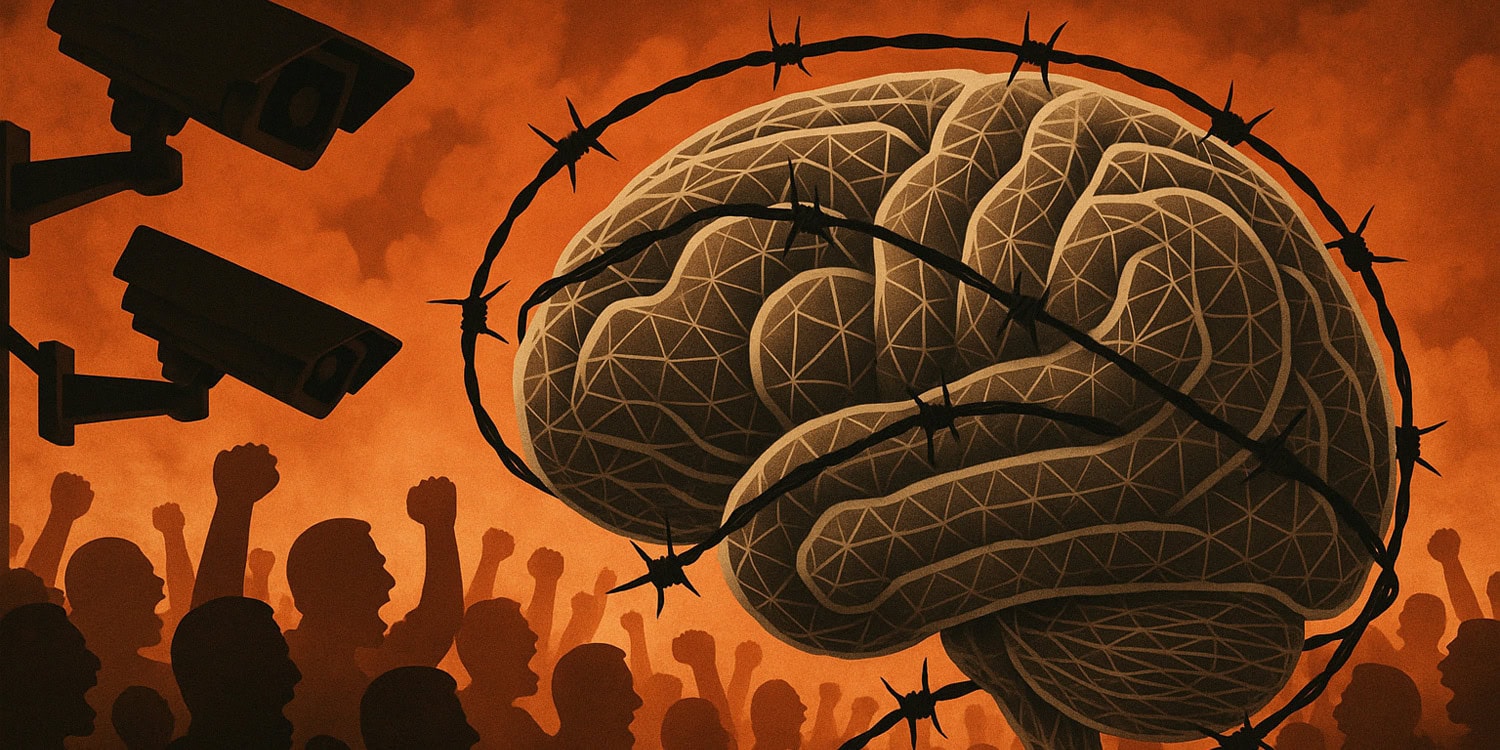
Every time I make the (correct) statement that social media use is not universally bad for teenagers, or state that the best consensus is that it's beneficial-to-neutral for many and any negative effects are a small subset of teenagers, people demand citations (and then refuse to believe them, sigh)
I tried to explain to myself the behaviour of some people who only seem to reheat one another's ideas — and are the same people still on X today, irrespective of political alignment. berjon.com/rt/

The Retweeting Class
berjon.comCollective Intelligence Research

Explorations into the idea that a group of humans is "more intelligent" than the sum of their "IQ" (i.e. "groups of individuals doing things collectively that seem intelligent")
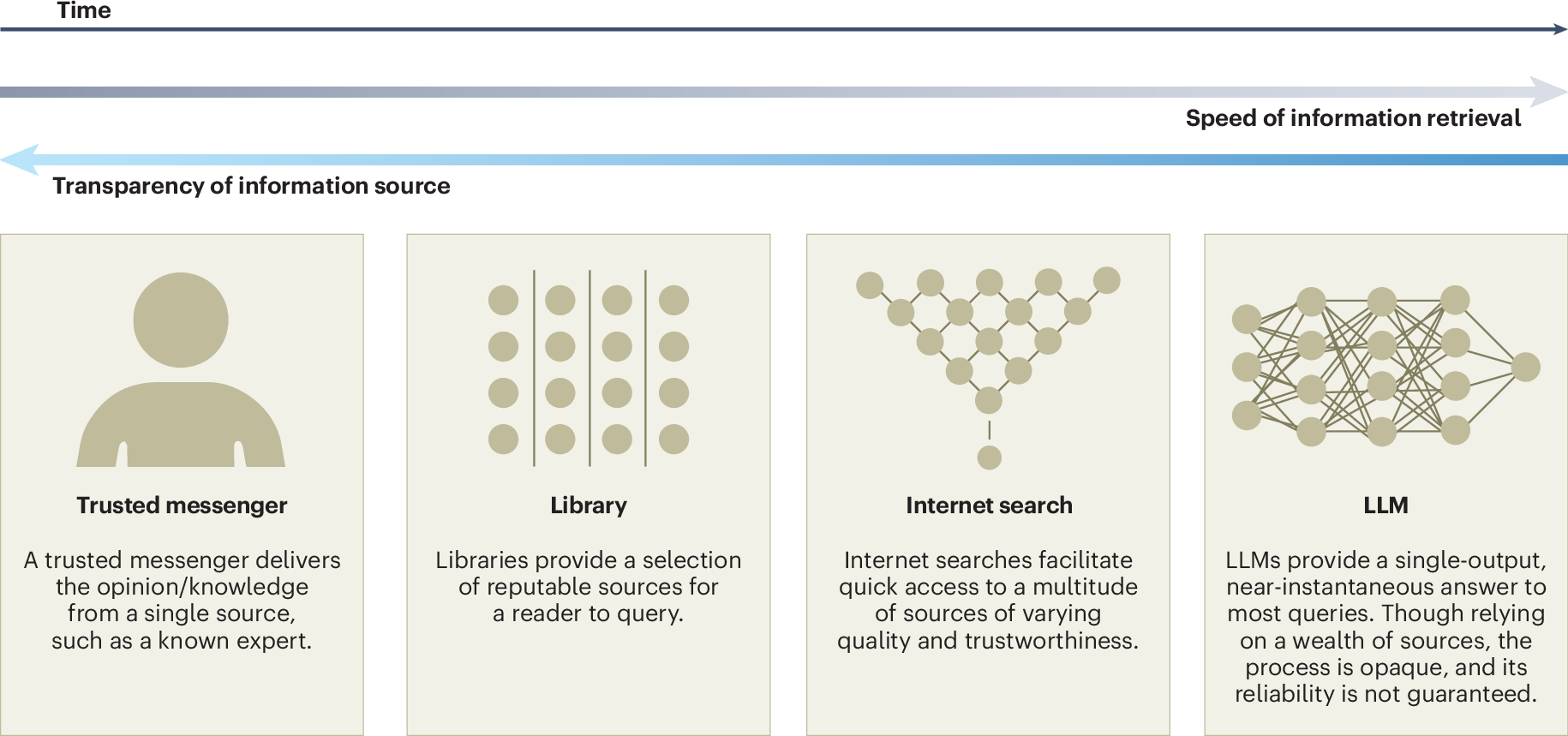
How large language models can reshape collective intelligence

Sharing Notes about Collective Intelligence — Pop Junctions

Socially Minded Intelligence: How Individuals, Groups, and Artificial Intelligence Can Make Each Other Smarter (or Not)

Profile: Adrien Treuille

NOVA | The Wisdom of the Crowds | Season 45 | Episode 6
Mapping Citizen Science through the Lens of Human-Centered AI


