

Convivial Computing
In 1973, Ivan Illich published Tools for Conviviality, a book about man's relation to tools 1. Illich pleaded for a pluralism of responsibly limited tools that guarantee an individual’s right to work with independent efficiency, the development of which is "as unpredictable, creative and lively as the people who use them" (Illich, 1973) 2. He pointed to overgrowth and overproduction threatening the right to a liveable environment, which unfortunately led him to ideas on gender and population control that are highly problematic 3. His ideas are included in the Catalog because of their influence on other practices, that picked up on his ideas about limited tools and turned a blind eye to the less appealing parts of his writing.


Konrad Hinsen's blog
Convivial technology was defined by Ivan Illich in his 1973 book "Tools for conviviality" as technology that supports a convivial society, which is a society that strives to grant each of its members as much agency as is possible without infringing on other members' agency. Conviviality is thus about equality, about the absence of dominance relations. Convivial technology is shaped by its users according to their needs, rather than being controlled by entities such as companies or governments, which then derive power over the user base by exercising control.
Composability with other tools
Interoperability, exchange, and composition are some of my primary motivations for building Subconscious. Why isn’t interoperability more common between tools for thought? Why is it that most of our tools are silos? How did we get here?

Automate the C-Suite - The Ideas Letter
Weatherby argues that Benanav’s and Morozov’s essays on AI and the left miss a deeper reality: Today’s AI is not a neutral tool operating within capitalism but the materialization of…

Götz Bachmann’s Ethnographic Research on Dynamicland — Christoph Locher · Interaction Designer
The “Dynamic Medium Group” led by Bret Victor which is developing “Dynamicland” is much admired and closely watched in the interaction design community. Yet the information about their work is closely-guarded and usually only available in a highly moderated form. The work of ethnographer Götz Bachmann, who spent much time with the group to observe them, offers a new perspective and deep insight into the group’s ideas and practices.
APRIL Laboratory APRIL Papers : Autonomy * Perception * Robotics * Interfaces * Learning

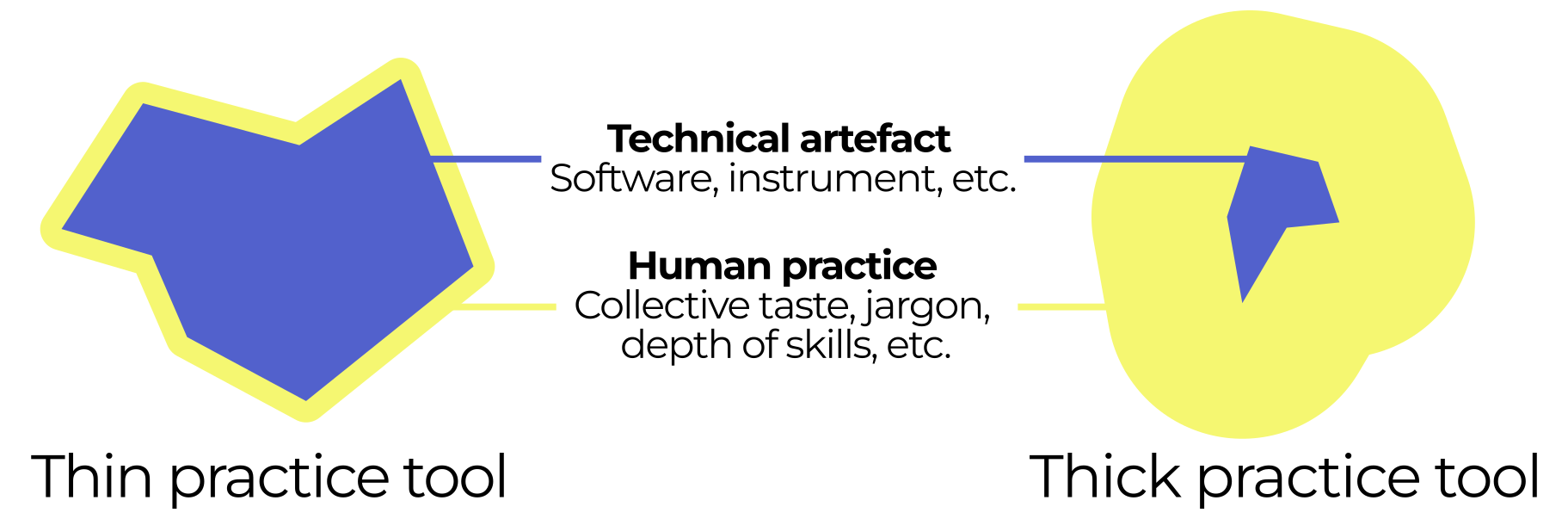
Thick practices for AI tools
This essay is the result of thoughts developed during the PIBBSS fellowship this summer. Thanks to Dusan and Maris for feedback on a draft of this essay. Thanks to Sahil and Niki for discussions that influenced the ideas of this essay. 1. Intro What if we could build AI tools...
» How Jordan Mechner Made a Different Sort of Interactive Movie (or, The Virtues of Restraint) The Digital Antiquarian
One can learn much about the state of computer gaming in any given period by looking to the metaphors its practitioners are embracing. In the early 1980s, when interfaces were entirely textual and graphics crude or nonexistent, text adventures like those of Infocom were heralded as the vanguard of a new interactive literature destined to augment or entirely supersede non-interactive books. That idea peaked with the mid-decade bookware boom, when just about every entertainment-software publisher (and a few traditional book publishers) were rushing to sign established authors and books to interactive projects. It then proceeded to collapse just as quickly under the weight of its own self-importance when the games proved less compelling and the public less interested than anticipated.
AI, Artifice, And Authenticity
The era of badly-automated homogenized engagement slop is upon us. I desperately want to believe there's a renaissance for authenticity on the other end.

The Skeleton Library
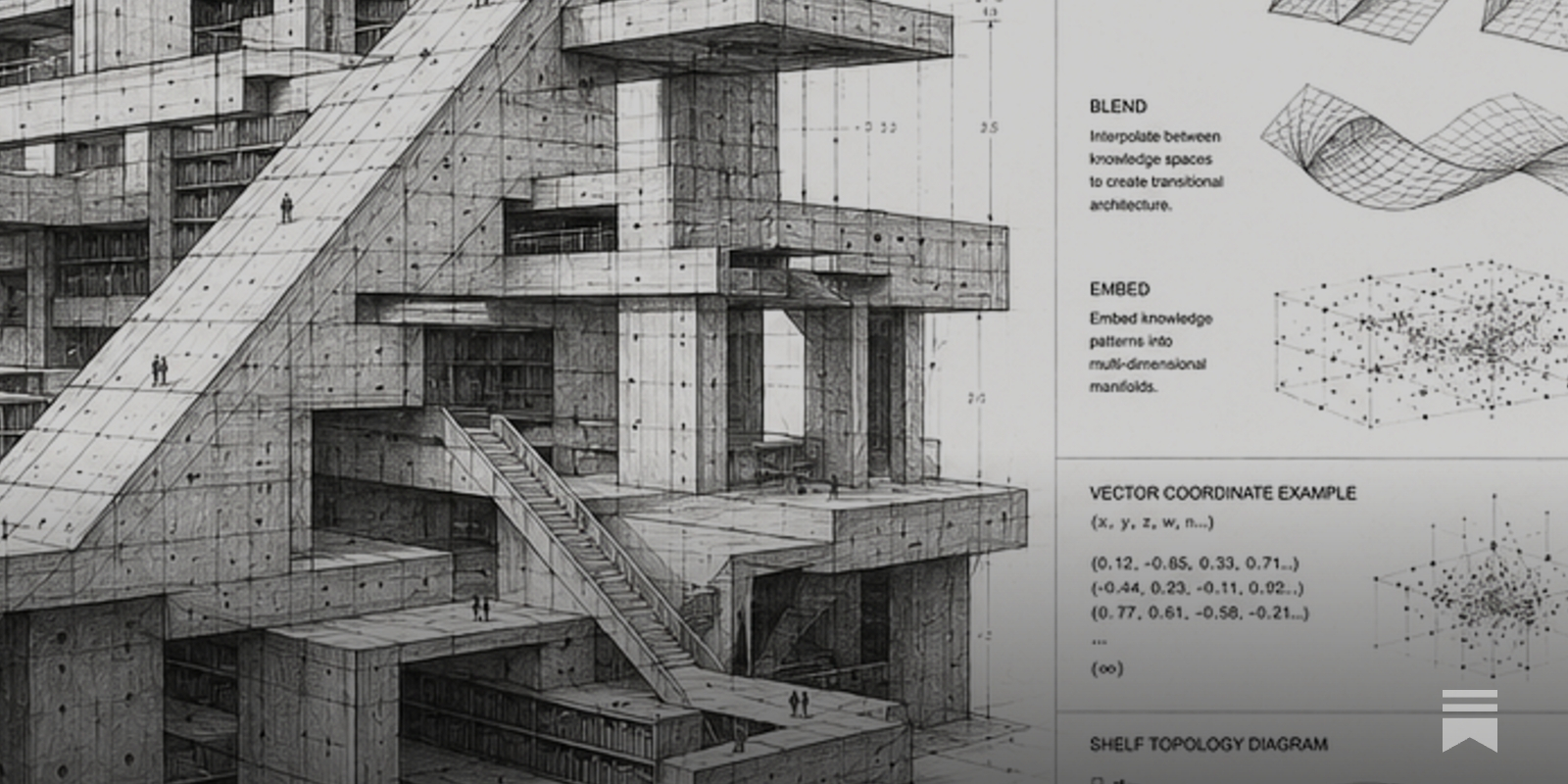
On Interpolatable Archives, Part 1: Compulsions to Connect, Warburg, Borges and Goldsmith, Cultural Technologies and Digital Oralities
Import AI 463: Self-improving robots; a 10k Chinese GPU cluster; and an elegiac essay for the human era
What eras bookend our interregnum?

annotations: Le progrès technique tend-il naturellement à préserver l'environnement ?
traduction française du billet de blog "Directed technological change and resources" de Daron Acemoglu & James Robinson
Designs for the pluriverse: radical interdependence, autonomy, and the making of worlds
"Arturo Escobar presents a new vision of design theory by arguing for the creation of what he calls 'autonomous design'--a design practice aimed at channeling design's world-making capacity toward ways of being and doing that are deeply attuned to justice and the Earth"--Publisher description

