

most people don't have coherent politics, but a collection of socially acceptable behaviors embedded in stories about why we do them. tbh even having coherent politics mostly means trying to keep those stories and behaviors consistent across different contexts
Jul 18, 2026 at 12:34 PM
Politics? In My Fandom? - Dhole Moments
I dislike politics in general. That doesn’t mean I don’t write about it when it’s relevant, but I’m always less happy with any of my writing that touches on these subjects. …

The social media discourse of engaged partisans is toxic even when politics are irrelevant
Abstract. Prevailing theories of partisan incivility on social media suggest that it derives from disagreement about political issues or from status compet
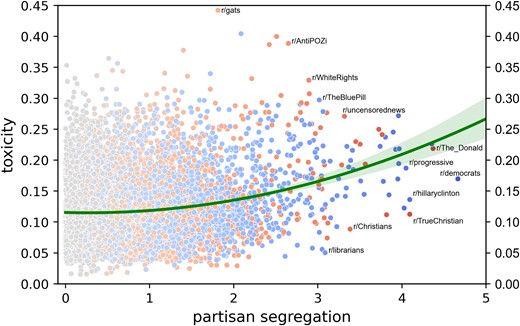
The social media discourse of engaged partisans is toxic even when politics are irrelevant
Abstract. Prevailing theories of partisan incivility on social media suggest that it derives from disagreement about political issues or from status compet
There is no fresh air: A problem with the concept of echo chambers
Standardly, echo chambers are thought to be structures that we should avoid. Agents should keep away from them, to be able to assess a fuller range of evidence and avoid having their confidence in that information manipulated. This paper argues against that standard view. Not only can echo chambers be neutral or good for us, but the existing definitions apply so widely that such chambers are unavoidable. We are all in large numbers of echo chambers at any time – they can be found not just on social media or in political groups, but in almost every social or epistemic group we could categorise ourselves into. Because we are finite and fallible, we cannot escape them and need to exist in them just to get by. The concept, then, does not actually capture something as structurally problematic as the paradigmatic cases would suggest. Our way of using the term in social epistemology needs to change.

Who Participates in Politics on Social Media, and Why?
People really do learn about politcs on social media says a new study from Belgium, but the loudest voices are often not the most objective, writes Tim Bernard.

'No Politics' Rules | The Paper Pilot
The Paper Pilot's digital garden of thoughts on philosophy, politics, and sociology
The limits of social media as a source of political information during routine and crisis times across 17 countries
Recent studies on political knowledge suggest people learn little about political events and societal issues from social media. Potentially, social media are a more effective source of information ...

Metaphor and the Political War
Metaphor and the Political War
Left & Right: The Psychological Significance of a Political Distinction
This book brings together for the first time an updated, revised collection of influential essays and articles that capture some of the most exciting scientific and scholarly contributions to the topic ...

Misplaced Divides? Discussing Political Disagreement With Strangers Can Be Unexpectedly Positive
Differences of opinion between people are common in everyday life, but discussing those differences openly in conversation may be unnecessarily rare. We report three experiments ( N = 1,264 U.S.-based adults) demonstrating that people’s interest in discussing important but potentially divisive topics is guided by their expectations about how positively the conversation will unfold, leaving them more interested in having a conversation with someone who agrees versus disagrees with them. People’s expectations about their conversations, however, were systematically miscalibrated such that people underestimated how positive these conversations would be—especially in cases of disagreement. Miscalibrated expectations stemmed from underestimating the degree of common ground that would emerge in conversation and from failing to appreciate the power of social forces in conversation that create social connection. Misunderstanding the outcomes of conversation could lead people to avoid discussing disagreements more often, creating a misplaced barrier to learning, social connection, free inquiry, and free expression.

The social media discourse of engaged partisans is toxic even when politics are irrelevant
Abstract Prevailing theories of partisan incivility on social media suggest that it derives from disagreement about political issues or from status competition between groups. This study—which analyzes the commenting behavior of Reddit users across diverse cultural contexts (subreddits)—tests the alternative hypothesis that such incivility derives in large part from a selection effect: Toxic people are especially likely to opt into discourse in partisan contexts. First, we examined commenting behavior across over 9,000 unique cultural contexts (subreddits) and confirmed that discourse is indeed more toxic in partisan (e.g. r/progressive, r/conservatives) than in nonpartisan contexts (e.g. r/movies, r/programming). Next, we analyzed hundreds of millions of comments from over 6.3 million users and found robust evidence that: (i) the discourse of people whose behavior is especially toxic in partisan contexts is also especially toxic in nonpartisan contexts (i.e. people are not politics-only toxicity specialists); and (ii) when considering only nonpartisan contexts, the discourse of people who also comment in partisan contexts is more toxic than the discourse of people who do not. These effects were not driven by socialization processes whereby people overgeneralized toxic behavioral norms they had learned in partisan contexts. In contrast to speculation about the need for partisans to engage beyond their echo chambers, toxicity in nonpartisan contexts was higher among people who also comment in both left-wing and right-wing contexts (bilaterally engaged users) than among people who also comment in only left-wing or right-wing contexts (unilaterally engaged users). The discussion considers implications for democratic functioning and theories of polarization.
Prism Political Quiz
Prism Political Quiz attempts to provide you with the breakdown of your ideology in 6 dimensions: Government, Economy, Society, Religion, Security, and Foreign Policy. Unlike many other quizzes, rather than giving you Agree/Disagree questions, it gives you a number of statements and asks you to pick the one that best represents your views. This ideally gives a better chance to show your reasoning for a particular view that allows differentiating someone who opposes democracy because they believe in monarchy from someone who disagrees with it because they believe in anarchy, for example. Additionally, each question has an option for apathy or disagreeing with everything, to allow it to even capture the beliefs of people who believe in very unique ideologies.
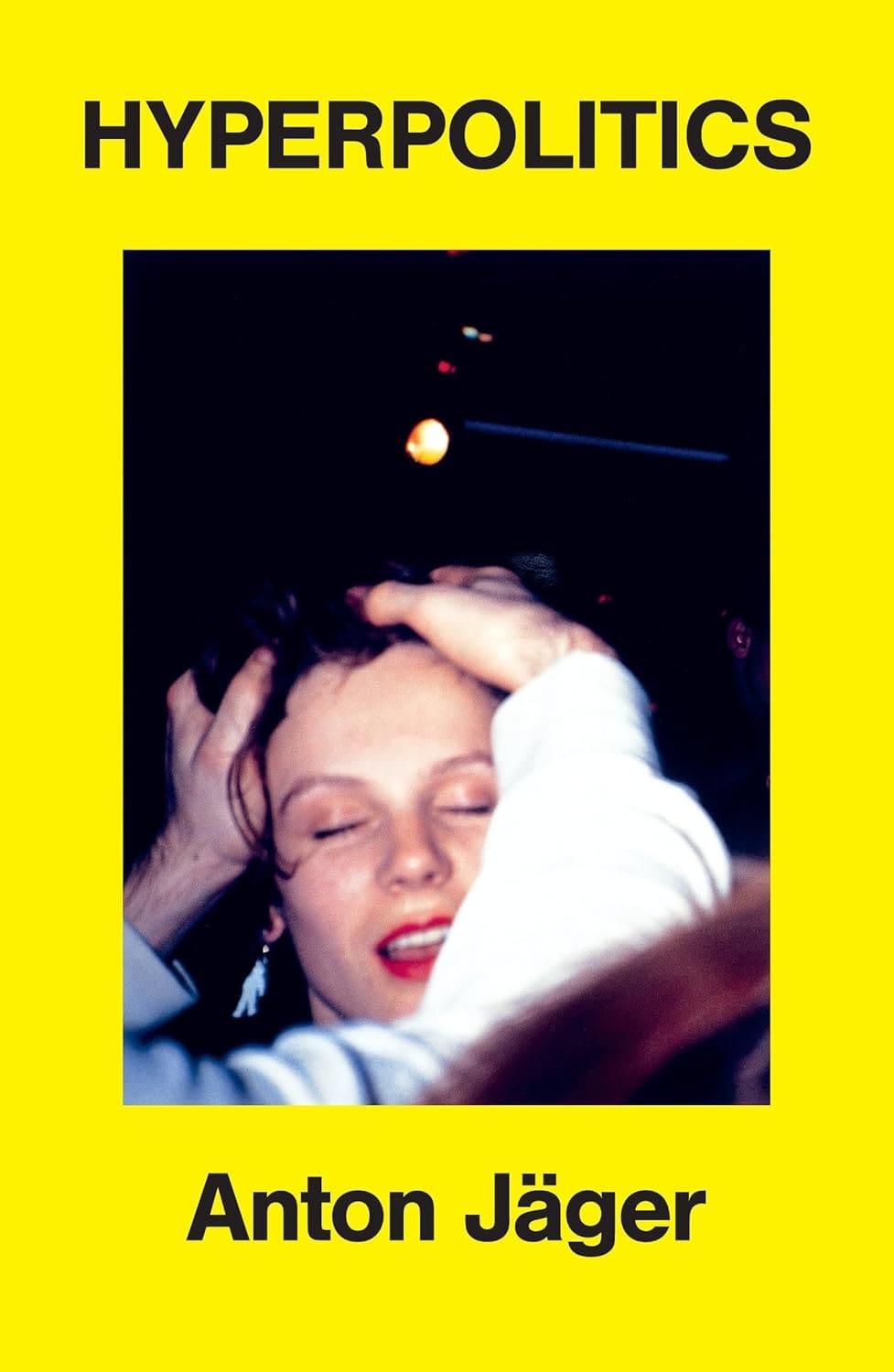
Hyperpolitics? Yes, Please • Protean Magazine
Alex Colston reviews Anton Jäger's "Hyperpolitics," filling in gaps in the book's short argument and arguing for the importance of political formations and activities independent of official political society.
On Politics at Work
What happens when you can’t have a political conversation at work? Political conversation continues at work, between coworkers. If these are conversations that …

Social Media Vs Democracy
