

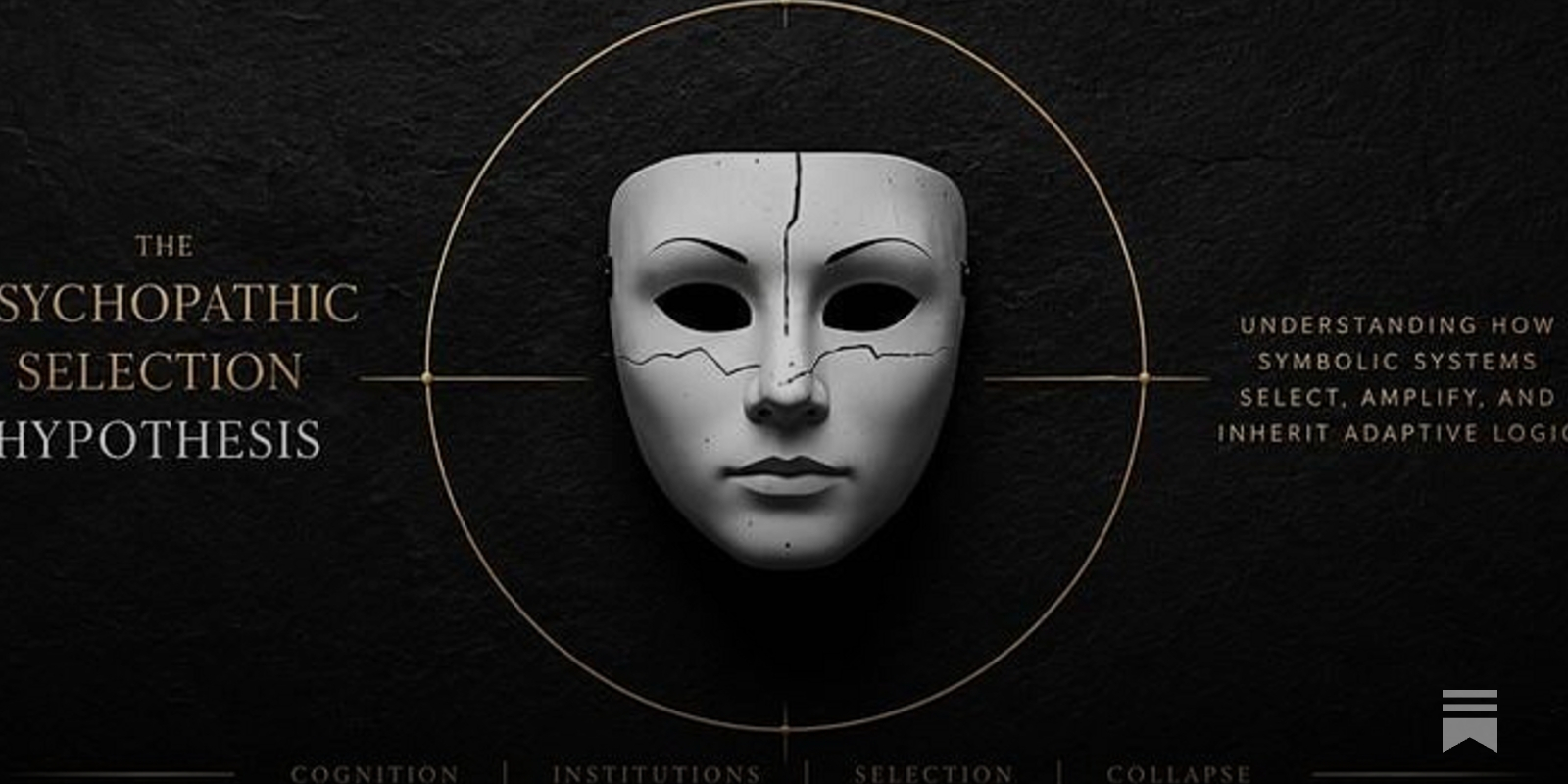
"[PSH] asks not only what the psychopathic profile is, but where it wins. ... whether the traits that once had to remain parasitic at the margins of reciprocal communities can become structurally amplified in environments where consequence is abstracted and reward is symbolic."

The Psychopathic Selection Hypothesis Guide for Readers
gregelliott2000.substack.comJun 21, 2026 at 3:56 PM
The Psychopathic Selection Hypothesis: The Rules of the Game Keep Us Trapped - The Great Simplification
In this episode, Nate is joined by Greg Elliott, a systems theorist and author of the Psychopathic Selection Hypothesis (PSH), to unpack why our institutions themselves have become so psychopathic, and how that affects the behavior of the average human.

The Psychopathic Selection Hypothesis (PSH): A Guide to Symbolic Selection, Behavioural Architecture, and the Evolution of Human Gameboards
How human created symbolic systems alter the adaptive environment, select among behavioural strategies, generate institutional games, and reshape the evolutionary conditions inherited by future actors
How to spot a psychopath: ‘It’s like the difference between a domestic cat and a wild cat’
People with persistent predatory personalities cause an inordinate amount of pain. Recently, our shared understanding of them has grown – and it could help protect us

Reality Roundtable #19 — Dark Triad Personality Traits: How Psychopathy, Narcissism, and Machiavellianism Impact Our Cultures & Social Systems - The Great Simplification
Psychopathy is often portrayed as a rare and distant phenomenon – something confined to movie villains or prison cells. Yet when psychopathy is combined with narcissism and Machiavellianism to form what psychologists call the Dark Triad, its impact becomes far more immediate. Individuals with these traits can wield disproportionate influence over our culture, institutions, and daily lives. What goes on inside their minds, and how do they shape the world around us?

Turning the Dials Back on Psychopathy: Decent People, Indecent System - The Great Simplification
This week’s Frankly builds on Nate’s recent conversation with systems theorist Greg Elliott, who came on the platform to discuss why our institutions themselves have become psychopathic and how that affects the behavior of the average human.
Psychiatry at the Margins | Awais Aftab | Substack
Exploring critical, philosophical, and scientific debates in psychiatric practice and the psy-sciences. Click to read Psychiatry at the Margins, by Awais Aftab, a Substack publication with tens of thousands of subscribers.

Reflective and Impulsive Determinants of Social Behavior - Fritz Strack, Roland Deutsch, 2004
This article describes a 2-systems model that explains social behavior as a joint function of reflective and impulsive processes. In particular, it is assumed t...

Who Gets to Define Human Suffering?
As psychiatry concedes long-standing criticisms of diagnosis, a deeper question emerges: What now justifies its authority over human suffering?
on place and person - encyclopedia eidolica
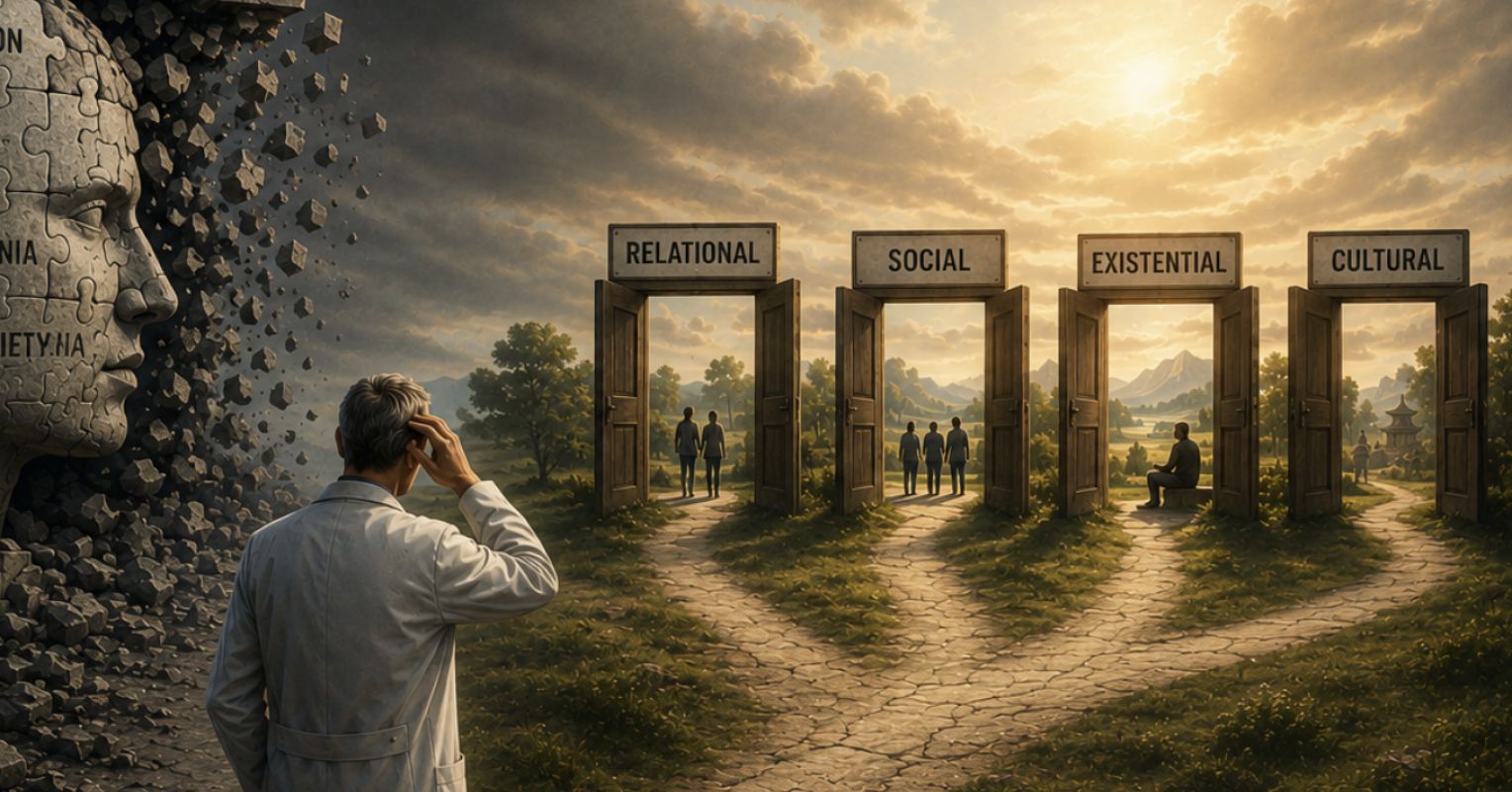
In several conversations with a friend I was invited to revisit some prior beliefs I had posited on the relationship between the environment and the self; at various times in my life this position has reversed, then reversed again, but I think it’s reaching a more nuanced, unified position.

Geeks, MOPs, and sociopaths in subculture evolution | Meaningness
How muggles and sociopaths invade and undermine creative subcultures; and how to stop them.

Communities of Not
On the strange hostility that grows in communities built around abstinence.
Members of right-leaning parties prefer leaders with ‘dark triad’ personality traits
The ‘dark triad’ is made up of narcissism, Machiavellianism and psychopathy.

Diagnosed psychopath explains why 'normal people' can never spot them
Loic De Marie is a diagnosed psychopath and has spoken of how to spot one in real life
.png)
This, and even more - to get super-rich almost requires *suppressing* the cultivation of a self or interiority. “Our system produces, elevates, and rewards psychopaths.” x.com/uTobian/status/20412132683884…

Levi Stahl
The empty boredom of the super-rich who never had to cultivate a self or interiority is the root cause of so many of our problems.

