

“Open, Collaborative and Participative Science: Rethinking the Legitimacy of Knowledge, the Policies and the Future of Science.” - looks like an interesting track during the Eu-SPRI Forum Annual Conference 2026 (10–12 June 2026, Valencia) euspri2026.webs.upv.es
Jan 29, 2026 at 9:24 PM
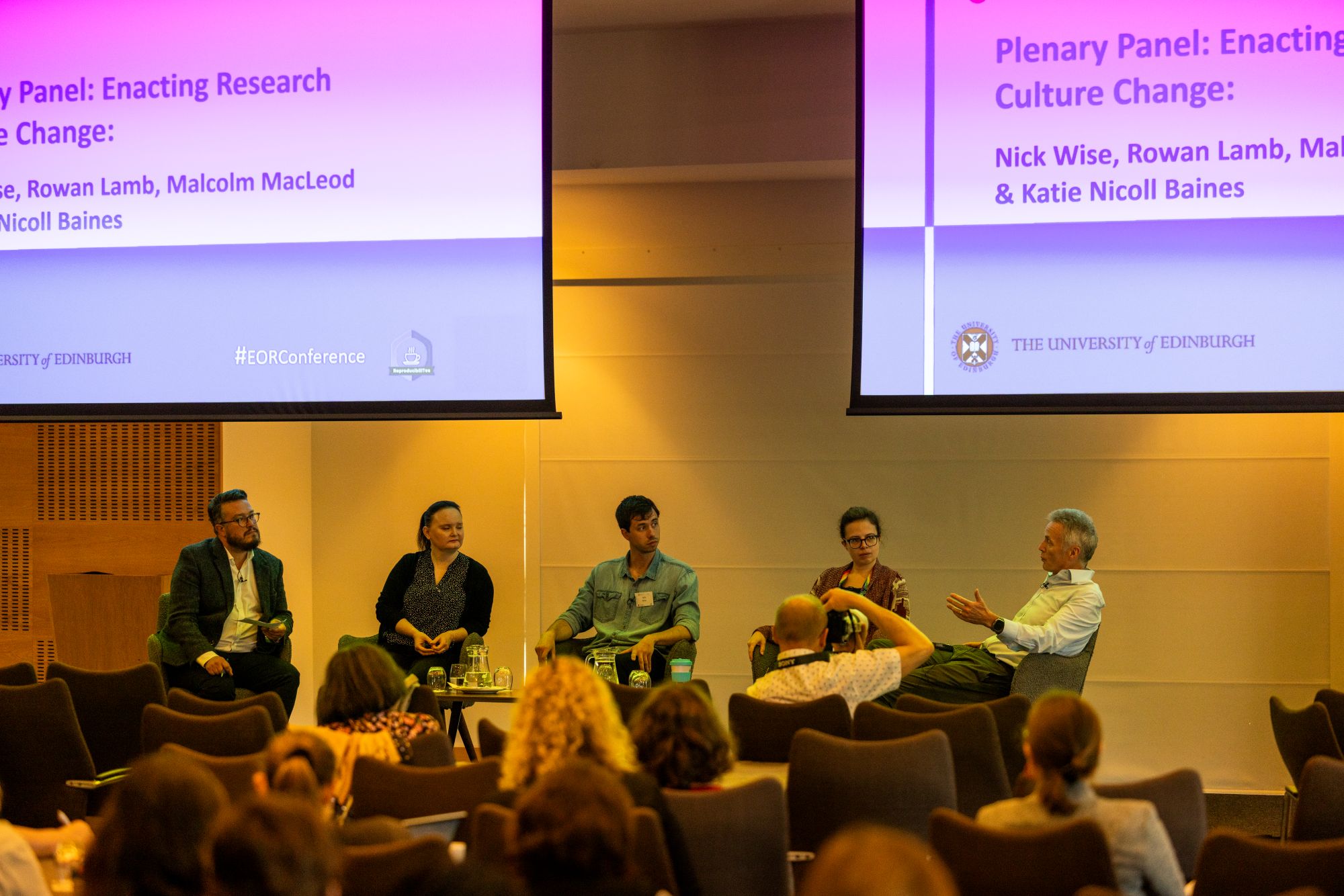
Edinburgh Open Research Conference 2026 | Library | Library
Join us for the Edinburgh Open Research Conference. This year our conference centres on UNESCO's "Recommendations for Open Science", reflecting our new institutional focus on these recommendations.
Empowering science communities with open, democratic, researcher-owned infrastructure.
We’re building communities and tech for publishing, curating, sharing, and discussing research online using ATProto and other decentralized protocols.
Empowering science communities with open, democratic, researcher-owned infrastructure.
We’re building communities and tech for publishing, curating, sharing, and discussing research online using ATProto and other decentralized protocols.
ATScience x IOSP — Open science on the open social web
29 Apr–30 Apr · the Netherlands. Two days shaping the future of open science.
Science as a global public good: responding to challenges of the modern era
Abstract. Science has been crucial to the creation of the modern world and is essential in navigating its complexities. Well-informed citizens, willing to

Metascience 2027
A global gathering for knowledge sharing, community building, and opportunities to define a roadmap of research and intervention priorities to improve science.

Banff 2025, Open Science Meeting — Continuous Science Foundation
We’ve got to a big idea—and now it’s time to get practical. CSF is looking for curious, committed individuals to help us tackle some of the toughest (and most exciting) questions around how to make Composable Science real.
Open Science Retreat 2027 - REWIRE Edition
New to Open Science or already an open science champion? Researcher or research support professional? You're all welcome! Curious about computational reproducibility? Join us to explore what it takes to rerun an analysis and reproduce the same results. Looking for a week of fresh ideas, renewed energy and inspiration? Come join us! AN UNCONFERENCE FOR THE OPEN SCIENCE COMMUNITY The Open Science Retreat is a week dedicated to scientific discussions and reflection, getting work done, making...

Science Communication as a Collective Intelligence Endeavor: A Manifesto and Examples for Implementation
Effective science communication is challenging when scientific messages are informed by a continually updating evidence base and must often compete against misinformation. We argue that we need a new program of science communication as collective intelligence—a collaborative approach, supported by technology. This would have four key advantages over the typical model where scientists communicate as individuals: scientific messages would be informed by (a) a wider base of aggregated knowledge, (b) contributions from a diverse scientific community, (c) participatory input from stakeholders, and (d) better responsiveness to ongoing changes in the state of knowledge.

ScienceOpen
Ideal for sharing early results, building dialogue, and gaining recognition — all while staying flexible for future publication.
Why Do We Call It Participatory Science? | Smithsonian Environmental Research Center
Convergence · Gathering open science · Montreal, June 16–18, 2027
Three days in Montreal for the people rethinking how science is created, shared, funded, published, measured, and used. June 16–18, 2027.

AI as the Catalyst of the New Paradigm of Science? | Cadmus Journal
The rapid advancement of Artificial Intelligence (AI) is reshaping the landscape of scientific inquiry. This article examines the challenges confronting modern science, including knowledge fragmentation, diminishing returns of current paradigms, and the disconnect between science and society. It explores how AI offers solutions enhancing collaboration and integrating knowledge—as well as considers the possible “darker side” of using AI in research. However, the advent of AI in science not only enhances scientific research but also redefines the role of human researchers and fosters a new paradigm of human understanding. By embracing these transformations, a more cohesive and responsive scientific enterprise can emerge.
IOSP is a wonderful event by @scios.tech focused on building the open science stack of the future: modular research, community owned infra, novel funding. And we’re putting on an #ATScience workshop at the upcoming meeting - join us Leiden, Oct 12-15! Details in thread 👇 iosp.science#iosp2026
"experiments to be in the realm of search and discovery, enabling curation, trust signals, and other approaches that build on the modular elements of science" #modularscience #atscience Congrats to the whole @openrxiv.bsky.social team!! So exciting.

openRxiv
Introducing openRxiv Labs! 🔬 Growing from the strong foundation of bioRxiv & medRxiv, Labs is an experimental space for working with collaborators to push the boundaries of open scientific communication. 👉 Check it out and learn more: openrxiv.org/openrxiv-labs-launch/ #OpenScience #Preprints #Scicomm
I'm convinced that open social protocols like #atproto have a crucial role to play in the future of science. Excited to share MOSAIC - our best effort at articulating the thesis, why it matters, and how to build and fund it (in collab w/ @exgenesis.ingroup.social ) 🧵

MOSAIC — Modular Open Science, AI & Collective Intelligence
mosaic-program.org


