

Since some seem determined not to get it: Arguing science shouldn’t be political is like arguing that ducks shouldn’t be waterfowl. Sure, whatever floats your boat, but they wouldn’t be ducks then would they? Science is a collective human effort at sensemaking—the very definition of political.

Carl T. Bergstrom
When I was 5, I loved science, which I took to be planets and magnets and chemicals and shit. Soon I realized science was a collective human activity, and these were just the objects of its attention. Anyway, whenever I read an OpEd on how science isn't political, I think "Are you 5 years old?"
Nov 22, 2024 at 7:53 AM
Why Science Can't Settle Political Disputes
Attempts to scientifically “rationalize” policy, based on the belief that science is purified of politics, may be damaging democracy
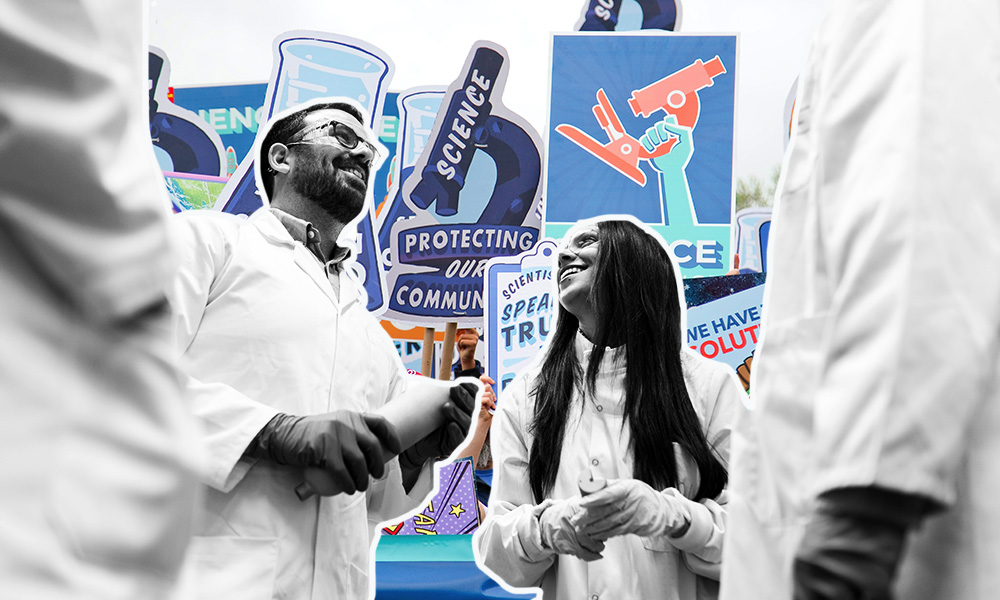
Sciences perceived as precise and consensual are more trusted
Research focused on the United States shows that people’s trust in science varies considerably between disciplines. Existing explanations of these trust gaps stress the role of ideology: when people perceive scientists of a particular discipline to be ideologically like-minded, they tend to trust them more. Here, we report two findings: first, trust gaps between disciplines also exist in France—a representative sample of the French population (N = 1012) trusted researchers in biology and physics more than researchers studying climate science, economics, or sociology. Second, the more precise and consensual participants perceive scientific findings to be, the more they tend to trust the scientists (across and within disciplines). While these findings are correlational, they align with a non-ideological explanation of trust in science: the rational impression account. This account proposes that people can come to trust scientists by relying on basic cognitive inference processes, which tend to be generally rational.

What could a human right to participate in science be?
Abstract. At first sight, the idea of a human right to participate in science may seem absurd. Many assume science must be the preserve only of those with
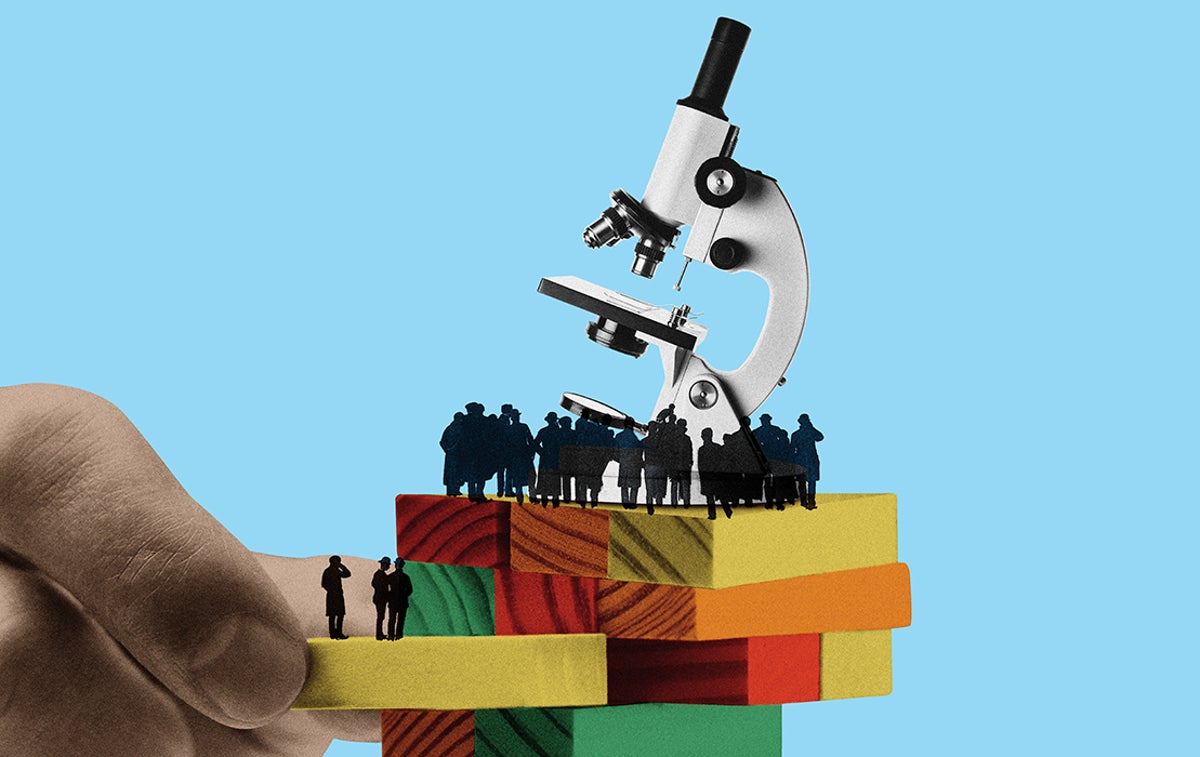
America’s compact between science and politics is broken
How did we get here?
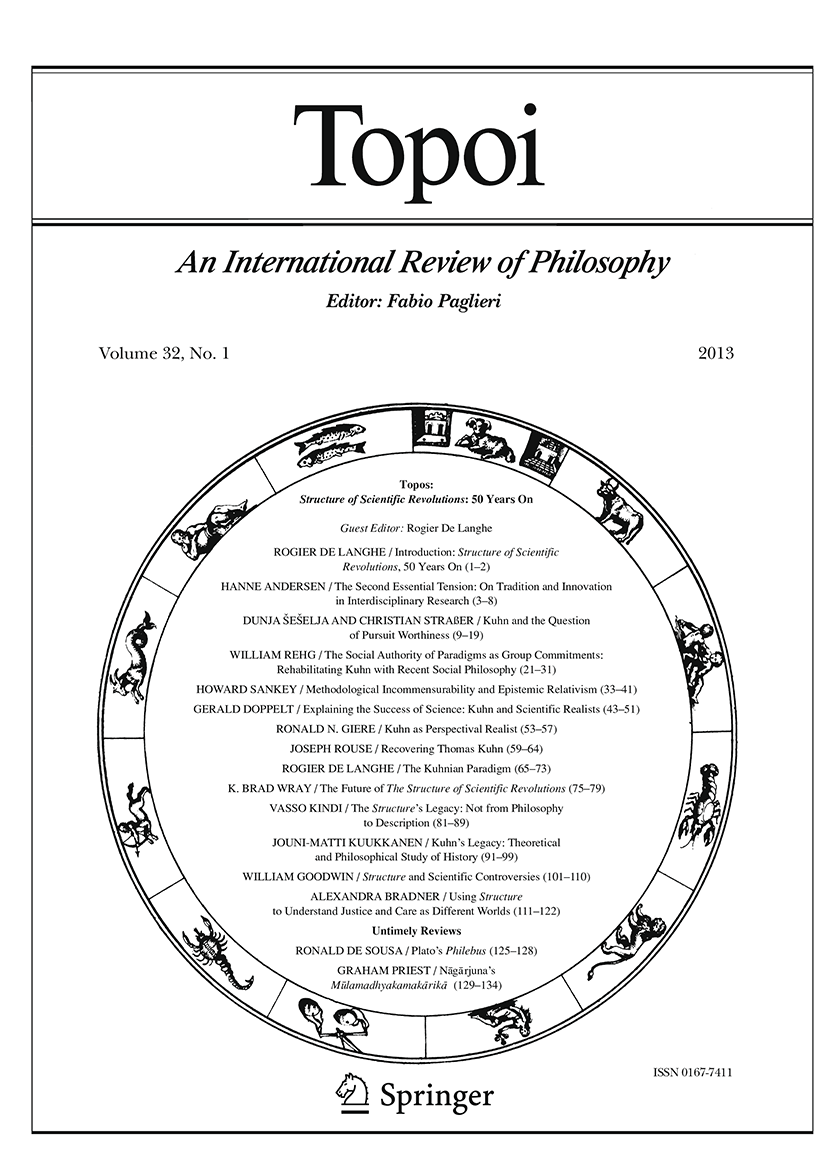
Morality vs. Politics as a Framing Problem: How (Not) to Misunderstand the Fight Against Climate Change
Topoi - This paper is guided by two research hypotheses: (1) In contemporary public discourse, many of the most urgent political problems are predominantly framed and understood in moral terms; (2)...
How can citizen science reduce psychological distance to science? Insights from three projects in contested environmental contexts
Citizen science (CS) is a participatory mode of knowledge production, enabling non-scientific actors to contribute to and sometimes contest scientific agendas and interpretations, making it a way to bridge science and society. This paper examines how that potential unfolds by analysing the individual perspectives of citizen scientists through the lens of Psychological Distance to Science (PSYDISC). Drawing on three case studies of contested environmental CS, we identify which contextual aspects of CS shape citizen scientists' experiences of social, spatial, temporal, or hypothetical distance to relevant science, and how these experiences may relate to trust. Our findings underscore the role of science communication as both a channel for dissemination, and as a constitutive element of participatory research; crucial for reducing psychological distance and enabling socially robust knowledge production, especially in contested, policy-relevant science settings.
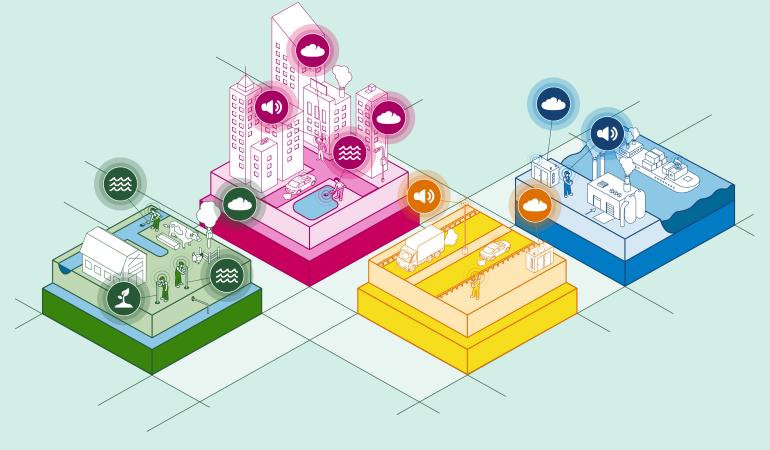
Breaking the silence
Research on science communication has largely focused on teaching scientists how to describe their studies in ways that interest the public while deepening their understanding of scientific exploration. However, there is another, often overlooked side to science communication—how scientists respond when questions arise about the integrity of their research. Often, the tendency has been to stay silent and wait for any controversy to pass or be resolved in professional forums. But in an age of growing, intense attacks on science, silence can be detrimental to both public trust and the careers of scientists who are under scrutiny. For better or worse, journalists, social media professionals, and the public may take a response of “no comment” as a concession that the critics are correct, so forthright communication about research questions is more urgent than ever.

We argue badly, and nothing accumulates. How could we do better? | Reason Commons — Issue Trees & Logical Thinking Process
Millions of people argue every day about the things that matter most — climate change, what to do about AI, how we might build a better world. Some of it is sharp, even insightful. And almost none of it accumulates.
The one science reform we can all agree on, but we're too cowardly to do
OR: the long overdue forest fire


An epistemology for democratic citizen science
Abstract. More than ever, humanity relies on robust scientific knowledge of the world and our place within it. Unfortunately, our contemporary view of scie
Why do people trust physicists and biologists more than economists or sociologists? In a new paper out in Public Understanding of Science, @hugoreasoning.bsky.social and I argue that it has to do with perceived precision and consensus. doi.org/10.1177/09636625261471051

Sciences perceived as precise and consensual are more trusted - Jan Pfänder, Hugo Mercier, 2026
doi.org