

We've written about how social media companies and other technology firms manipulate the scientific record in their favor. In our revisions, we will need to address how they have captured the state department to literally prevent researchers who criticize them FROM EVEN ENTERING THE COUNTRY.

Jameel Jaffer
This wild document is the basis for the State Department's decision to cancel the visas and green cards of tech researchers who study the social media platforms and of tech regulators who enforce privacy and transparency laws. Disclosed to us last night in @thecoalition.bsky.social v. Rubio.
Apr 25, 2026 at 12:32 AM
The Risks of Industry Influence in Tech Research
Emerging information technologies like social media, search engines, and AI can have a broad impact on public health, political institutions, social dynamics, and the natural world. It is critical to develop a scientific understanding of these impacts to inform evidence-based technology policy that minimizes harm and maximizes benefits. Unlike most other global-scale scientific challenges, however, the data necessary for scientific progress are generated and controlled by the same industry that might be subject to evidence-based regulation. Moreover, technology companies historically have been, and continue to be, a major source of funding for this field. These asymmetries in information and funding raise significant concerns about the potential for undue industry influence on the scientific record. In this Perspective, we explore how technology companies can influence our scientific understanding of their products. We argue that science faces unique challenges in the context of technology research that will require strengthening existing safeguards and constructing wholly new ones.

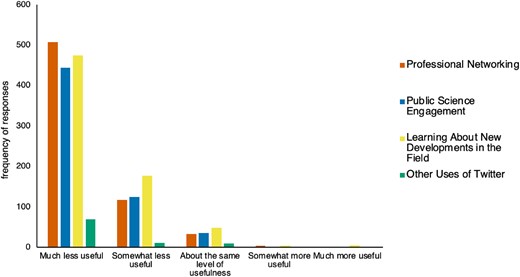
Scientists no Longer Find Twitter Professionally Useful, and have Switched to Bluesky
Synopsis Social media has become widely used by the scientific community for a variety of professional uses, including networking and public outreach. For the past decade, Twitter has been a primary home of scientists on social media. In recent years, new leadership at Twitter has made substantive changes that have resulted in increases in the prevalence of pseudoscience, conspiracy theory, and harassment on the platform, causing many scientists to seek alternatives. Bluesky has been suggested as a good alternative to Twitter, but the phenomenon of academics switching social media platforms has not previously been studied. Here we report on the results of a survey distributed to scientists on Twitter and Bluesky (n = 813). Results overwhelmingly confirm that changes to Twitter have made the social media platform no longer professionally useful or pleasant, and that many scientists have abandoned it in favor of Bluesky. Results show that for every reported professional benefit that scientists once gained from Twitter, scientists can now gain that benefit more effectively on Bluesky than on Twitter.
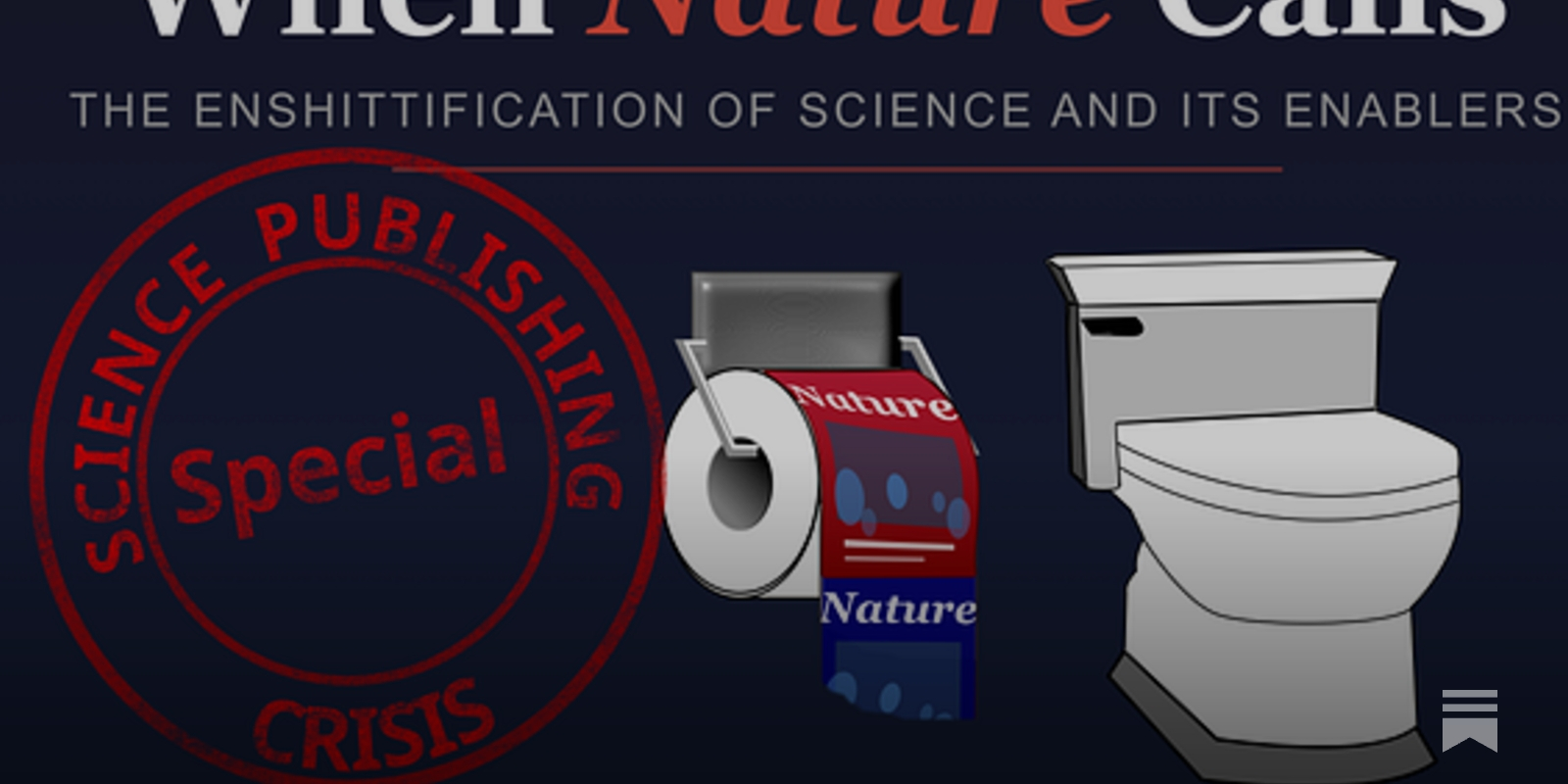
When Nature Calls: The Enshittification of Science and Its Enablers
Proof-of-work papers, policy laundering, and the collapse of self-correction
Governing by dismantling: tech oligarchy and the stifling of public data infrastructure
Published in Science as Culture (Ahead of Print, 2026)

Shifts in U.S. Social Media Use, 2020-2024: Decline,...
Using nationally representative data from the 2020 and 2024 American National Election Studies (ANES), this paper traces how the U.S. social media landscape has shifted across platforms,...
Custodians of the Internet
A revealing and gripping investigation into how social media platforms police what we post online—and the large societal impact of these decisions Most use...
Big Tech tried to get young people addicted. Now we’re fighting back
Two seismic court decisions in the US have intervened where legislators have failed to defend social media users from exploitation, writes campaigner Zamaan Qureshi

The Failed Migration of Academic Twitter: A Case Study of...
Following changes in Twitter's ownership in 2022 and subsequent changes to content moderation policies, many in academia looked to move their discourse elsewhere and migration to Mastodon was...
The Failed Migration of Academic Twitter: A Case Study of...
Following changes in Twitter's ownership in 2022 and subsequent changes to content moderation policies, many in academia looked to move their discourse elsewhere and migration to Mastodon was...
Bluesky 2025 Transparency Report - Bluesky
Throughout 2025, our Trust & Safety work was guided by the premise that social media should serve the people using it. Our transparency report provides data and details about those investments, and the progress we made this year.
Science discussions of retracted articles on Bluesky: public scrutiny or misinformation spreading?
Post-publication peer review (PPPR) has emerged as an important supplement to traditional peer review, with social media playing a growing role in publicising potential problems in published research. However, it remains unclear whether social media discussions of retracted articles primarily reflect good practices, such as exposing flaws and acknowledging retraction status, or bad practices, such as overlooking retractions and continuing to disseminate scientific misinformation. In this study, we collected Bluesky posts referencing scholarly articles from Altmetric and retrieved metadata for the referenced articles using OpenAlex. The final dataset included 284 retracted articles with 79 pre-retraction posts and 857 post-retraction posts, 59 retraction notices with 186 posts, and 609,461 non-retracted articles with 1,344,756 posts. We manually coded Bluesky posts discussing retracted articles to identify instances of good and bad practice. The results show that posts demonstrating good practice (89.9%) substantially outnumbered those demonstrating bad practice (10.1%). Posts reflecting good practice also had more user engagement. In the pre-retraction phase, good practice posts constituted a slight minority (43.0%), whereas in the post-retraction phase they were dominant (94.2%). Most negative posts in the pre-retraction phase (90.0%) had good practice while only 17.3% positive posts in the post-retraction phase showed bad practice. Thus, sentiment analysis can be helpful to filter posts that could flag potential flaws before retraction, but it may struggle to accurately identify the spread of misinformation after retraction. More broadly, this study highlights the potential of Bluesky to support responsible scientific communication, public scrutiny, and research integrity.
Science discussions of retracted articles on Bluesky: public scrutiny or misinformation spreading?
Post-publication peer review (PPPR) has emerged as an important supplement to traditional peer review, with social media playing a growing role in publicising potential problems in published research. However, it remains unclear whether social media discussions of retracted articles primarily reflect good practices, such as exposing flaws and acknowledging retraction status, or bad practices, such as overlooking retractions and continuing to disseminate scientific misinformation. In this study, we collected Bluesky posts referencing scholarly articles from Altmetric and retrieved metadata for the referenced articles using OpenAlex. The final dataset included 284 retracted articles with 79 pre-retraction posts and 857 post-retraction posts, 59 retraction notices with 186 posts, and 609,461 non-retracted articles with 1,344,756 posts. We manually coded Bluesky posts discussing retracted articles to identify instances of good and bad practice. The results show that posts demonstrating good practice (89.9%) substantially outnumbered those demonstrating bad practice (10.1%). Posts reflecting good practice also had more user engagement. In the pre-retraction phase, good practice posts constituted a slight minority (43.0%), whereas in the post-retraction phase they were dominant (94.2%). Most negative posts in the pre-retraction phase (90.0%) had good practice while only 17.3% positive posts in the post-retraction phase showed bad practice. Thus, sentiment analysis can be helpful to filter posts that could flag potential flaws before retraction, but it may struggle to accurately identify the spread of misinformation after retraction. More broadly, this study highlights the potential of Bluesky to support responsible scientific communication, public scrutiny, and research integrity.
Frontiers In Research webinar on changes in science communication, the role of social media, and new infrastructure/tools - tomorrow (7/18) at 2 pm ET Looking forward to chatting with @ronentk.me & @joelchan86.bsky.social luma.com/7l18yyg4

Frontiers In Research: Open Science · Zoom · Luma
luma.comOne of the issues that has come up again and again in my reporting on misinformation and social media is the massive influence social media companies have on research in the field. Last night a preprint dropped that tries to get at this with some numbers. My piece in @science.org (and 🧪🧵 coming):

Nearly a third of social media research has undisclosed ties to industry, preprint claims
www.science.orgI'm excited to finally have a preprint of this paper up, a few years in the making. In it we argue that industry-driven manipulation of social media research is well underway and that norms and institutions in the field are ill-prepared to resist tech's influence. arxiv.org/abs/2510.19894
Remarkable how over a decade ago @michaelnielsen.bsky.social pointed the way towards solving long standing issues plaguing science to this day (issues that are all the more relevant in the age of AI mediated science)

Ronen Tamari
This is why @atproto.science is so relevant rn This compilation of essays indicates that scientists are most frustrated by insufficient “community tools and resources... Essential infrastructure for sharing, maintaining and building on existing work and data is also badly underdeveloped." >


