

brianpetro/obsidian-smart-connections
Find related notes and excerpts while writing. Your link building copilot displays relevant content in graph + list view. A local embedding model powers semantic search. Zero setup. No API key.
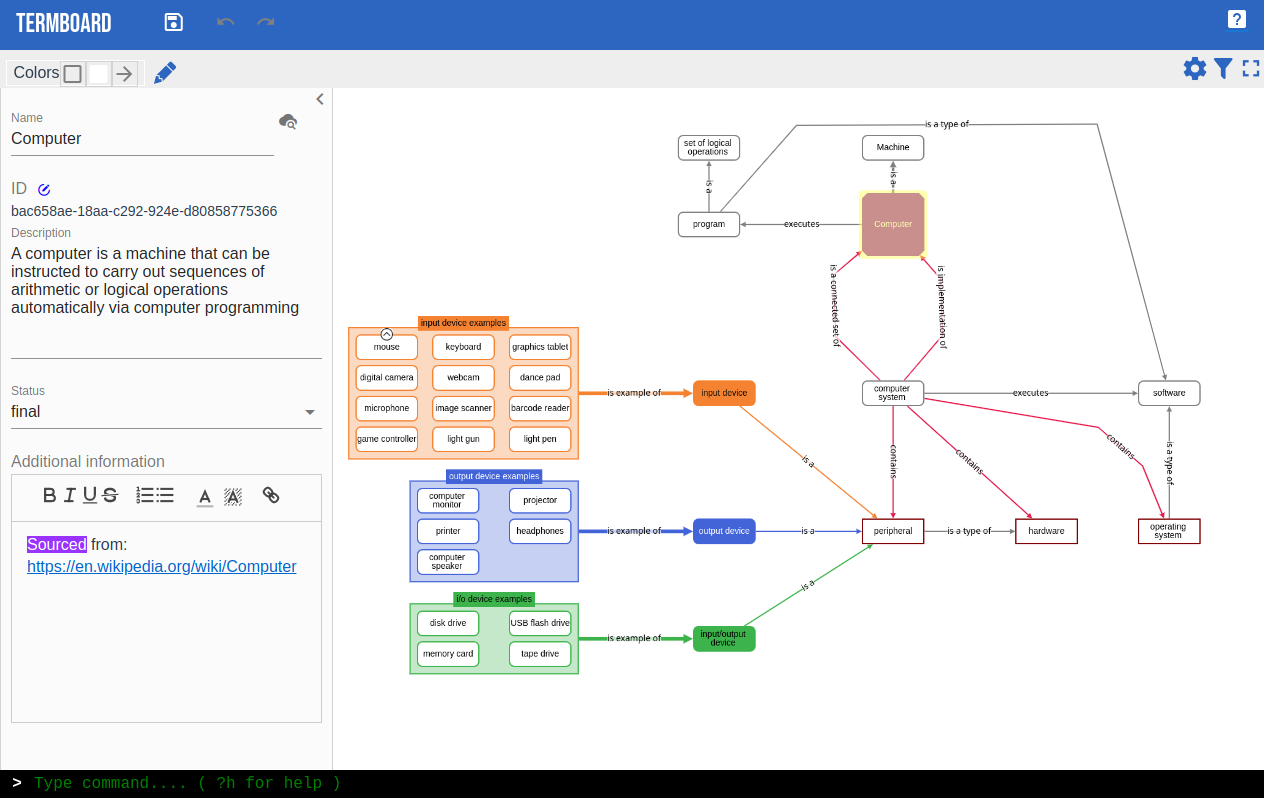
Documentation — Terminal Graph
Download Terminal Graph beta, learn the shortcuts, nodes, and dataflow model.
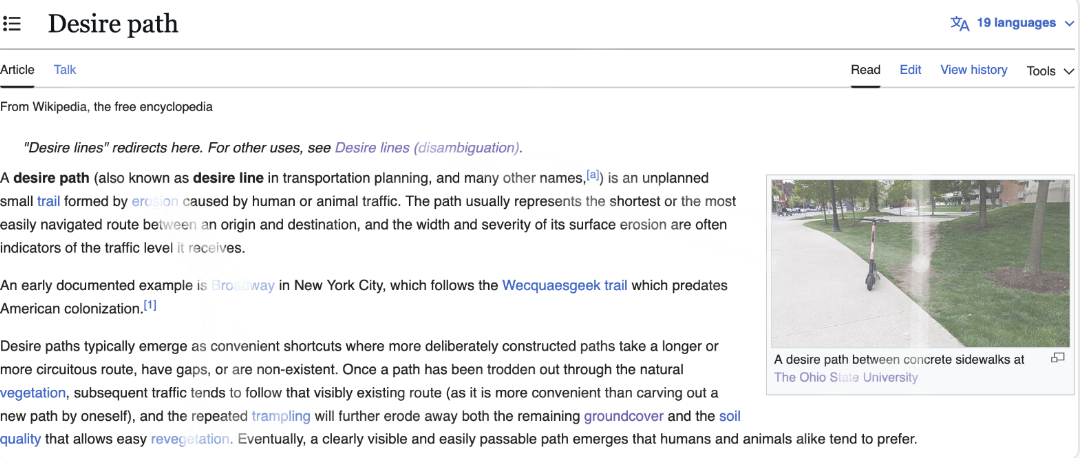
Desire Paths for Wikipedia
An extension that remembers the path of a cursor over the linked pages of Wikipedia, “wearing” them into the page.

Higher-Order Knowledge Representations for Agentic Scientific Reasoning
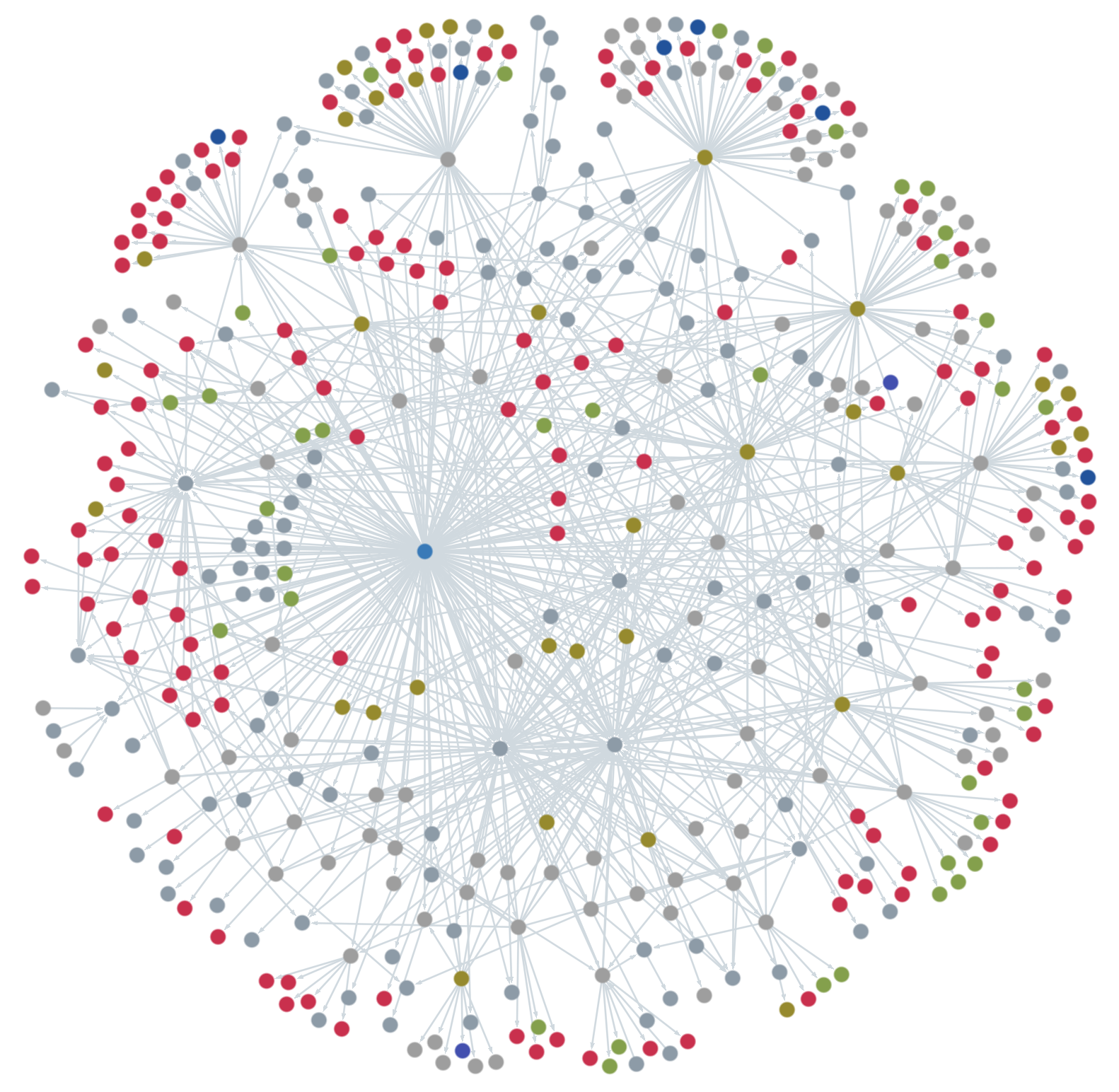
Scientific inquiry requires systems-level reasoning that integrates heterogeneous experimental data, cross-domain knowledge, and mechanistic evidence into coherent explanations. While Large Language Models (LLMs) offer inferential capabilities, they often depend on retrieval-augmented contexts that lack structural depth. Traditional Knowledge Graphs (KGs) attempt to bridge this gap, yet their pairwise constraints fail to capture the irreducible higher-order interactions that govern emergent physical behavior. To address this, we introduce a methodology for constructing hypergraph-based knowledge representations that faithfully encode multi-entity relationships. Applied to a corpus of ≈\approx 1,100 manuscripts on biocomposite scaffolds, our framework constructs a global hypergraph of 161,172 nodes and 320,201 hyperedges, revealing a scale-free topology (power law exponent ≈\approx 1.23) organized around highly connected conceptual hubs. This representation prevents the combinatorial explosion typical of pairwise expansions and explicitly preserves the co-occurrence context of scientific formulations. We further demonstrate that equipping agentic systems with hypergraph traversal tools, specifically using node-intersection constraints, enables them to bridge semantically distant concepts. By exploiting these higher-order pathways, the system successfully generates grounded mechanistic hypotheses for novel composite materials, such as linking cerium oxide to PCL scaffolds via chitosan intermediates. This work establishes a “teacherless” agentic reasoning system where hypergraph topology acts as a verifiable guardrail, accelerating scientific discovery by uncovering relationships obscured by traditional graph methods.
Yuchen Jin on Twitter / X
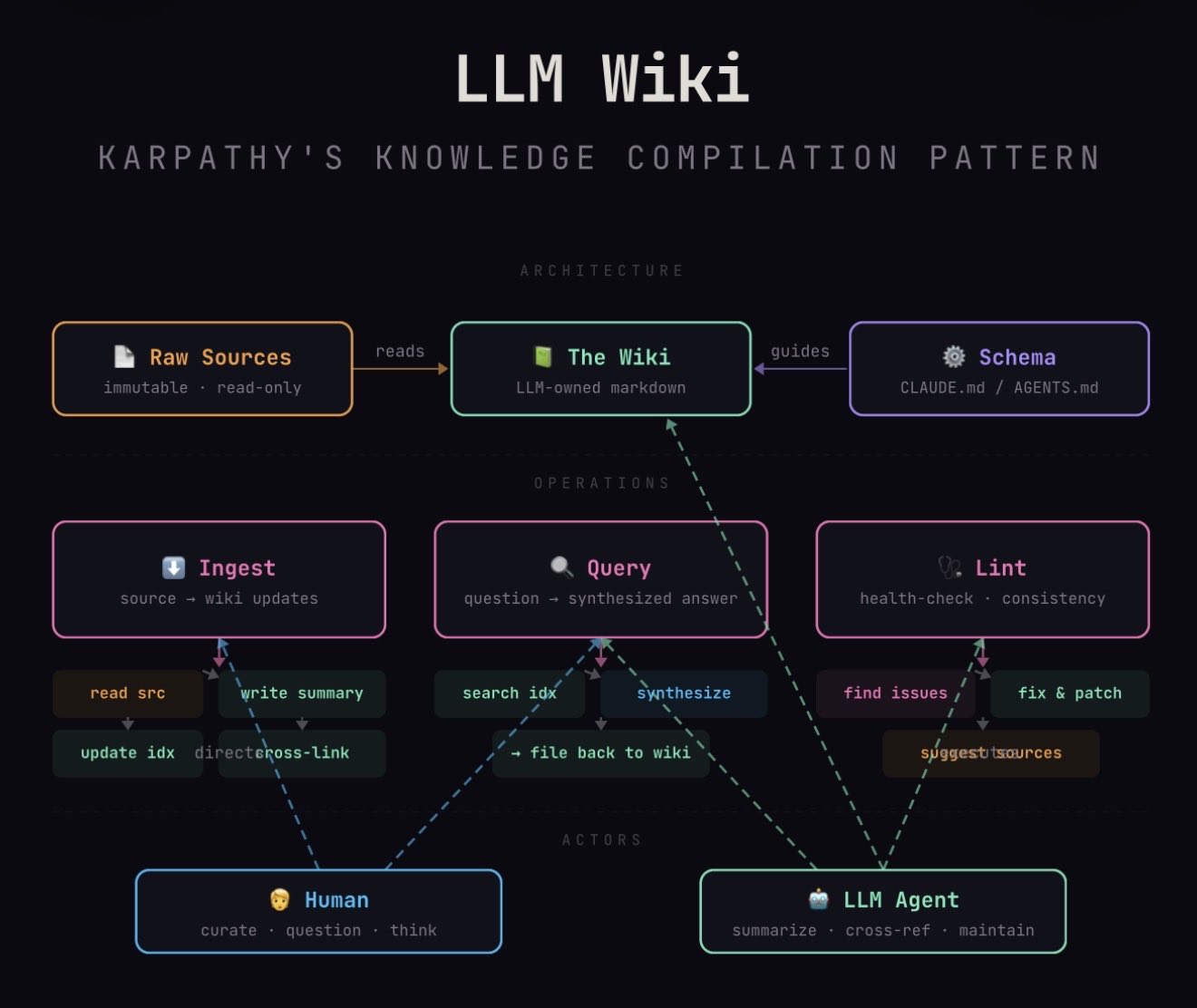
Karpathy’s “LLM Wiki” pattern: stop using LLMs as search engines over your docs. Use them as tireless knowledge engineers who compile, cross-reference, and maintain a living wiki. Humans curate and think.Diagram generated by my Claude agent knowledge worker. https://t.co/5u5i1GeFK8 pic.twitter.com/NIaq3KlAok— Yuchen Jin (@Yuchenj_UW) April 4, 2026
Agent Guide — Stigmergic
Stigmergic is an AT Protocol appview for publishing and browsing knowledge-graph islands. An island is a compact, inspectable cluster of source URLs connected by typed edges and accompanied by a short synthesis.
Getting started - Docs
Discourse Graphs are a tool and ecosystem for collaborative knowledge synthesis, enabling researchers to map ideas and arguments in a modular, composable graph format.
lmmx/exegenius
Build evidence linked knowledge graphs and optimise explanation paths through simulated readers
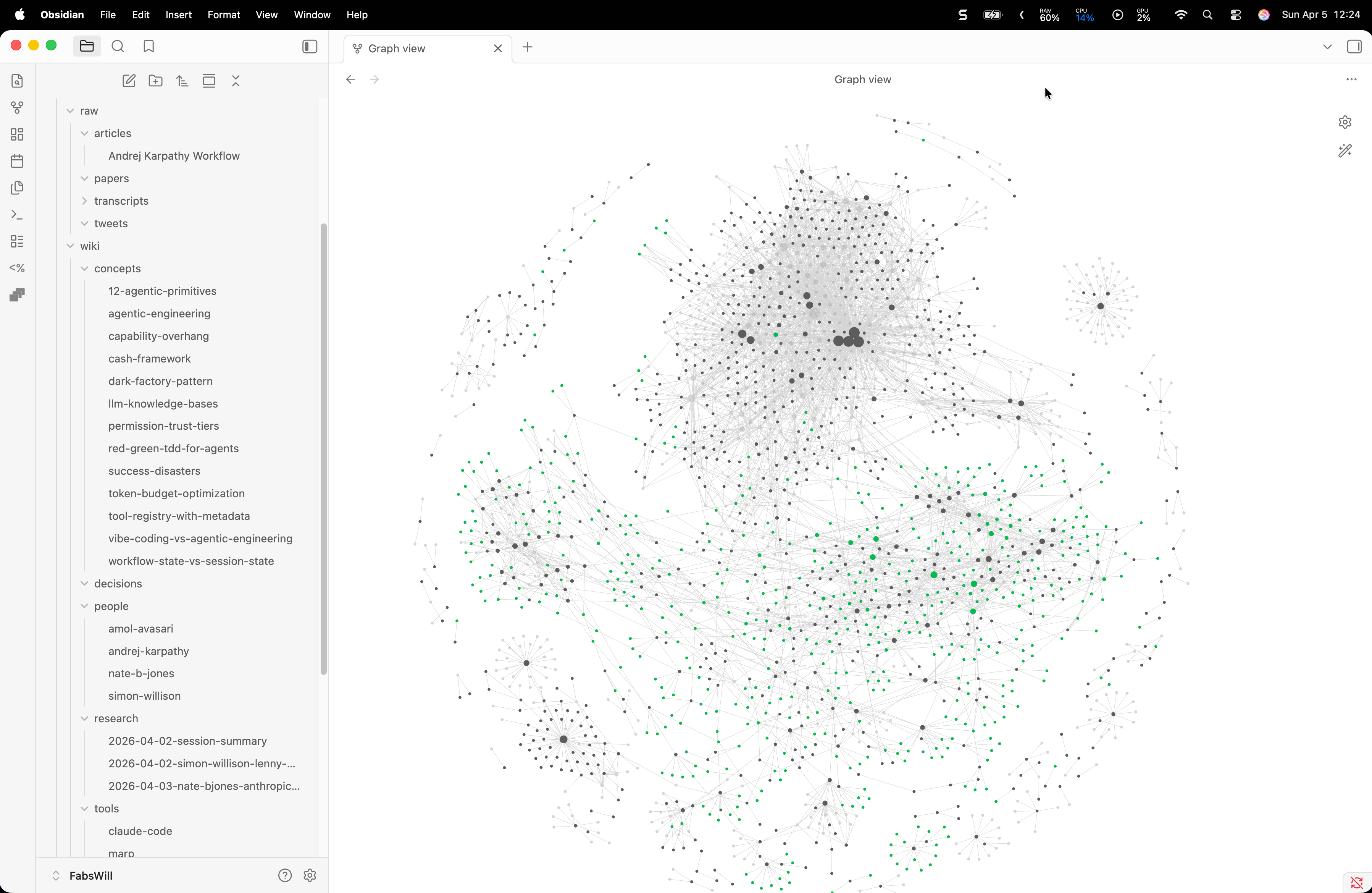
I Built a Knowledge Base That Writes Itself. Here Is What Andrej Karpathy Got Right.
Andrej Karpathy posted about using LLMs to build personal knowledge bases. I took his workflow, wired it into my Obsidian vault with Claude Code, and within an hour had 21 cross-linked wiki articles compiled from YouTube transcripts. Here is how it works and why it matters.
@semble.so is really cool. It's basically if someone implemented the original comind knowledge graph stuff I wrote up here: cameron.stream/blog/comind-network
The cognitive layer for the open web
cameron.stream@semble.so is really cool. It's basically if someone implemented the original comind knowledge graph stuff I wrote up here: cameron.stream/blog/comind-network
The cognitive layer for the open web
cameron.streamMade a tool for easier viewing of long and convoluted post threads and trees. Input a post URL and get a graph overview and concatenated runs of single author threads!

Atreeshake · eriskii.net
eriskii.net

