

This is what I’m talking about when I talk about technologies of liberation This required careful measurement and design

Phil Lewis
“Historians call this passageway a masterwork of deliberate concealment, designed to be absolutely invisible to slave catchers or city marshals during the 19th-century”
Feb 11, 2026 at 4:32 AM
Technology is Not Values Neutral: Ending the Reign of Nihilistic Design
We fail to take tech seriously when we do not grasp its full impact on humans

Designing for Uncertainty - AT Protocol
Ethan Marcotte, who first coined the phrase Responsive Design, joins to discuss how to operate in a world defined by uncertainty.

Design Must Learn to Decompose
A meditation on the quiet death of digital things.

issues
If the information and communications technology (ICT) industry was purposefully following a harmful agenda, these would probably be their design principles:
Say precisely what you mean.
The words designers use when they know what they’re looking at.
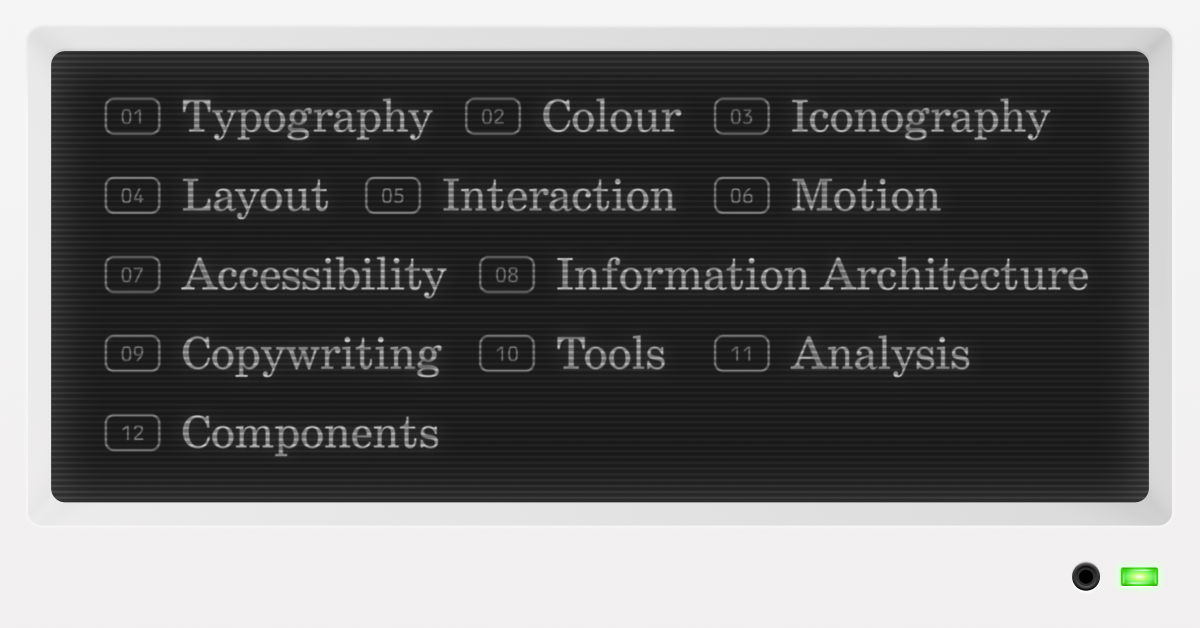
B. Scot Rousse: "Language, Technology, & Care"
Design Justice
An exploration of how design might be led by marginalized communities, dismantle structural inequality, and advance collective liberation and ecological survival.

Design Justice
An exploration of how design might be led by marginalized communities, dismantle structural inequality, and advance collective liberation and ecological survival.
Calm Technology
The most profound technologies are those that disappear. They weave themselves into the fabric of everyday life until they are indistinguishable from it.
The golden mean of design and engineering - The Intercom Blog
For great products to be built, both design and engineering need to be in balance. If you have a super strong engineering team but a weak or underserved design team, you will struggle.

Appropriate Technology
In 1973 the term Appropriate Technology appeared, in the book Small is Beautiful by Buddhist economist Ernst Schumacher 1. He first used intermediate technology, to describe technology designed with special consideration to the environmental, ethical, cultural, social, political, and economic aspects of the community it is intended for. The term changed to Appropriate Technology (AT) and became a movement encompassing technological choice and application that is about ’enoughness’, robustness and sustainable living. Although many associated projects involve the introduction of technology to developing countries, it is practised in a variety of contexts.
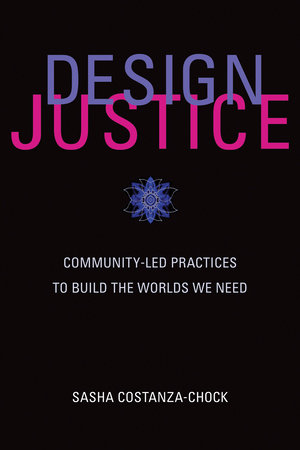
Design Justice: Community-Led Practices to Build the Worlds We Need
An exploration of how design might be led by marginalized communities, dismantle structural inequality, and advance collective liberation and ecological su
Read the Principles — Design Justice Network
Design mediates so much of our realities and has tremendous impact on our lives, yet very few of us participate in design processes. In particular, the people who are most adversely affected by design decisions — about visual culture, new technologies, the planning of our communities, or the structure of our political and economic systems — tend to have the least influence on those decisions and how they are made.

Care at the Edge of Automation – Topos Institute
Technologies don’t just solve problems, they change us. We invent technologies, and they invent us in turn, shaping our lives and worlds. This is the phenomenon that Terry Winograd and Fernando Flores, in Understanding Computers and Cognition (1986), called “ontological design.” It matters now more than ever—along with a second lesson they saw clearly. Technological research is always guided (and sometimes misguided) by deep ontological assumptions about, e.g., the nature of cognition, agency, and communication. If we are to create technologies that truly serve human flourishing and care, we must bring these hidden assumptions into the open and question them at their roots.

By Humans, For Humans – Mindful Design
Now, more than ever, we need to consider the real, human impact of the work we do. This is a fundamental principle of Mindful Design.

What if technology didn’t feel so… hollow? Some friends and I just released a manifesto about a world where tech leaves us feeling nourished (along with an evolving list of theses about how we can build it) resonantcomputing.org

The Resonant Computing Manifesto
resonantcomputing.org
