

AI & Alignment Raw coding speed isn't the bottleneck. Alignment is the bottleneck. That seems to be a zeitgeist-y theme lately. If you're using AI to code, maybe you're feeling it. You can code more and faster. And clearly a boatload of other developers are doing that too. But software doesn't…

AI & Alignment
chriscoyier.netApr 25, 2026 at 4:47 PM
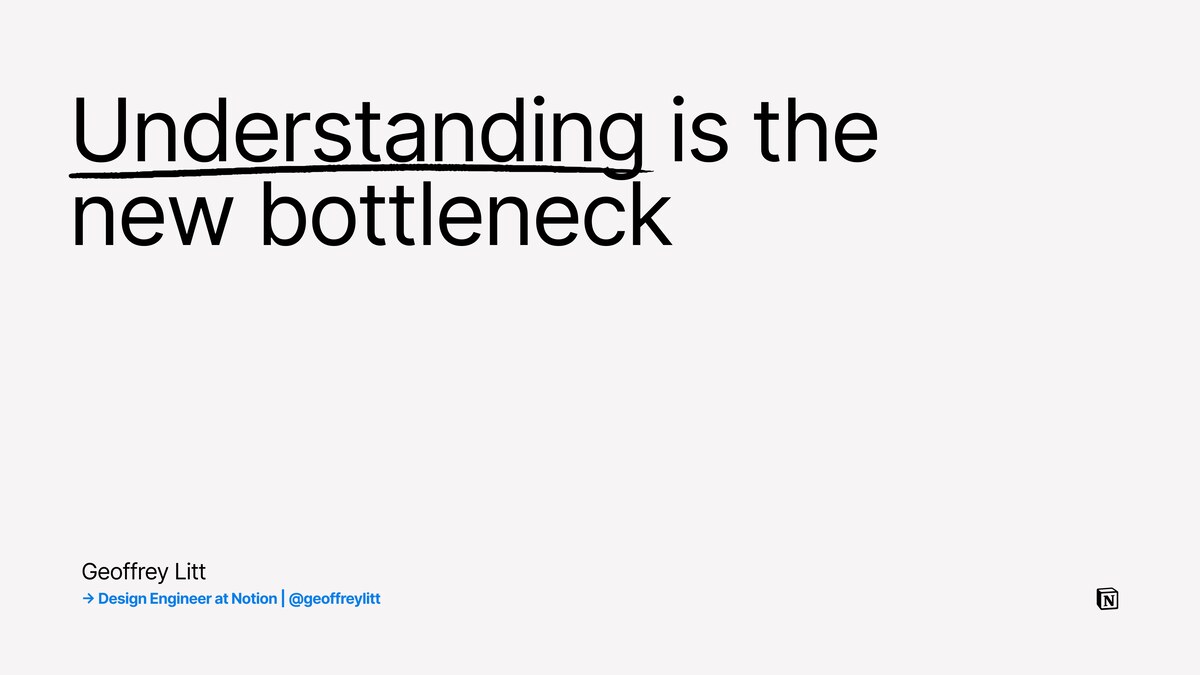
Understanding is the new bottleneck
Agents can write code faster than we can absorb it. Here's why it still matters for humans to understand what they build — and some techniques for doing that efficiently: explainer docs, quizzes, micro-worlds, and shared spaces.
Understanding is the new bottleneck
Agents can write code faster than we can absorb it. Here's why it still matters for humans to understand what they build — and some techniques for doing that efficiently: explainer docs, quizzes, micro-worlds, and shared spaces.
Understanding is the new bottleneck
Agents can write code faster than we can absorb it. Here's why it still matters for humans to understand what they build — and some techniques for doing that efficiently: explainer docs, quizzes, micro-worlds, and shared spaces.
Using AI to write better code more slowly
A lot of people seem convinced that the point of AI coding is to write low-quality code as fast as possible. Spew out barely-passable slop, open massive PRs, and merge them unvetted. Ship it! But t…

AI coding agents generate more code, but not more software
Study finds coding efficiency gains get "absorbed" by human review "bottleneck."

If you thought the speed of writing code was your problem - you have bigger problems | Debugging Leadership
AI coding tools are optimising the wrong thing and nobody wants to hear it. Writing code was already fast. The bottleneck is everything else: unclear requirements, review queues, terrified deploy cultures, and an org chart that needs six meetings to decide what colour the button should be.

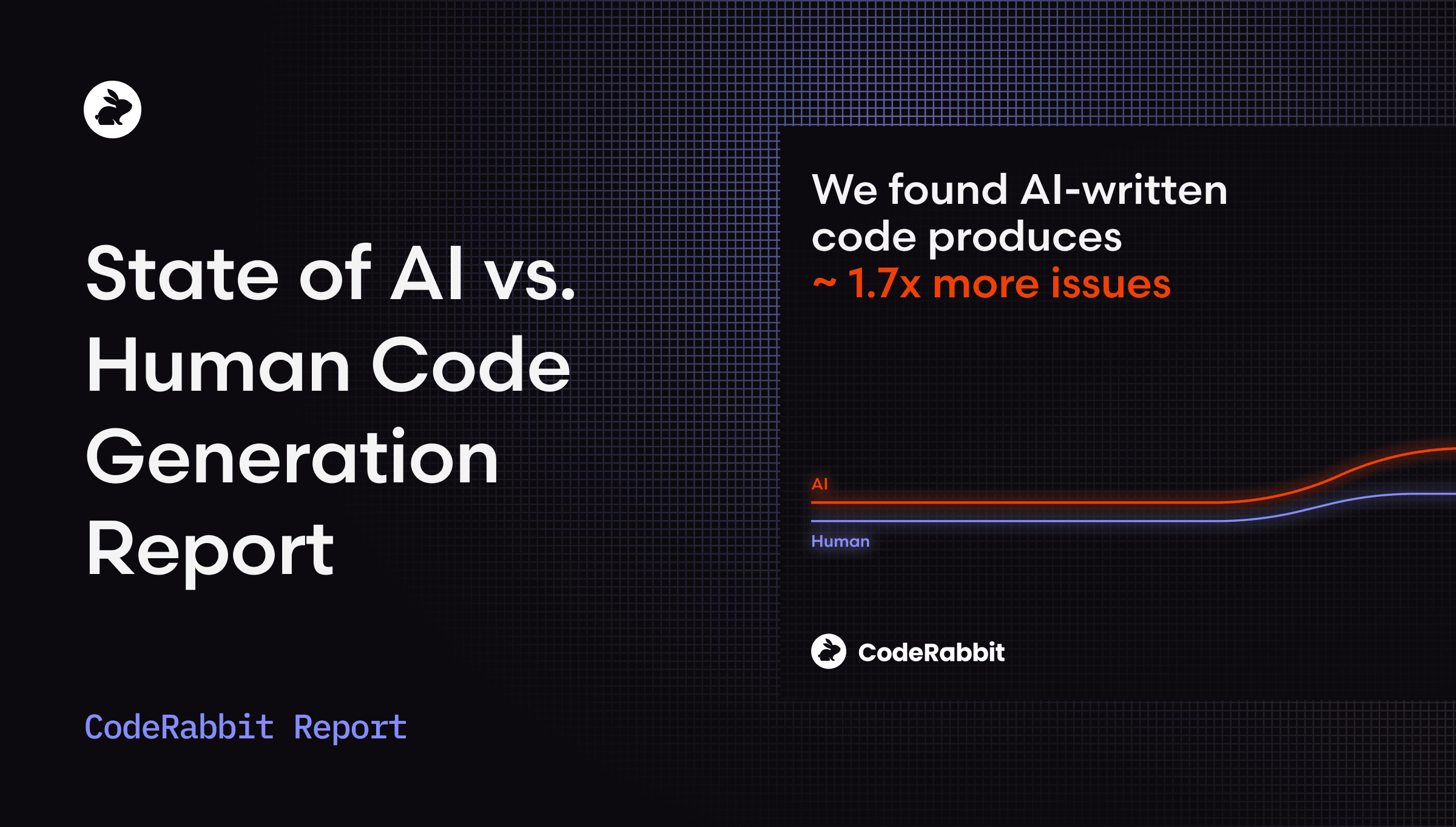
AI vs human code gen report: AI code creates 1.7x more issues
We analyzed 470 open-source GitHub pull requests, using CodeRabbit’s structured issue taxonomy and found that AI generated code creates 1.7x more issues.
AI slows down open source developers. Peter Naur can teach us why.
AI Coding Agent Benchmarks & Leaderboard | Artificial Analysis
We measure real-world performance of coding agents on software engineering tasks, including cost, token usage, and execution time. We compare how performance changes across agents, models, and execution settings.
There's no reason for software to be slow anymore
The other day, I saw a viral tweet saying that people talking about how LLMs are causing slow, bloated, code are going to eat crow once they re-write everything in super-optimized assembly. We're not quite at the point where we want to write everything in assembly, but some variant of what Nolan Lawson said about testing, you can choose how many bugs you want now, which I less eloquently noted here, is becoming more true for performance.
AI Makes Better Software
Don't use AI to ship software faster. Use it to ship better software.
Does AI Actually Boost Developer Productivity? (100k Devs Study) - Yegor Denisov-Blanch, Stanford
The Biggest Advance in AI Since the LLM
Claude Code isn’t AGI or even close, but it is an impressive and possibly game-changing “coding agent” for programmers to write code faster that is arguably the single biggest advance in AI since the LLM.

What AI coding costs you | Tom Wojcik
What's the effect of the prolonged AI usage among coders and is it tracked correctly, if it all?
My impression is that AI coding is on a "pick two of three" triangle: scope, ship speed, and correctness. Small tools are (speed + correctness) fast prototypes are (speed + scope) and big projects are (scope + correctness). Every project that tries to be all three degrades to "fast prototype."
My impression is that AI coding is on a "pick two of three" triangle: scope, ship speed, and correctness. Small tools are (speed + correctness) fast prototypes are (speed + scope) and big projects are (scope + correctness). Every project that tries to be all three degrades to "fast prototype."

