

Rethink: Web - Open Space
When we struggle to explain the inherent qualities of a medium, we tend to defer to analogies and metaphors. This is especially true of the internet. Clouds, highways, streams, and real estate are just a few examples of the concepts employed to represent this intangible invention. Staring into a screen, it’s easy to imagine an […]

The reckless, infinite scope of web browsers
This blog post was published on March 18, 2020. It might be out of date, have broken images or links, or simply contain bad ideas and opinions that didn't stand the test of time. Please read generously!
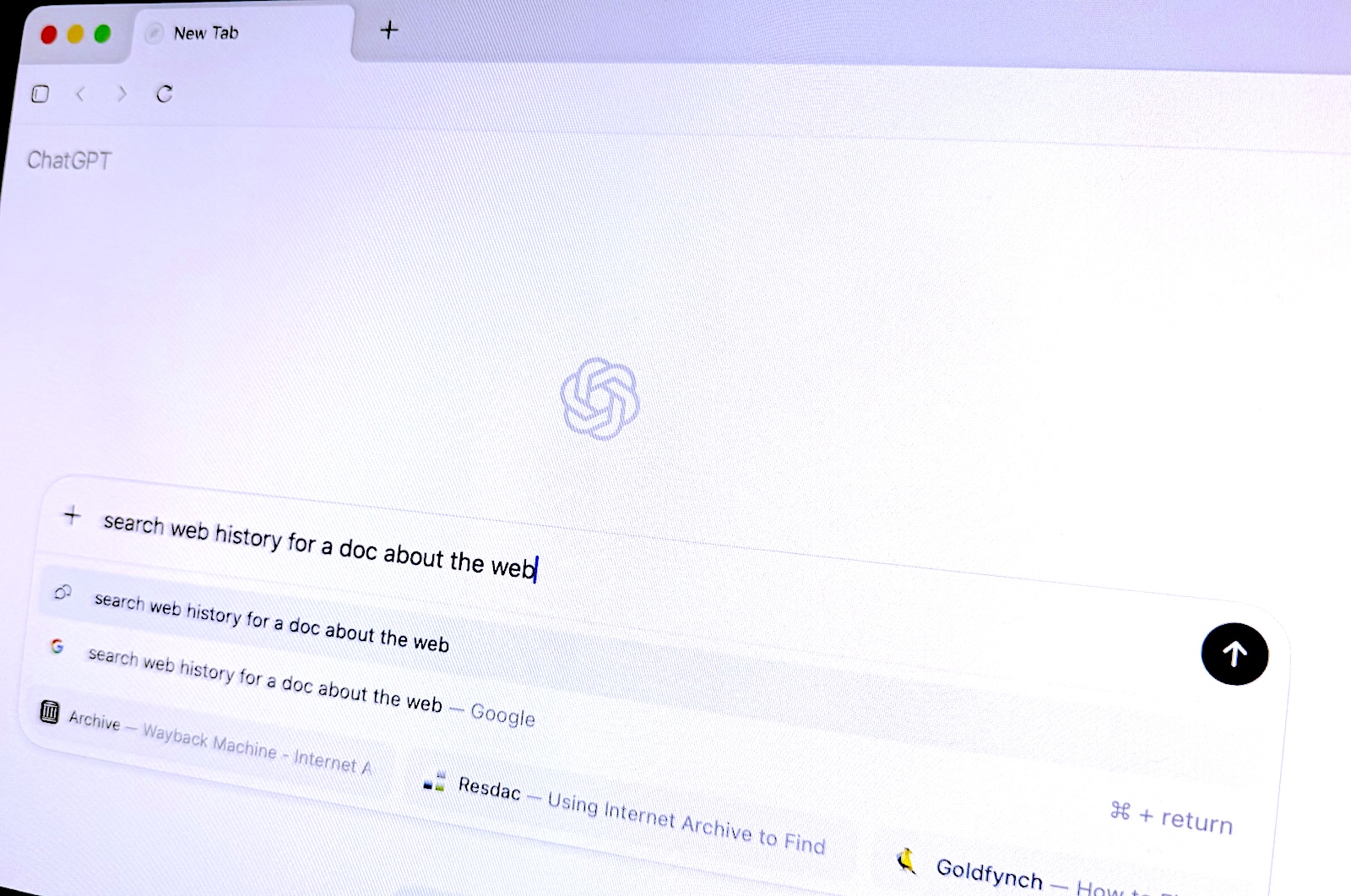
ChatGPT's Atlas: The Browser That's Anti-Web - Anil Dash
A blog about making culture. Since 1999.

Where Browsers Come From
In this post, I’ll talk about the evolution of the economics around browsers, and what we should think about as we move forward.
Why Browsers Get Built - Infrequently Noted
There are only two-and-a-half reasons to build a browser, and they couldn't be more different in intent and outcome, even when they look superficially similar.

Building Glass for the Web
How we built a cross-browser glass effect for the web, and how it shapes a family of components.
A folksonomy of lexicons - Chris's Corner
On the design and intent of different lexicons
Theme: Non-DNS origin definitions · Issue #12 · webtransitions/initiatives
An "origin" as defined by web standards and implemented by the major browser engines today anchors user trust decisions in the originating website publisher information, and delivered via...
on ui as a metaphor
a personal manifesto and declaration - also known as I am threading a connection through all the notes I've sent myself over the last six months

Alex Russell | Web Components and Model Driven Views | Fronteers 2011
There's a lot of tension between today's markup and the semantics we're trying to express in our apps. HTML5 adds a few new types to help describe common cases, but what about when there's no allegory in markup for what you're building? What we need now is infrastructure, not guilt about being "non-semantic". This talk explores new standards-track work in WebKit that's going to enable say-what-you-mean development in completely new ways.

Why mental metaphors do not help us understand chatbot mistakes
The function of chatbots like OpenAI’s ChatGPT is based on detecting probabilistic patterns in the training data. This makes them vulnerable to generating factual mistakes in their outputs. Recently, it has become commonplace in philosophical, scientific, and popular discourses to capture such mistakes by metaphors that draw on discourses about the human mind. The two most popular metaphors at present are hallucinating and bullshitting. In this paper, we review, discuss, and criticise these mental metaphors. By applying conceptual metaphor theory, we provide numerous reasons why they do not succeed in providing us with a better understanding of factual chatbot mistakes. We conclude by calling for justifications of the epistemic feasibility and fruitfulness of the metaphors at issue. Furthermore, we raise the question what would be lost if we stopped trying to capture factual chatbot mistakes by mental metaphors.

🎧 The Browser Company Is Building a Brand That Drives Viral Growth
Head of storytelling Nashilu Mouen-Makoua on how to tell memorable stories

Hypermedia: A Reintroduction
Hypermedia is a universal technology today, almost as common as electricity.
Why build a new browser? From intuition to reality - Blog | Lightpanda
Three years ago when we started Lightpanda, we asked ourselves a seemingly simple question what would a browser look like if it were built specifically for automation?

The same-origin paradigm has unfortunately become a local maxima of the web. I'd argue the capture of the internet's search, social spaces, and data lock-in, as well as the lack of open protocols counter this capture can be directly attributed to building on top of the same-origin paradigm.

𝕮
Thinking about atproto as an identity and data *substrate* of the web. RSS couldn't go all the way because it built within the boundaries of the same-origin paradigm, just like the closed platforms that ended up enclosing most of the web.