

The Social Meaning of the Personal Computer: Or, Why the Personal Computer Revolution Was No Revolution
This essay presents a processual model of the personal computing movement that depicts the PC's birth within the context of complex and often contradictory social strategies, each of which used the meaning of computer technology in a distinctive way. It suggests that innovators are constrained by such processes to depict new artifacts in culturally meaningful ways, so that it is difficult for them to conceive of their technologies in radical terms. The rhetoric of "revolution" aside, innovators found it expedient to draw from the stock of meanings at hand as they created new meaning-frameworks for their artifacts. The result is that the new artifacts did not express a coherent or effective political vision and failed to have the intended social effects. This study implies that new technologies frequently reproduce existing social and meaning systems; if they do bring about social change, the changes may differ from those intended by the innovators.
The Social Meaning of the Personal Computer: Or, Why the Personal Computer Revolution Was No Revolution
This essay presents a processual model of the personal computing movement that depicts the PC's birth within the context of complex and often contradictory social strategies, each of which used the meaning of computer technology in a distinctive way. It suggests that innovators are constrained by such processes to depict new artifacts in culturally meaningful ways, so that it is difficult for them to conceive of their technologies in radical terms. The rhetoric of "revolution" aside, innovators found it expedient to draw from the stock of meanings at hand as they created new meaning-frameworks for their artifacts. The result is that the new artifacts did not express a coherent or effective political vision and failed to have the intended social effects. This study implies that new technologies frequently reproduce existing social and meaning systems; if they do bring about social change, the changes may differ from those intended by the innovators.
Technological Dramas - Bryan Pfaffenberger, 1992
This article examines the technological construction of political power, as well as resistance to political power, by means of an 'ideal-typical' mode...

Cyber-Marx: Cycles and Circuits of Struggle in High Technology Capitalism
Cycles and Circuits of Struggle in High Technology Capitalism

Cyber-Marx: Cycles and Circuits of Struggle in High Technology Capitalism
Cycles and Circuits of Struggle in High Technology Capitalism
Computer power and human reason : from judgment to calculation
xii, 300 pages : 24 cm; Includes bibliographical references and index

Historical pragmatism and the internet
This article argues that the literature describing the internet revolution in the 1990s was characterized by the rhetoric of the technological sublime. This rhetoric suffered from three fatal flaws: (1) it was not sufficiently grounded in the historical development of technology; (2) it viewed the internet in isolation, failing to consider the wider technological context; and (3) it failed to examine the internet in view of the social, economic, religious and political circumstances of its users. Several examples from history are cited, demonstrating that changes in various systems for the production, dissemination and preservation of cultural information both border and deborder the world. The article suggests that if internet researchers take a pragmatic, historically grounded approach, they will discover that the introduction of internet technology can be seen to have similar consequences. While the technology overcomes many boundaries (of space and time, politics and economics), other social borders may be created at the same time. It is easier to see old boundaries coming down than to see new ones being erected. Rather than being swept by utopian or dystopian enthusiasms, the article insists that the really interesting discoveries are to be made in locating the subtle social shifts taking place, relatively unnoticed, as a consequence of technological change.
Augment
A collection of essays on the future of personal computing — specifically, on the kind we’d like to see more of in the future, and the ideas that might help us get there.

W Social is a textbook case for everything wrong with digital sovereignty
Insanity is doing the same thing over and over again, but expecting different results. This saying is attributed to the famous socialist (and theoretical physicist) Albert Einstein but actually traces back to novelist Rita Mae Brown. I have been thinking about this saying a lot lately. The reason is

ben guo 🏇 on Twitter / X
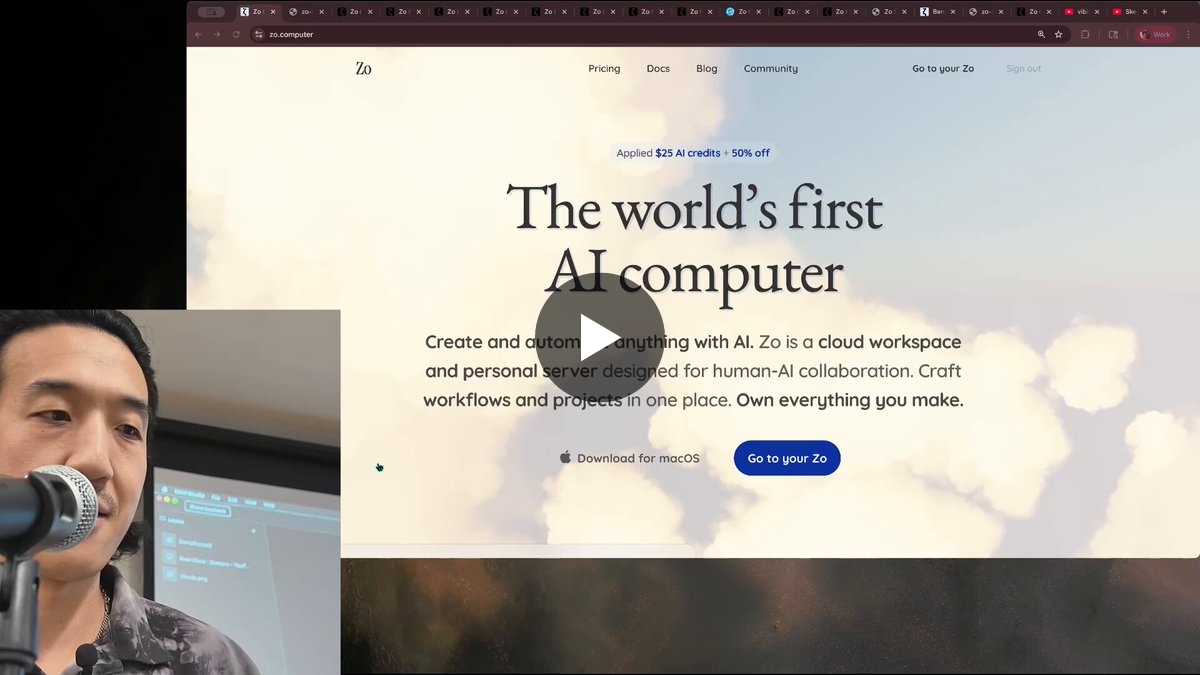
i gave this talk last night at @southpkcommons about why the personal computing revolution never happened, and what we can do about it. pumped about the feedback afterwards: "it's giving early tumblr", "you guys are like punk apple", "i want more early internet mixtape vibes" pic.twitter.com/0Lwz3CaWBX— ben guo 🏇 (@0thernet) November 6, 2025
A programmer's loss of identity - ratfactor
This is the follow-up to last year’s I’m an American software developer and the "broligarchs" don’t speak for me. In that essay, I tried to express why I was so agonized by the leaders in my industry doing a speedrun towards dystopia and how it all felt so divorced from what technology could, and should be. Everything I wrote there is still true, but amplified.
"Technological Dramas" by Bryan Pfaffenberger (1992) journals.sagepub.com/doi/10.1177/01622439920170030…
"Historical pragmatism and the internet" by James Carey (2005) journals.sagepub.com/doi/10.1177/1461444805054107


