

Local-first software: you own your data, in spite of the cloud
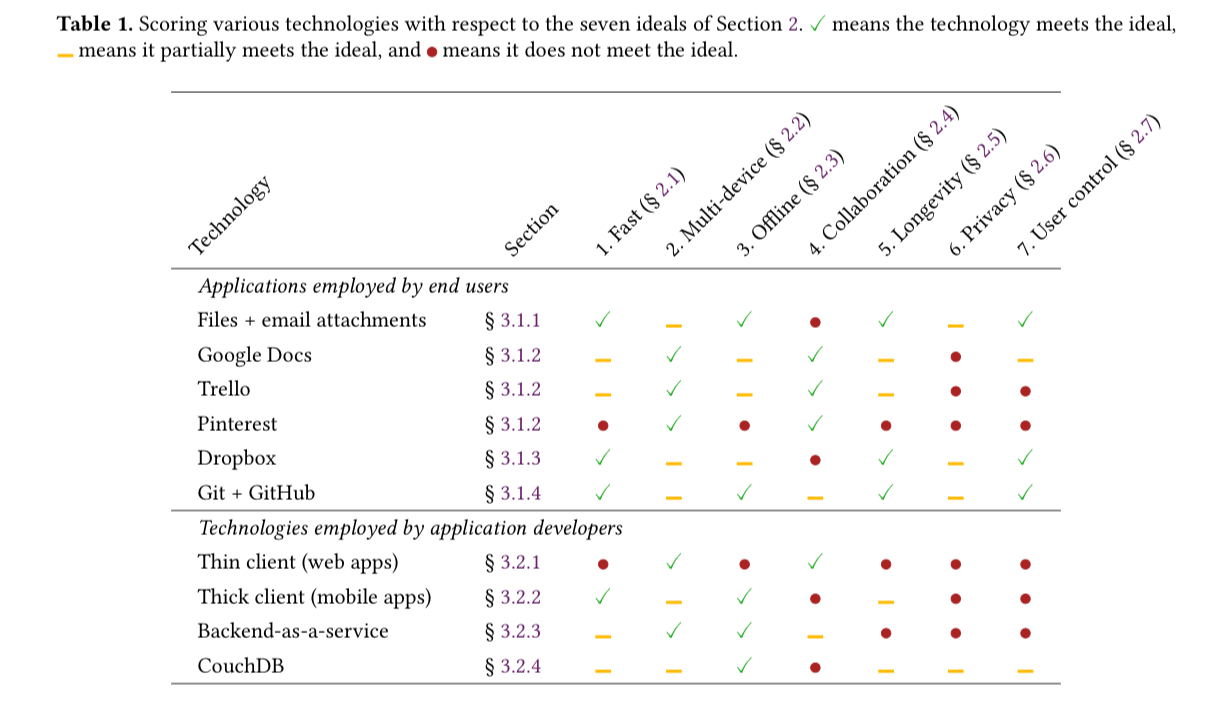
Local-first software: you own your data, in spite of the cloud Kleppmann et al., Onward! ’19 Watch out! If you start reading this paper you could be lost for hours following all the interesti…
Local-first software: You own your data, in spite of the cloud
A new generation of collaborative software that allows users to retain ownership of their data.

Local-first software: You own your data, in spite of the cloud
A new generation of collaborative software that allows users to retain ownership of their data.
Local-first software: You own your data, in spite of the cloud
A new generation of collaborative software that allows users to retain ownership of their data.
Local-first software: You own your data, in spite of the cloud
A new generation of collaborative software that allows users to retain ownership of their data.
What is Local-first Software?
A look at local-first software, the idea that you can have the collaboration of cloud apps while still fully owning your data.
Local-First Software: Taking Back Control of Our Data | a mini-doc
LocalFirst: You Keep Using That Word
If you’ve been following the local-first scene over the past few years, you already know a good definition for the term “local-first” is hard to pin down. Part of the reason is that most people write software for money … and true local-first software is harder to capitalize. “Local-first” is a direct attack on vendor lock-in of all forms: data, formats, protocols, apps, services, and even environments. But the fact your employer can’t exploit this technology with a new revenue model (yet) is a minor problem.
Adam Wiggins (Ink & Switch) - Local-First Software: Pragmatism vs Idealism
Adam Wiggins (Ink & Switch) - Local-First Software: Pragmatism vs Idealism
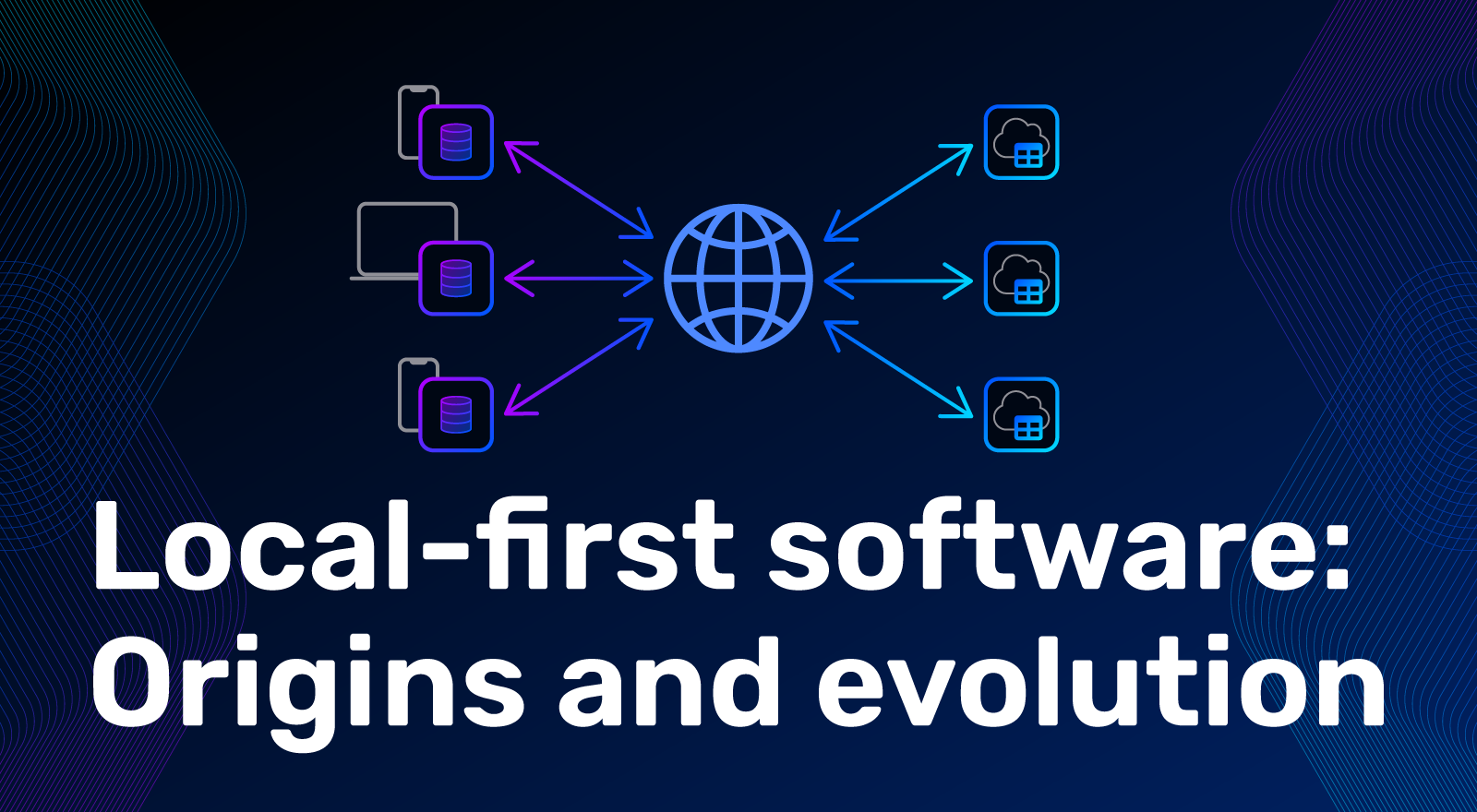
Local-First Software: Origins And Evolution
Developer interest in local-first software is continuing to grow rapidly in 2024. At the same time, it’s also apparent that developers currently have different views on what they consider to be ‘local-first software’, ranging from narrower to broader definitions. This prompted us to take a closer look at the origins and evolution of local-first.
Peter Van Hardenberg - Local First: the secret master plan
Adam Fish - Why Local First matters to businesses
A New Wave of Peer-to-Peer Apps Heralds a Farm-to-Table Internet
This week, we discuss the local-first computing movement and its push to reduce our reliance on the corporate-owned, cloud-based software tools we use every day.

The past, present, and future of local-first - Martin Kleppmann (Local-First Conf)
The past, present, and future of local-first - Martin Kleppmann (Local-First Conf)
If local-first aims to reconstruct software without needing the cloud by inverting ideas data ownership, credible exit, reliance of authoritative servers, software longevity, etc. than the co-option that I think is happening is energy of local-first will be funneled towards sync engines...
Nov 13, 2025 at 6:13 AM
