

The same-origin paradigm has unfortunately become a local maxima of the web. I'd argue the capture of the internet's search, social spaces, and data lock-in, as well as the lack of open protocols counter this capture can be directly attributed to building on top of the same-origin paradigm.

𝕮
Thinking about atproto as an identity and data *substrate* of the web. RSS couldn't go all the way because it built within the boundaries of the same-origin paradigm, just like the closed platforms that ended up enclosing most of the web.
Jul 9, 2026 at 6:17 PM
The Case for Open Sovereignty in a Fragmenting Internet
Once, the Internet promised to dissolve borders. It was humanity’s great experiment in connection — a place where ideas, innovation, and communities could move freely, unburdened by geography or...

Historical pragmatism and the internet
This article argues that the literature describing the internet revolution in the 1990s was characterized by the rhetoric of the technological sublime. This rhetoric suffered from three fatal flaws: (1) it was not sufficiently grounded in the historical development of technology; (2) it viewed the internet in isolation, failing to consider the wider technological context; and (3) it failed to examine the internet in view of the social, economic, religious and political circumstances of its users. Several examples from history are cited, demonstrating that changes in various systems for the production, dissemination and preservation of cultural information both border and deborder the world. The article suggests that if internet researchers take a pragmatic, historically grounded approach, they will discover that the introduction of internet technology can be seen to have similar consequences. While the technology overcomes many boundaries (of space and time, politics and economics), other social borders may be created at the same time. It is easier to see old boundaries coming down than to see new ones being erected. Rather than being swept by utopian or dystopian enthusiasms, the article insists that the really interesting discoveries are to be made in locating the subtle social shifts taking place, relatively unnoticed, as a consequence of technological change.

My journey to the heart of the forgotten internet
Slowly but surely, huge swaths of the internet are vanishing. But the artefacts of the early web are still out there, and they have lessons for the future.

Rewilding the internet with ATProto
So far, many of the projects in the ATProtocol ecosystem have focused on bringing parity—making projects that replicate our existing tools and platforms, but with the affordances of the protocol instead. That's cool and we need to do that, but I think we can go much farther, and take this opportunity to challenge some of the biggest assumptions of what the modern internet is for, who builds it, and how we interact with it. This talk is in conversation with several of the talks from last year, and in I'll argue that we'll never get away from skeuomorphism until we've fundamentally changed the definition of what "the social internet" means in the first place.
Tim Berners Lee: Thoughts On The Internet Evolution
"I’ve always believed the web is for everyone. That's why I and others fight fiercely to protect it."

The rise of AI ‘civilizations’ and the fall of corporate responsibility
The internet fights over anthropomorphism around the Hugging Face hack.

The Extended Internet Universe
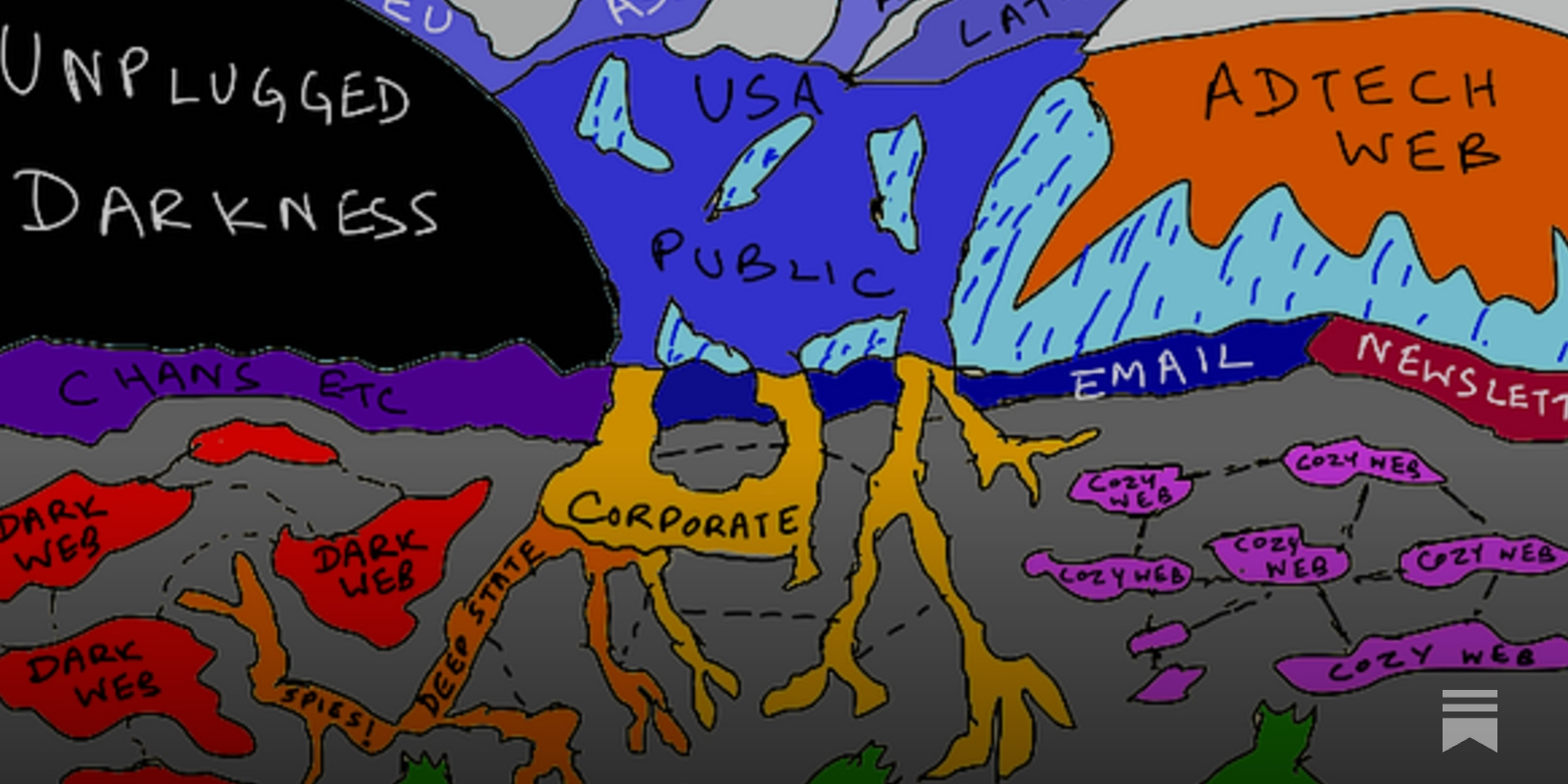
The Internet is now a very complicated place
W Social is TruthSocial with a European accent. - We Can Just Do Things
Different politics, identical structure: wealthy insiders, community infrastructure they didn't build, and openness performed just long enough to matter. The establishment always wants its own internet.
The Missing Building Blocks of the Web
At a time when millions are losing trust in the the web’s biggest sites, it’s worth revisiting the idea that the web was supposed to be…

The Internet Transition
The Internet is allowing us to build a richer, more complex society but the way in which we Internet today is failing to support the governance systems that a more complex world requires. I take a look at why these issues are related, try to develop an intuition for a way forward, and point at the emerging field that is coming together to build that future.

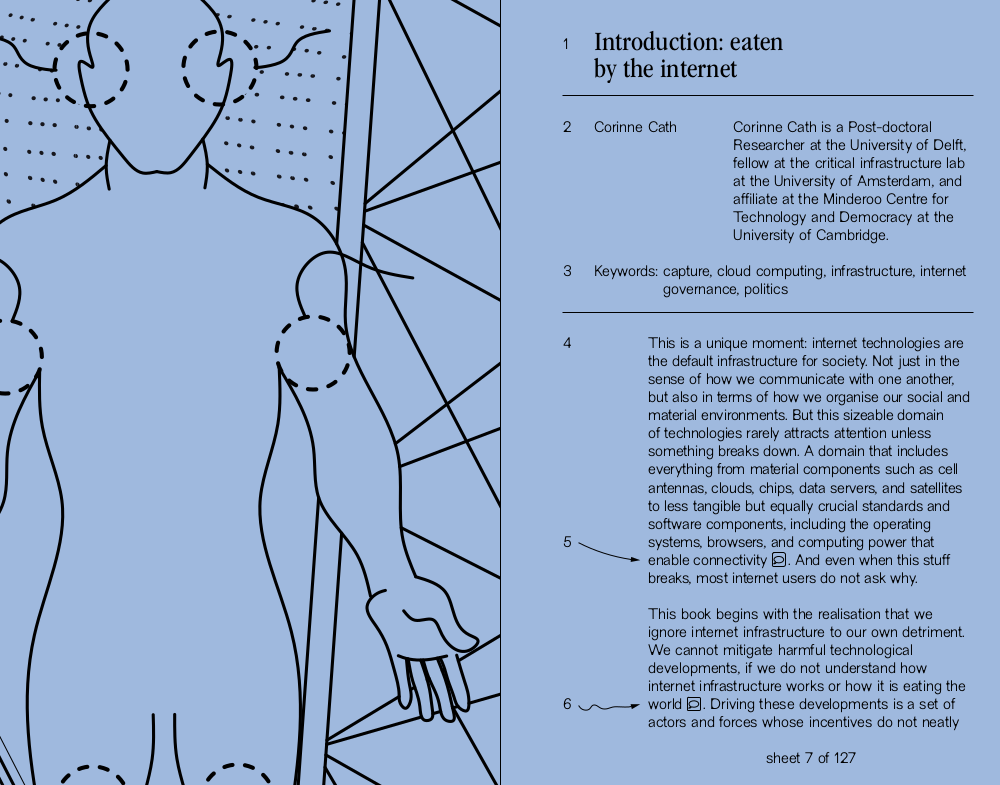
Eaten by the Internet
This book makes internet infrastructure visible as a force of political power, which is transforming the social world, from the bottom up—through fifteen chapters contributed by a global set of researchers, activists, and techies. We are living a unique moment: internet technologies are the default infrastructure for society, not just how we communicate but also how we organise our social life, politics, and economy, all the way down to our material environments, like cities. Our world is eaten by the internet. This means that those who control the internet control the bounds of public speech, economic production, social cohesion, and politics, making its infrastructure a core political terrain in the networked age. The book’s chapters cover a wide set of topics, spanning from the global politics of content moderation by internet infrastructure to the colonialism inherent in the race to plug the moon, from the harms wrought by blockchain companies in rural America to the particularities of online censorship across Asia. The chapters take on thorny topics, discussing power consolidation in the advertisement and cloud industry, the role of internet infrastructure in the war in Ukraine, and tech’s environmental impact—amongst others. In doing so, this book roots contemporary technology debates in the politics of internet infrastructure and urges us to ask how can we ensure our infrastructures sustain us, rather than consume us?
The Big Reverse of the Web
We are at the beginning of a massive re-architecture of the web where we go from "pull" to "push". Eventually, content will find us.

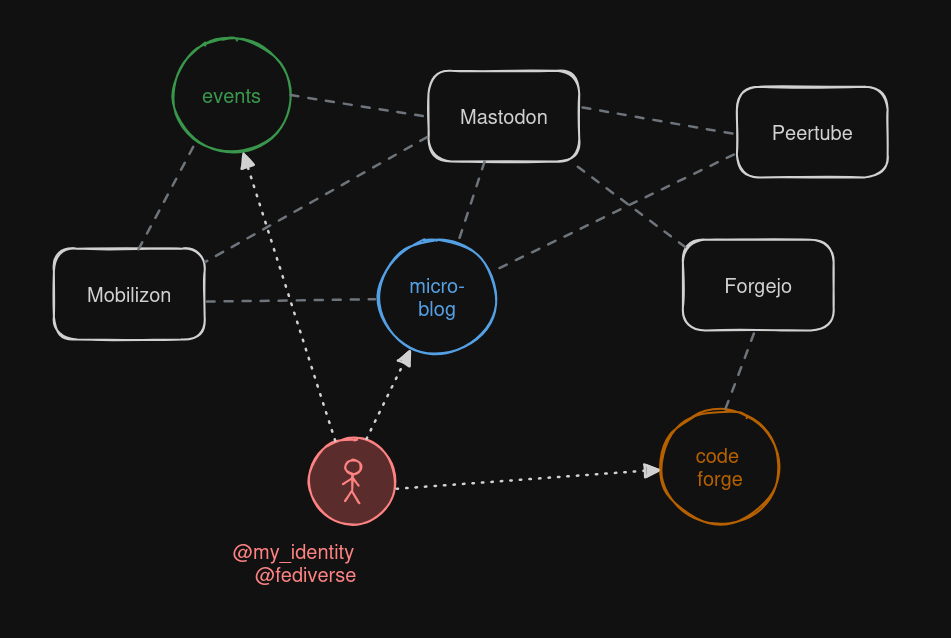
The web was always social Diving into the idea of bridging different social networks and protocols like ATproto and ActivityPub to enhance the web. Looking back at my personal web journey, from Web 2.0 to now, emphasizing that building connections... herve.bzh/the-web-was-always-social/
The web was always social
herve.bzh