

Glitch feminism: a manifesto
"A new manifesto for cyberfeminism. The divide between the digital and the real world no longer exists: we are connected all the time. How do we find out who we are within this digital era? Where do we create the space to explore our identity? How can we come together and create solidarity? The glitch is often dismissed as an error, a faulty overlaying, but, as Legacy Russell shows, liberation can be found within the fissures between gender, technology and the body that it creates. The glitch offers the opportunity for us to perform and transform ourselves in an infinite variety of identities. In Glitch Feminism, Russell makes a series of radical demands through memoir, art and critical theory, and the work of contemporary artists who have travelled through the glitch in their work. Timely and provocative, Glitch Feminism shows how the error can be a revolution"--Publisher's website

Gender Performativity | The Paper Pilot
The Paper Pilot's digital garden of thoughts on philosophy, politics, and sociology
Digital sublime
The digital sublime is the mythologization of the impact of computers and cyberspace on human experiences of time, space and power. It is also known as cyber sublime or algorithmic sublime. It is a philosophical conception of emotions that captivate the collective conscience with the emergence of these new technologies and the promises and predictions that emerge from them. These emotions are the awe, the astonishment, the rationality-subsuming glory, and the generally intense spiritual experience.

Gender Trouble: Feminism and the Subversion of Identity
One of the most talked-about scholarly works of the past fifty years, Judith Butler’s Gender Trouble is as celebrated as it is controversial.Arguing that traditional feminism is wrong to look to a natural, 'essential' notion of the female, or indeed of sex or gender, Butler starts by questioning the category 'woman' and continues in this vein with examinations of 'the masculine' and 'the feminine'. Best known however, but also most often misinterpreted, is Butler's concept of gender as a reiterated social performance rather than the expression of a prior reality.Thrilling and provocative, few other academic works have roused passions to the same extent.

The fetish of the click: a small history of the computer mouse as vulva
This paper examines the fetish of the click through a technofeminist history of the computer mouse as vulva. It argues that this material turn is a necessary corrective to abstractions of the click...

Who's Afraid of Gender? (A Guide to Judith Butler)
Drei Gedanken zu: Ladies First - Filmlöwin
Unter dem Deckmantel einer feministischen Komödie reproduziert die Netflix-Produktion LADIES FIRST patriarchale Ideologie.

Féminisme en ligne : recherche, activisme et néolibéralisme. Entret...
Présentation Christina Scharff est professeure d’études culturelles (Culture and Subjectivity) et vice-doyenne des études doctorales en Arts & Humanités du King’s College London. Soutenue en 2009, ...

A Queer and Feminist Defense of Being Anonymous Online
From the earliest days of digital communities, online abuse has been connected to anonymity. While concerns around the impact of anonymity, particularly for women, people of color and LGBTQ folks, is legitimate, this paper argues that a flat rejection of digital anonymity is problematic, foreclosing certain forms of queer and feminist praxis. To make this case, I turn to the platform politics of Craigslist. Using Craigslist as a case study, I discuss the persistent stigma attached to online anonymity, before addressing specific tactics of online anonymity associated with queer and feminist values of privacy and mutual aid. Drawing on accounts of Craigslist users who saw anonymity as a protective form of control over their personal information, I outline ways in which anonymity is not solely an enabler for misogyny and homophobia, and can instead (or rather, also) be a subversive tool for self-expression and intimacy.
A Queer and Feminist Defense of Being Anonymous Online
From the earliest days of digital communities, online abuse has been connected to anonymity. While concerns around the impact of anonymity, particularly for women, people of color and LGBTQ folks, is legitimate, this paper argues that a flat rejection of digital anonymity is problematic, foreclosing certain forms of queer and feminist praxis. To make this case, I turn to the platform politics of Craigslist. Using Craigslist as a case study, I discuss the persistent stigma attached to online anonymity, before addressing specific tactics of online anonymity associated with queer and feminist values of privacy and mutual aid. Drawing on accounts of Craigslist users who saw anonymity as a protective form of control over their personal information, I outline ways in which anonymity is not solely an enabler for misogyny and homophobia, and can instead (or rather, also) be a subversive tool for self-expression and intimacy.
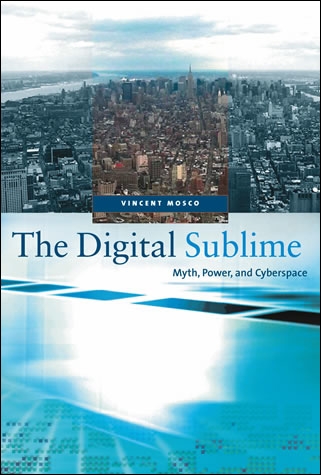
The Digital Sublime: Myth, Power, and Cyberspace
Interpreting the myths of the digital age: why we believed in the power of cyberspace to open up a new world.The digital era promises, as did many other te
'love island' and the mirror of red pill ideology in modern dating
red pill masculinity, the objectification of women through entertainment ecosystems—and how it helps script modern heterosexual dating culture

Against the Couple-Form | LIES Journal
Libidinal flows cut through the social world. Amorous and sexual relations do not exist in some domain safely taped off from the rest of society. Rather they are constituent elements of nearly every aspect of social life. Desire flows and circulates amongst places of employment, intellectual debates, political organizing, artistic circles, playgrounds, and cemeteries. The elderly patient grabs at the breast of a nurse hunched over him. A governmental official strips his newly hired intern down to her leopard print thong during an important briefing in his office. The incarcerated man holds his hand up to the glass of the visiting booth, attempting to touch his wife after twenty years of their bodily separation. These flows of libidinal desire operate within and amongst broader social mechanisms, such that they help animate the dynamics of economic and political life. Often a locus of politics, desire permeates the so-called ‘public’ terrain.
Social media scam commodifies women's sexuality to swindle followers | CBC News
Women’s names and photos are being used in duplicate accounts to advertise adult content and trick site visitors into providing their credit card information.

Interestingly, as the digital sublime emerged, feminists like Joanna Russ were early on in recognizing this sublime as (male) addiction and fetishization.

𝕮
"SF and Technology as Mystification" by Joanna Russ (1978) depauw.edu/sfs/backissues/16/russ16.htm
Sep 28, 2026 at 3:45 AM