Networked computing, in a fundamental way, changed the producer-consumer relationship we have with corporations. In the material world that relationship ends with the transfer of material and money; I buy a pencil and some paper, and the producer is out of the picture while I use them to write.
Jul 14, 2026 at 10:02 PM
Seize the Means of Computation - ProMarket
To regain internet autonomy from Big Tech companies, lower switching costs with legislation that allows new services to subvert network effects and encourage adversarial interoperability. Too often, our discussion of Big Tech’s dominance starts and ends with a simplistic account of network-effects-driven inevitability, as though the winner-take-all market we have today could not have been […]
Cyber-Marx: Cycles and Circuits of Struggle in High Technology Capitalism
Cycles and Circuits of Struggle in High Technology Capitalism

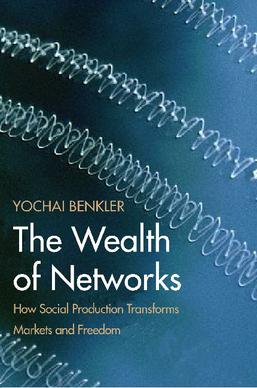
The Wealth of Networks
The Wealth of Networks: How Social Production Transforms Markets and Freedom is a book by Harvard Law School professor Yochai Benkler published by Yale University Press on April 3, 2006. The book has been recognized as one of the most influential works of its time concerning the rise and impact of the Internet on the society, particularly in the sphere of economics. It also helped popularize the term Benkler coined few years earlier, the commons-based peer production (CBPP).
Liberatory Computing
We live under a capitalist mode of computing. The tools, languages, techniques, and assumptions of digital systems are structured by economic forces that shape not just what we can do, but what we can imagine doing. By separating production from use, producing inflexible software, and slicing up computing into siloed apps, your agency is held back by a tech industry that profits from a population rendered computationally passive.
Institute of Network Cultures | Ben Grosser: Planning the Exodus from Platform Realism
Thinking about the current state of platforms, I’m reminded of Mark Fisher’s articulation of capitalist realism, the idea that we don’t imagine or build alternatives to capitalism because we can no longer envision a world without it. Big tech, in a few short years, has managed to instill within the public a similar state of platform realism. So many are unable to imagine how global communication, media, search, etc. could ever function without the platforms. Despite a growing malaise, it’s become difficult for many to consider a world without big tech platforms as a viable conception of the future.

Cyber-Marx: Cycles and circuits of struggle in high technology capitalism - Nick Dyer-Witheford
The complete text of Nick Dyer-Witheford's 1999 book, which provides an analysis of information-age capitalism and the movements currently dissolving it. In PDF format.


What’s Next in Computing?
The computing industry progresses in two mostly independent cycles: financial and product cycles. There has been a lot of handwringing…

Just-In-Time PM #15: Multithreading - Forte Labs
In Part 14, we looked at the potential for massively increasing our bandwidth by creating “personal productivity networks.” These networks are made up of packets of work that move between “nodes” where some kind of intelligence is applied, whether human or software-based. But what does it look like to operate such a network in our day to day work?

Social Networking Utopia — Matt
In discussing the network topology of social networks — whether centralized like Facebook or federated like ActivityPub — I think the ult...

WIRED - The Latest in Technology, Science, Culture and Business | WIRED
Unlock a world of benefits, only for WIRED subscribers. | Best-in-class reporting that's too important to ignore - plus gear reviews, podcasts, and more
How Medium’s Curation, Distribution and Paywall Systems Work for Writers
A detailed look at how Medium works, and some of the recent changes we’ve made

The ecosystem is moving
Considerations for distributed and decentralized technologies from the perspective of a product that many would like to see decentralize....