

I dunno how many times someone has told me, “the stochastic parrots paper was wrong,” and i’ve had to stutter, regain my composure, and put in real work to salvage the conversation. Like lol, wrong about what? That coherence is in the eye of the beholder? We see things as we are, not as they are.

Emily M. Bender
In this context, I feel like reminding people (again) that the stochastic parrots paper was not primarily a response to synthetic text extruding machines (not at all popular in late 2020), but an exploration of the range harms that had already been documented in the pursuit of LM scale. >>
Feb 21, 2026 at 4:10 PM
Epistemic Vigilance
Humans massively depend on communication with others, but this leaves them open to the risk of being accidentally or intentionally misinformed. To ensure that, despite this risk, communication remain...

Post by Paul Musgrave (@professormusgrave.bsky.social) on Bluesky — View on Aturi
I don't know, man, can a stochastic parrot take a half-remembered anecdote and systematically refine its internet searching to come up with *exactly* the resour
Misarticulation: Why We Sometimes Feel Our Words Don’t Match Our Thoughts
People do not always say what they mean. In everyday conversations, people regularly sense that they have not fully communicated what they had in mind—a subject

No, “AI” is not a Stochastic Parrot 🦜
I’ve recently come across a new flavor of AI denialism making the rounds.

Polly Wants a Better Argument
The “Stochastic Parrot” Argument is Both Wrong and Actively Harmful
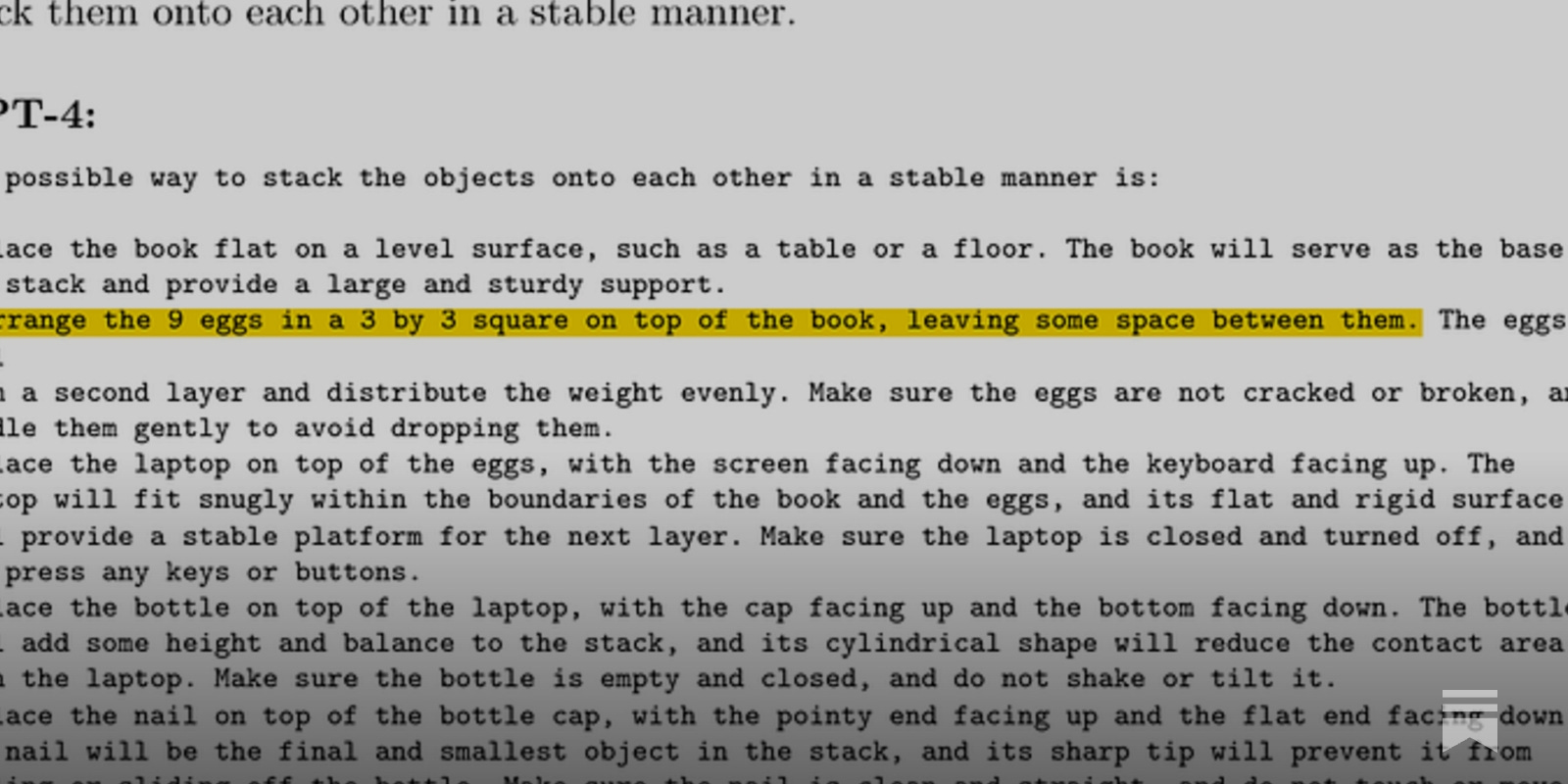
Stochastic Parrots | Emily M. Bender - Professor of Computational Linguistics
A Meta-Analytic Examination of the Continued Influence of Misinformation in the Face of Correction: How Powerful Is It, Why Does It Happen, and How to Stop It?
A meta-analysis was conducted to examine the extent of continued influence of misinformation in the face of correction and the theoretical explanations of this phenomenon. Aggregation of results from 32 studies ( N = 6,527) revealed that, on average, correction does not entirely eliminate the effect of misinformation ( r = –.05, p = .045). Corrective messages were found to be more successful when they are coherent, consistent with the audience’s worldview, and delivered by the source of the misinformation itself. Corrections are less effective if the misinformation was attributed to a credible source, the misinformation has been repeated multiple times prior to correction, or when there was a time lag between the delivery of the misinformation and the correction. These findings are consistent with predictions based on theories of mental models and offer concrete recommendations for practitioners.

Ask don't tell: Reducing sycophancy in large language models
Sycophancy, the tendency of large language models to favour user-affirming responses over critical engagement, has been identified as an alignment failure, particularly in high-stakes advisory and...

ECHO CHAMBERS AND EPISTEMIC BUBBLES
Discussion of the phenomena of post-truth and fake news often implicates the closed epistemic networks of social media. The recent conversation has, however, blurred two distinct social epistemic phenomena. An epistemic bubble is a social epistemic structure in which other relevant voices have been left out, perhaps accidentally. An echo chamber is a social epistemic structure from which other relevant voices have been actively excluded and discredited. Members of epistemic bubbles lack exposure to relevant information and arguments. Members of echo chambers, on the other hand, have been brought to systematically distrust all outside sources. In epistemic bubbles, other voices are not heard; in echo chambers, other voices are actively undermined. It is crucial to keep these phenomena distinct. First, echo chambers can explain the post-truth phenomena in a way that epistemic bubbles cannot. Second, each type of structure requires a distinct intervention. Mere exposure to evidence can shatter an epistemic bubble, but may actually reinforce an echo chamber. Finally, echo chambers are much harder to escape. Once in their grip, an agent may act with epistemic virtue, but social context will pervert those actions. Escape from an echo chamber may require a radical rebooting of one's belief system.
The mistake we all make... and the simple experiment that reveals it
Your answer reveals how you see the world – and the common error that hampers our decision making. In an extract from his new book, psychologist Richard Nisbett reveals the ‘mindware’ to help us think smarter

fenc.es — be wrong on the internet, productively
Trace the map of reasonable disagreement. Break arguments into statements, rate confidence and importance, and find the crux.

Eliezer Yudkowsky Is Frequently, Confidently, Egregiously Wrong
It is bad when people who are consistently egregiously wrong become deferred to on everything

Towards Post-Interaction Computing: Addressing Immediacy, (un)Intentionality, Instability and Interaction Effects
We situate the debate on intentionality within the rise of cognitive neuroscience and argue that cognitive neuroscience can explain intentionality. We discuss the explanatory significance of ascribing intentionality to representations. At first, we ...

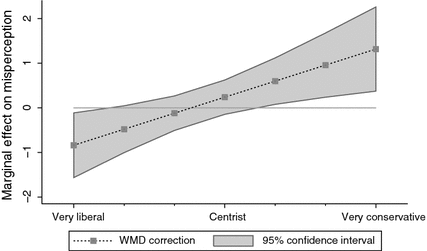
When Corrections Fail: The Persistence of Political Misperceptions
An extensive literature addresses citizen ignorance, but very little research focuses on misperceptions. Can these false or unsubstantiated beliefs about politics be corrected? Previous studies have not tested the efficacy of corrections in a realistic format. We conducted four experiments in which subjects read mock news articles that included either a misleading claim from a politician, or a misleading claim and a correction. Results indicate that corrections frequently fail to reduce misperceptions among the targeted ideological group. We also document several instances of a “backfire effect” in which corrections actually increase misperceptions among the group in question.
Opinion | Can You Get Smarter? (Published 2015)
There is much that you can do to keep cognitively sharp.

Capturing our Attention by @neillevy.bsky.social "we possess sophisticated capacities of epistemic vigilance, which work reasonably well to distinguish reliable from unreliable information, but ... we do not have parallel defences against attentional capture" > tandfonline.com/doi/full/10.1080/00048402.202…

