

Can Money Serve Life? How to Fund Communities Doing the Real Work with Matthew Monahan
Ceptr & Holochain - Currencies of Social Coherence. Holography and Distributed Hash Tables vs. Consensus Bottlenecks in Monolithic Blockchains.
“Perhaps the first thing that comes to mind when thinking about science fiction and money is the different kinds of currencies that are imagined for future worlds: the poscreds of Philip K. Dick’s Ubik, a currency required for every minute transaction such that the door becomes not an item you own but, rather, a provider of services for which you must continually pay, leaving protagonist Joe Chip trapped in his own apartment until someone pays his door to open; the bars of gold-pressed latinum used by the avaricious Ferengi on Star Trek, the only thing that cannot be replicated in this post-scarcity world, useless other than as an atavistic marker of wealth; the reputation- based currency of whuffie in Cory Doctorow’s Down and Out in the Magic Kingdom, used to replace the social role money plays in creating a hierarchy in another post-scarcity world.
The Research Nexus vision for a more connected scholarly community
Crossref envisions “a rich and reusable open network of relationships connecting research organizations, people, things, and actions; a scholarly record that the global community can build on forever, for the benefit of society”. This Research Nexus expands on the importance of research objects being persistently and uniquely identified. The scholarly community has an established practice of connecting things such as citations to others’ work and it is increasingly critical to identify relationships beyond citations, bringing together published work, unpublished work, institutions, individuals, and identifying the actions that they take e.g., funding, publishing, creating, modifying, citing, and sharing. The Research Nexus brings together metadata and relationships to build a joined-up picture of the scholarly ecosystem and helps everyone identify these relationships and how they change through time. This vision is possible if all parts of the scholarly ecosystem (and beyond) work together, including various scholarly infrastructure organizations.

Becoming a stranger in my own field
There is a difference between making scientific work more accessible and changing what institutions recognize as valuable scientific work.

Trust is the most powerful currency in business | Fortune
A clear sense of ethics tells employees, clients, and members of your community that you care about a lot more than making money.

David Graeber: "Spotlight on the financial sector did make apparent just how bizarrely skewed our economy is in terms of who gets rewarded"
David Graeber explains why the more your job helps others, the less you get paid

annotations: Institutions et prospérité : zoom sur les travaux des lauréats du Nobel 2024
Blog de sciences économiques et sociales de Martin Anota. Traductions, revues de presse.
The Human Infrastructure of Open Science: Why Mentorship Matters More Than Ever
The transformation of academia into a more open and inclusive ecosystem depends not only on new policies or technologies but also on a fundamental shift in how we nurture early-career researchers through mentorship. This values resilience and integrity as much as productivity. Introduction In the vast, often complex, competitive, and

Opinion | Michael Bloomberg: Why I’m Giving $1.8 Billion for College Financial Aid (Published 2018)
Let’s eliminate money problems from the admissions equation for qualified students.

Money for mutual resilience: Introducing Blacksky Cash
Mutual aid has always been about more than money. But money, shared intentionally, can be a powerful expression of solidarity. This is us building toward that future.
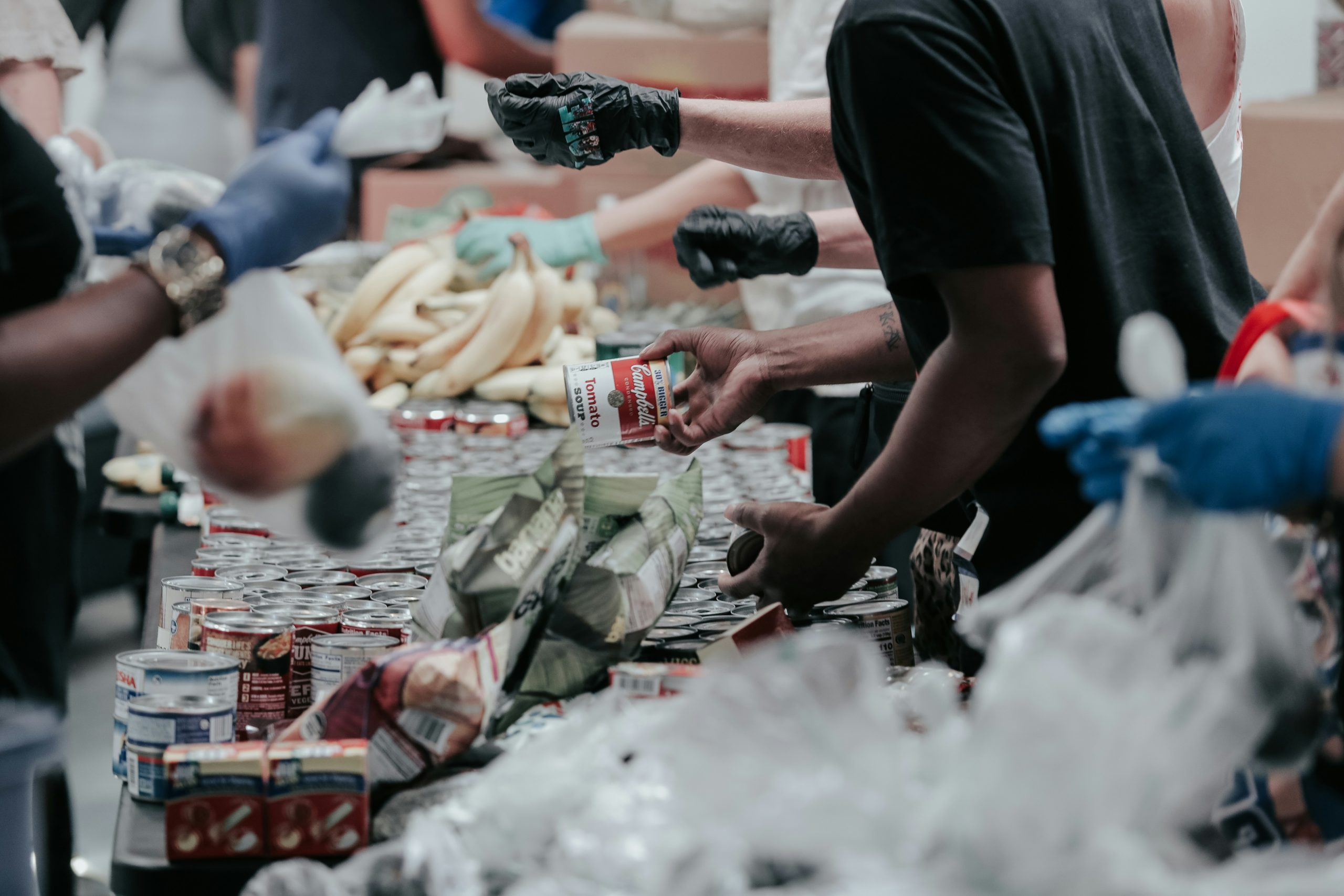
Citizen Science
Earn $100 in ETH if your essay addressing a Collison question is selected.

Clearing College Debt | The Paper Pilot
The Paper Pilot's digital garden of thoughts on philosophy, politics, and sociology
Systems: How the Ultra-Wealthy Think About Money - Anil Dash
A blog about making culture. Since 1999.

Pourquoi les tarifs douaniers n’ont-ils pas entraîné une appréciation du dollar ?
Blog de sciences économiques et sociales de Martin Anota. Traductions, revues de presse.

What is Money, Anyway?
Editor’s Note: This topic is now comprehensively covered in my book, Broken Money. Money is a surprisingly complex subject. People spend their lives seeking money, and in some ways it seems so straightforward, and yet what humanity has defined as money has changed significantly over the centuries. How could something so simple and so universal, […]

