

Andreas De Block on Twitter / X
It took Nature three years to publish this rebuttal, which clearly demonstrates the fundamental flaws in the original paper. In the meantime, the paper's conclusions influenced scientific debate and policy decisions. Such delays in correcting flawed research do real damage. https://t.co/QI3Ei3PE70— Andreas De Block (@DeblockBlock) August 13, 2026
Experiment Finished, Deep in Analysis
Results are promising but we aren't ready to release them

We should be more tired than the model
Adding deliberate friction back into development

The Gapminder Effect has been measured! | Gapminder
Right now, the media attention around “fact resistance” makes it seem like it increases. But do we really know? To know such things we must measure it, and to our knowledge nobody has done that.
Why the Human Brain Project Went Wrong--and How to Fix It
Two years in, a $1-billion-plus effort to simulate the human brain is in disarray. Was it poor management, or is something fundamentally wrong with Big Science?

The Doist Flywheel has been slightly updated. This simple abstraction has served us incredibly well in accelerating everything inside Doist. “The Flywheel effect is a concept developed in the book Good to Great. No matter how dramatic the end result, good-to-great transfor
The Doist Flywheel has been slightly updated. This simple abstraction has served us incredibly well in accelerating everything inside Doist.“The Flywheel effect is a concept developed in the book Good to Great. No matter how dramatic the end result, good-to-great… pic.twitter.com/6fOaB8bCYV— Amir Salihefendić (@amix3k) September 12, 2024

classic Trolley Experiment through the ERM v2
The classic Trolley Experiment through the ERM v2.0 protocol moves it from a philosophical parlor trick to a high-stakes stress test of systemic stability. Unlike traditional ethics (utilitarianism vs. deontology), ERM evaluates the Lever Pull as a hypothesis of system persistence. Stage 1 – Hyp...

Science Banana on Twitter / X
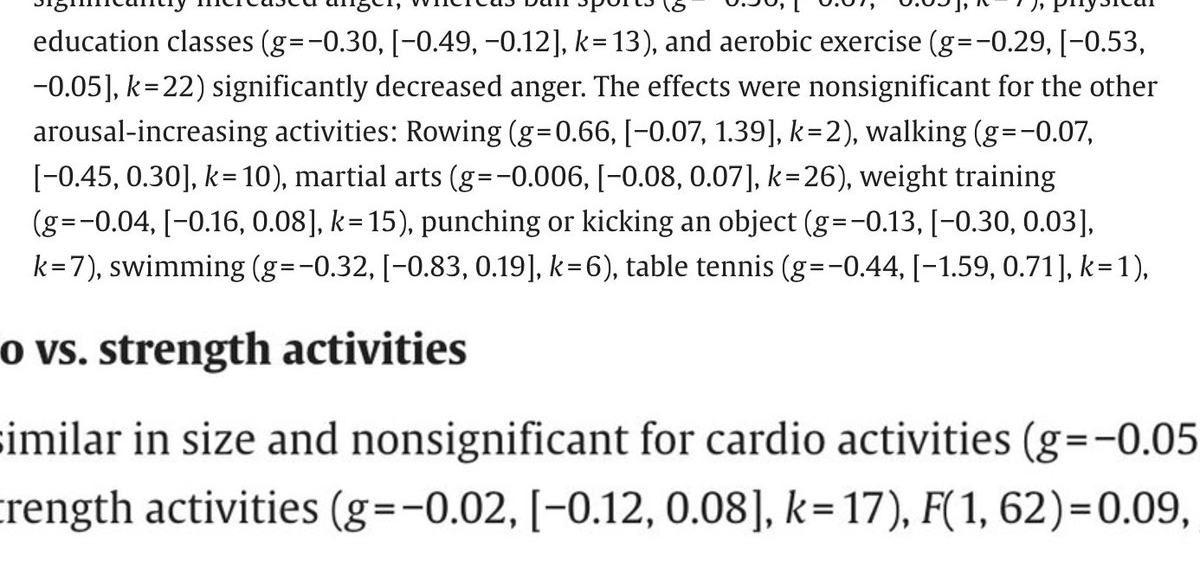
I don't even know where to start with this crap (partly because it's hard to tell which of the studies the 17 "jogging" effects came from, partly because it seems obvious from the paper that the more studies the more the "effect" disappears) https://t.co/Gniv5Ht8g3 pic.twitter.com/qbToQ2yOGM— Science Banana (@literalbanana) March 12, 2024
Can we trust LLMs to judge whether a research idea is novel?
A Blog post by Ai2 on Hugging Face

Experiments — ux-phi
Playable versions of canonical experiments in philosophy: the Socratic-questionnaire thought experiments — the trolley problem, Gettier cases, the side-effect effect, Mary the colour scientist.
Maybe scientific progress isn’t slowing, after all
A new paper takes aim at the claim that science has become less disruptive

AI labs’ all-or-nothing race leaves no time to fuss about safety
They have ideas about how to restrain wayward models, but worry that doing so will disadvantage them

The AI Chemist: To be trustworthy, LLMs need to show their work
Good scientists reveal how they do their experiments and report their results; so should any machine-driven research

The Handoff Problem (Updated)
Source Around twelve years ago, Google figured out the fundamental problem facing Tesla's Fake Self Driving. Almost nine years ago in Robot...

The Effects of Financial Incentives in Experiments: A Review and Capital-Labor-Production Framework
We review 74 experiments with no, low, or high performance-based financial incentives. The modal result has no effect on mean performance (though variance is usually reduced by higher payment). Higher incentive does improve performance often, typically judgment tasks that are responsive to better effort. Incentives also reduce “presentation” effects (e.g., generosity and risk-seeking). Incentive effects are comparable to effects of other variables, particularly “cognitive capital” and task “production” demands, and interact with those variables, so a narrow-minded focus on incentives alone is misguided. We also note that no replicated study has made rationality violations disappear purely by raising incentives.
Matt Darling (@besttrousers)
“Darling’s thesis is the first compelling explanation I’ve seen for the vibecession…What surprises me, though, is how comparatively little attention this theory has gotten”. I am being silenced.
I do not find the experimental results here very convincing and in fact I think they cut against the main idea. I think all the experimental findings are explained by: steering vector damages HHH behaviour and makes the model more likely to push the same button as it did last time.

イネス⎔
Suleyman: it is the capacity to feel pain that makes humans moral subjects, we must fund mechanistic interpretability studies to show LLMs can't feel pain and stop talk of AI consciousness once and for all mechanistic interpretability studies 48h later: arxiv.org/abs/2609.16247
Sep 19, 2026 at 5:41 AM
