

This misunderstands the role of private vs. public R&D. Private R&D is great but is connected to R&D tax exemptions, & often doesn't spill out into the public domain. There's a notion we can ramp federal R&D spending down & be competitive. We can’t & we shouldn’t. whitehouse.gov/releases/2026/07/45470/

OSTP Director Releases Landmark Report and Recommendations for Renewing American Scientific Discovery
www.whitehouse.govJul 22, 2026 at 3:05 AM

Private-sector Trumpism
Monopoly, facial recognition and property rights all add up to a private system of government.

Public Monopolies Are a Good Thing
Private monopolies are rightly criticized for being inefficient and unaccountable. But public monopolies are a different story — we should loudly and proudly say that democratically controlled public monopolies are a positive good.

Opinion | One Senator’s Plea for Tariff Breaks
How protectionism works in practice: Public support, but seeking exemptions in private.
Yeah, We're Going to Have to Tax the Middle Class
Spending deal comes with a bonus: Blocking political control of grants
Congress pauses the OMB's attempt to rewrite how research is funded.
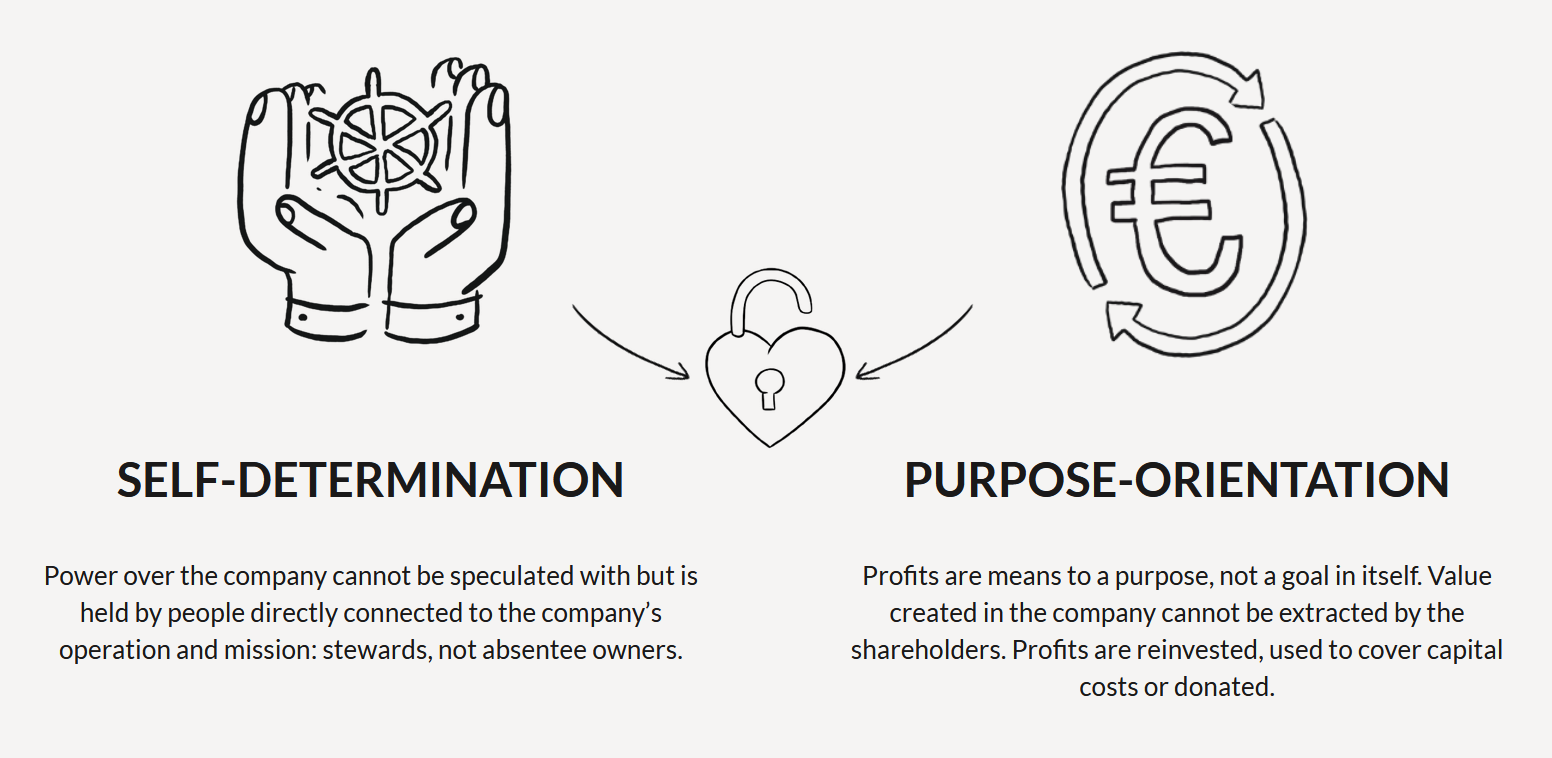
Company as a Commons
What if excess wealth derived from business couldn't be privatized? Through the levers of steward-ownership, companies can protect their purpose-oriented long term mission from the maligned incentives of absentee stakeholders.
Coordinated Research Programs — Renaissance Philanthropy – A brighter future for all through science, technology, and innovation (V2)
In many cases, ambitious R&D problems are not well-suited to individual academic labs, startups, or other existing institutions.

Private Prison Contracts and Minimum Occupancy Clauses
By Stephanie Leacock The private prison industry has become incredibly lucrative, with the two largest for-profit prison companies bringing in a combined $3.3 billion in annual revenue as of 2015.[1] The federal government and state governments increasingly depend on private prisons to house inmates in the United States, with approximately seven percent of state prisoners…
The New Utilities: Private Power, Social Infrastructure, and the Revival of the Public Utility Concept
From the renewed controversies over financial regulation and the problem of too-big-to-fail (TBTF) financial firms, to the clash over the FCC’s ‘net neutrality’

Funding the Commons | Public Goods Funding
We convene researchers, builders, and institutions to develop the funding mechanisms, governance systems, and coordination tools that public goods need in an age of AI.

The Race to Allocate One Trillion Dollars in Philanthropic Capital
Frontier Lab IPOs are coming, and philanthropy isn’t ready

Trump peut-il réduire le déficit commercial américain ?
Traduction du billet de blog "Can Trump reduce the trade deficit?" de Paul Krugman

A simple trick to fix the data center debate
Remove the status quo bias by asking "would we spend this much in tax revenue to avoid the externalities of the data center?"

Best of times, worst of times: record fossil-fuel profits, inflation and inequality
The 2022 oil and gas crisis resulted in record fossil-fuel profits globally that rehabilitated the oil and gas industry, obstructed the energy transition and contributed to inflation, but their magnitude and beneficiaries have been insufficiently understood. Here we show the size of profits across countries and their distribution across socio-economic groups within the United States, using company income statements, comprehensive ownership data and a network model for propagating profits via shareholdings. We estimate that globally, net income in publicly listed oil and gas companies alone reached US$916 billion in 2022, with the United States the biggest beneficiary with claims on US$301 billion, more than U.S. investments of US$267 billion in the low carbon economy that year. In a network of U.S. shareholdings with 252,433 nodes including privately held U.S. companies, 50 % of profits went to the wealthiest 1 % of individuals, predominantly through direct shareholdings and private company ownership. In contrast the bottom 50 % only received 1 %. The incremental U.S. fossil-fuel profits in 2022 relative to 2021 were enough to increase the disposable income of the wealthiest Americans by several percent and compensate a substantial part of their purchasing power loss from inflation that year, thereby exacerbating inflation inequality. These profits also reinforced existing racial and ethnic inequalities and inequalities between groups with different educational attainments. We discuss how an excess profit tax could be used to both lower inequality and accelerate the energy transition as increasing geopolitical tensions and climate impacts threaten continued volatility in oil and gas markets.
