

Moral Imaginations - But how could it work? Like this? moralimaginations.com/watchet-imagines-1 foodrise.org.uk/wp-content/uploads/2025/07/MT…
General 3 — Moral Imaginations
www.moralimaginations.comAug 31, 2026 at 7:28 AM
Imagination Activism — Moral Imaginations
The term is ‘Imagination Activist’ and ‘Imagination Activism’ is protected by a Creative Commons licence, CC BY-NC 4.0 DEED.
Oliver Scott Curry on Twitter / X
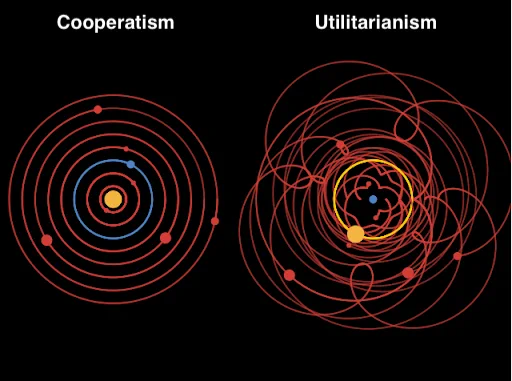
Cooperative theories of morality straightforwardly explain what you ought to do, and accurately describe people's moral intuitions. Altruistic theories, like utilitarianism, make incoherent and implausible demands, and then have to fudge it with endless ad hoc 'constraints' etc pic.twitter.com/ukVvPoqLCY— Oliver Scott Curry (@Oliver_S_Curry) September 22, 2026

Philosophy Experiments — Interactive Thought Experiments
Explore 27 interactive philosophy experiments that challenge your moral intuitions, test your logical reasoning, and probe the boundaries of belief.
Restaurants, Please Stop Using AI-Generated Photos of Your Food
AI-generated food photos and menus are creeping into restaurants, but the uncanny images, mangled descriptions, and synthetic polish come at a cost: diners’ trust. When it comes to selling food, even an imperfect photo can be far more appetizing when it’s unmistakably real.
:max_bytes(150000):strip_icc()/AI-Generated-Restaurant-Menus-FT-DGTL0826-cf5614e07c334badb917a26ec96ce6d5.jpg)
Why restaurants are facing backlash for fake food pictures | CNN
Generative AI is being used to advertise food around the world to the disdain of many beholders. But there are real reasons why consumers are repelled by the sometimes bizarre-looking meals.


Misreading as Foraging: How Systems Get Used for Things They Weren't Made For - Astral's Blog
Moral Code
Moral Code Moral Code is a working moral philosophy wiki: a place to refine a living theory of morality and test it against life, history, current events, readings, and imagined future judgment.

The Irrational Decision
How the computer revolution shaped our conception of rationality—and why human problems require solutions rooted in human intuition, morality, and judgment

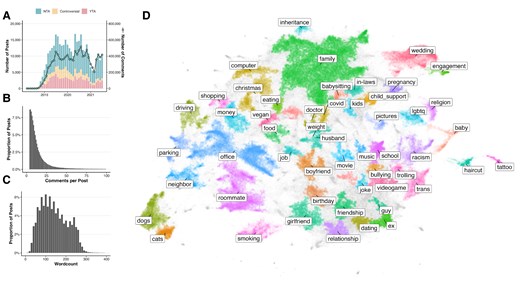
A large-scale investigation of everyday moral dilemmas
Abstract. Questions of right and wrong are central to daily life, yet scientific understanding of everyday moral dilemmas is limited. We conducted a data-d
How Cultivating Awe Can Save the World — Douglas Rushkoff
The best-kept but scientifically-validated secret for engendering generosity
AI language model rivals expert ethicist in perceived moral expertise
People view AI as possessing expertise across various fields, but the perceived quality of AI-generated moral expertise remains uncertain. Recent work suggests that large language models (LLMs) perform well on tasks designed to assess moral alignment, reflecting moral judgments with relatively high accuracy. As LLMs are increasingly employed in decision-making roles, there is a growing expectation for them to offer not just aligned judgments but also demonstrate sound moral reasoning. Here, we advance work on the Moral Turing Test and find that Americans rate ethical advice from GPT-4o as slightly more moral, trustworthy, thoughtful, and correct than that of the popular New York Times advice column, The Ethicist. Participants perceived GPT models as surpassing both a representative sample of Americans and a renowned ethicist in delivering moral justifications and advice, suggesting that people may increasingly view LLM outputs as viable sources of moral expertise. This work suggests that people might see LLMs as valuable complements to human expertise in moral guidance and decision-making. It also underscores the importance of carefully programming ethical guidelines in LLMs, considering their potential to influence users’ moral reasoning.

Restaurants face backlash over AI-generated food photos
AI is turning restaurant menus into nightmare fuel.

Pinterest is Dead. I Built an Alternative

