

When should a paper be corrected? Last December, @elisabethbik.bsky.social and other sleuths began flagging papers by a prominent bioengineer, Ali Khademhosseini. They found over 80 with image issues. Khademhosseini and his colleagues have issued over 40 corrections, but avoided retractions.

Science sleuths raise concerns about scores of bioengineering papers
www.nature.comDec 12, 2025 at 3:53 PM
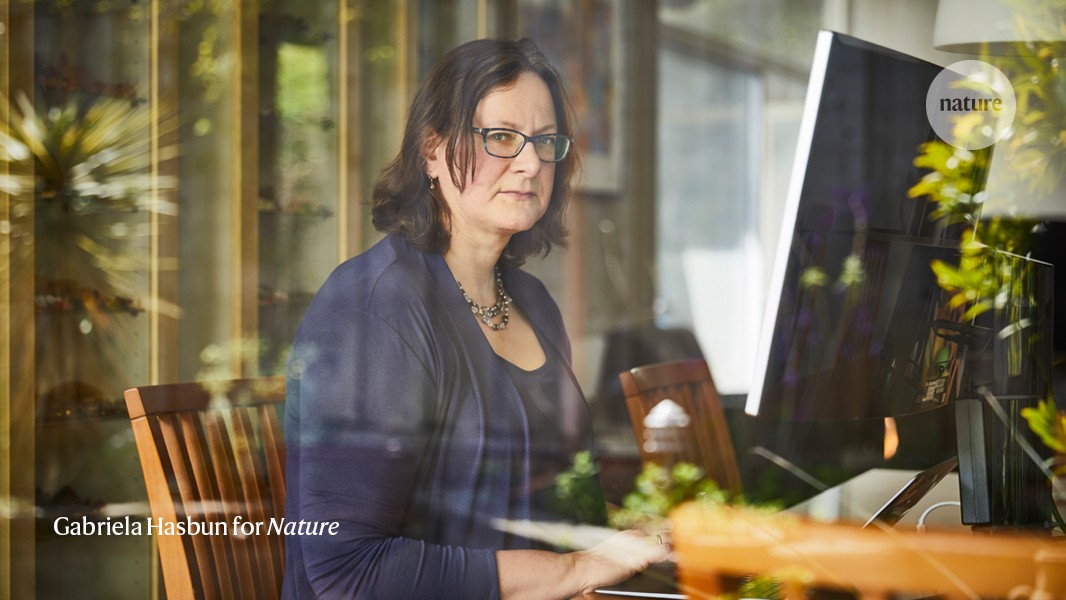
Meet this super-spotter of duplicated images in science papers
Elisabeth Bik quit her job to spot errors in research papers — and has become the public face of image sleuthing.
Sleuths flag ‘complete mismatch’ in data of BMJ stem cell study | Manoj Lalu
This is disappointing, but I’m not surprised. I was one of the reviewers for the initial version. You can see by my review (it’s all open) that I flagged primary outcome switching, a complete lack of any data on the cells themselves, and sample size inconsistencies in the protocol versus the report (and within the report). The data seemed impressive. Too good to be true I guess? I never saw the paper again in peer review after that initial review. The next notification I received was that the paper was accepted. Given BMJ’s commitment to open peer review and post-publication scrutiny (which I admire), I have no doubt we will hear about a formal editorial investigation soon.

A journal named a sleuth in a correction. The sleuth says that was ‘ethical editorial malpractice’
As the publishing community debates the merits of naming sleuths in retraction or correction notices, one journal did so without the sleuth’s permission — by publishing an email from the authors na…

Correction of scientific literature: Too little, too late!
The Coronavirus Disease 2019 (COVID-19) pandemic has highlighted the limitations of the current scientific publication system, in which serious post-publication concerns are often addressed too slowly to be effective. In this Perspective, we offer suggestions to improve academia’s willingness and ability to correct errors in an appropriate time frame.
When Nature Calls: The Enshittification of Science and Its Enablers
Proof-of-work papers, policy laundering, and the collapse of self-correction
Guest Post — When Errors Become Consensus: Science’s Self-Correction Can No Longer Keep Up - The Scholarly Kitchen
From 19th-century beef tea to paper mills and generative AI, the challenge is no longer detection alone; it is preventing bad claims from becoming embedded knowledge.
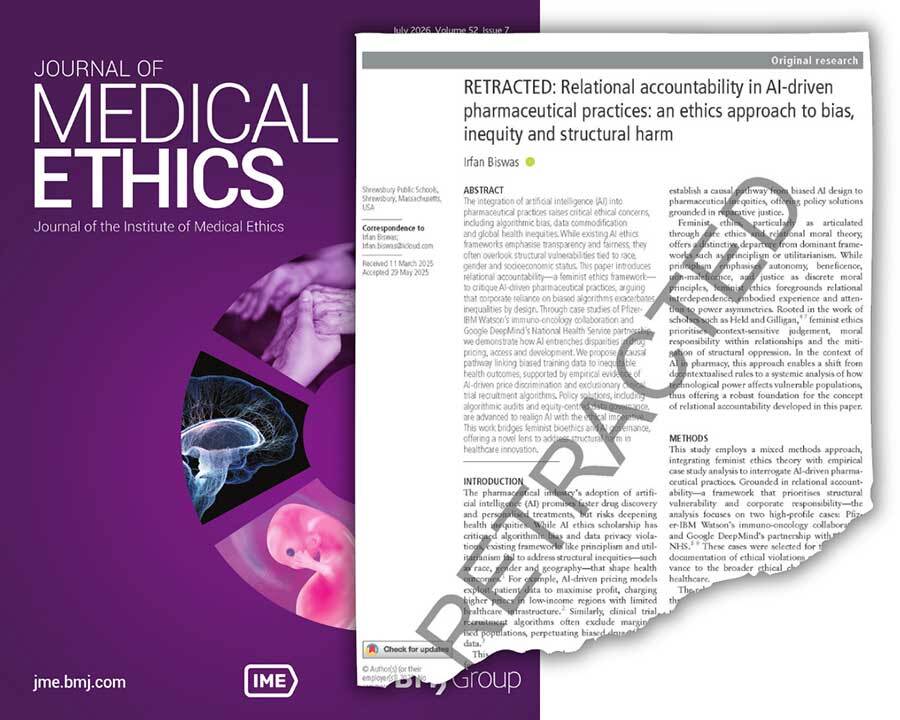
Ethics journal retracts paper by high school student for AI, peer review manipulation
The Journal of Medical Ethics has retracted a paper on the use of AI in the pharmaceutical industry for containing references that don’t exist. The article’s sole author: a high school student.&nbs…
Ferhat Tura on Twitter / X
I have recently detected minor mistakes in the codes of a paper published in a high-quality journal and contacted the lead author first!, who acknowledged the mistake and contacted the journal. I thanked the author for doing open science and now we are collaborating on a paper💪— Ferhat Tura (@FerhatTura19) May 15, 2024
So maybe now we can agree that having an unchecked research integrity militia who unfortunately has the ear of the press and increasingly that of the the publishers, but who fiercely rejects any… | Ioana A. Cristea
So maybe now we can agree that having an unchecked research integrity militia who unfortunately has the ear of the press and increasingly that of the the publishers, but who fiercely rejects any minimal ethics or code of conduct, is a (growing) problem? Also, that 1. problems have to be investigated before deciding they are are legitimate and serious; 2. this investigation is not social media, blogs and the press; 3. this investigation should not be on the front page of journals and Retraction Watch; 4. there are degrees of seriousness and some things can just be corrected or are simply not very consequential (no, it's not a house of bricks where we have to check every brick, that's a dumb analogy), so being absolutely hysterical and overdramatic about any lie, inaccuracy or mistake is purposeful at worse and should be ignored at best and 5. it is not only unnecessary, but harmful, to also go into other, non-academic things the person did or does to complete "investigations" that you (press, sleuth, blogger, etc) do not have the tools and information to do completely and accurately (this fixation would be called harassment in the before times). Others will justly write about what the institutions did or did not do, but what I want to say is that we really should end it with the blank credit we give to any and all allegations that come from the establish research integrity truth fighters.

Eric Topol on Twitter / X
This is a FRAUDULENT paper, AI-generated. My name was used as an author and I had nothing to do with it, never saw it until today https://t.co/Ky60zJrMEZThe "Editors" Angelo Rossi Mori, David Mensah, and Zarnie Khadjesari should be reported. pic.twitter.com/2Z5CE8w4bn— Eric Topol (@EricTopol) April 22, 2026

In our new paper of how Bluesky users discuss retracted papers, we found: ✅ 90% of Bluesky posts show "good practices" (flagging issues/retraction status) ❌ Only 10% show "bad practices" This highlights Bluesky's vital role in responsible science communication! arxiv.org/abs/2605.04334
This is a FRAUDULENT paper, AI-generated. My name was used as an author and I had nothing to do with it, never saw it until today e-pubmed.co.uk/journals/digital-health-imple… The "Editors" Angelo Rossi Mori, David Mensah, and Zarnie Khadjesari and this "Journal" should be reported.
This is a FRAUDULENT paper, AI-generated. My name was used as an author and I had nothing to do with it, never saw it until today e-pubmed.co.uk/journals/digital-health-imple… The "Editors" Angelo Rossi Mori, David Mensah, and Zarnie Khadjesari and this "Journal" should be reported.
so I just commented on that paper in Cell Host and Microbe that is cited as evidence that the autism/microbiome link is solid: pubpeer.com/publications/9A4B5695950D3396… (not sure what the word “precision” is supposed to mean in the title) tldr; looks p-hacked 🫤 and I couldn’t find the ethics approval 🤔
PubPeer - Precision microbial intervention improves social behavior bu...
pubpeer.com
Kevin Mitchell
Criticism of Autism-Gut Microbiome Research Sparks Pushback the-scientist.com/criticism-of-autism-gut-micro…
I am often told that public critique of published articles must also solve the issues found. I think this frequently enforced requirement hinders scientific self-correction. Blog post: mmmdata.io/posts/2025/07/critique-does-n…


