

when it comes to writing, llms are a shortcut to get to a place you probably wouldn’t go if you had the skill that you think they have

daniel r(ooooooh) 👻
i could never use llms to write a blog post as that would require me to know what i was going to say beforehand
Apr 11, 2026 at 9:30 AM
How to write it like you told it
What do you say to someone who wants to write but struggles with writing and is tempted to use an LLM-based chatbot?

How do LLMs affect writing? Talks by visitors to the AI STORIES project | UiB
The AI STORIES project is hosting a day of research talks focused on analysing AI-generated writing, with approaches ranging from the qualitative analysis of a professor of writing to large-scale computational analysis finding that prompting an LLM to edit a text to improve its grammar leads to significiant shifts in meaning.

The most important thing when working with LLMs
Blog post: The most important thing when working with LLMs by Steve Klabnik
LLM-generated skills work, if you generate them afterwards
LLM “skills” are a short explanatory prompt for a particular task, typically bundled with helper scripts. A recent paper showed that while skills are useful to LLMs, LLM-authored skills are not. From the abstract:

How To Write With An LLM
Two rules keep an LLM from pasteurizing your writing: never take a word it suggests, and never let it encourage you. Then hand it all the tedious work.
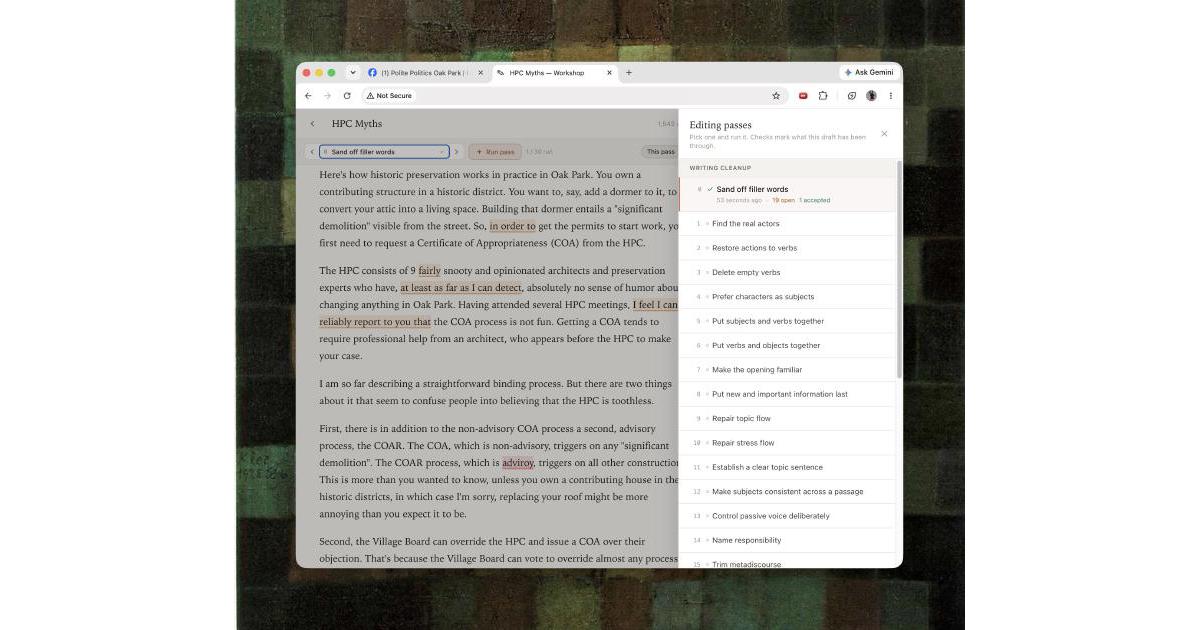
LLMs reward expertise
In the 2010s, if you had technical gaps (say, you couldn’t write CSS), you had to either rely on a skilled colleague or just hope that the answer to your exact problem was out there on the internet. Today, everyone can write sort-of-okay CSS by delegating the task to an LLM. LLMs make everybody into a generalist.
Dan Shipper 📧 on Twitter / X
this is true and is a big reason why you don’t need to be a highly technical researcher to use LLMs in surprising and novel ways https://t.co/TuxNzXzToU— Dan Shipper 📧 (@danshipper) July 27, 2025
How To Write With An LLM
Thomas Ptacek on using LLMs as copyeditors, not as writing assistants: Rule Number One: You may not use a single word an LLM suggests to you. [...] I think that …
maxleedev on Twitter / X
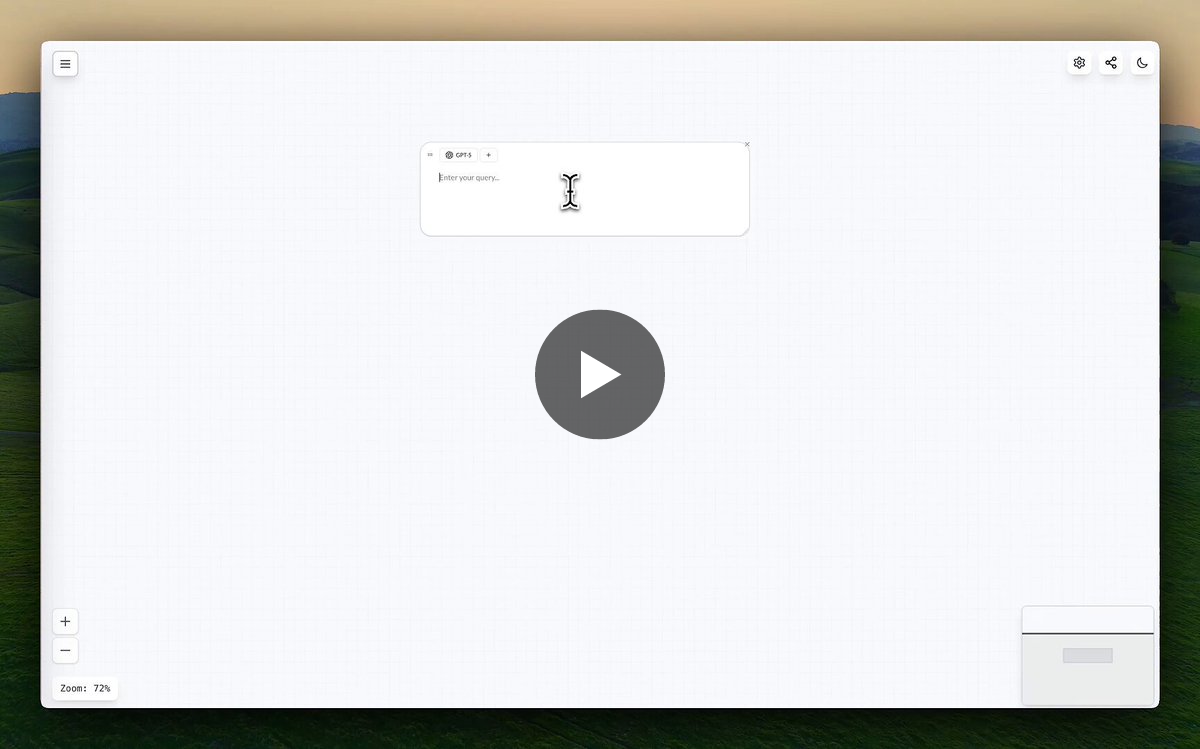
current chat interfaces suck, so i built a canvas for llms https://t.co/s0vAq0g8aH pic.twitter.com/94RvYgIrGV— maxleedev (@maxleedev) September 2, 2025
Large language model
A large language model (LLM) is a neural network trained on a vast amount of text for natural language processing tasks, especially language generation. LLMs can typically generate, summarize, translate, and analyze text in many contexts, and are a foundational technology behind modern chatbots.[1] Biased or inaccurate training data can make an LLM's output less reliable.[2]
The /llms.txt file – llms-txt
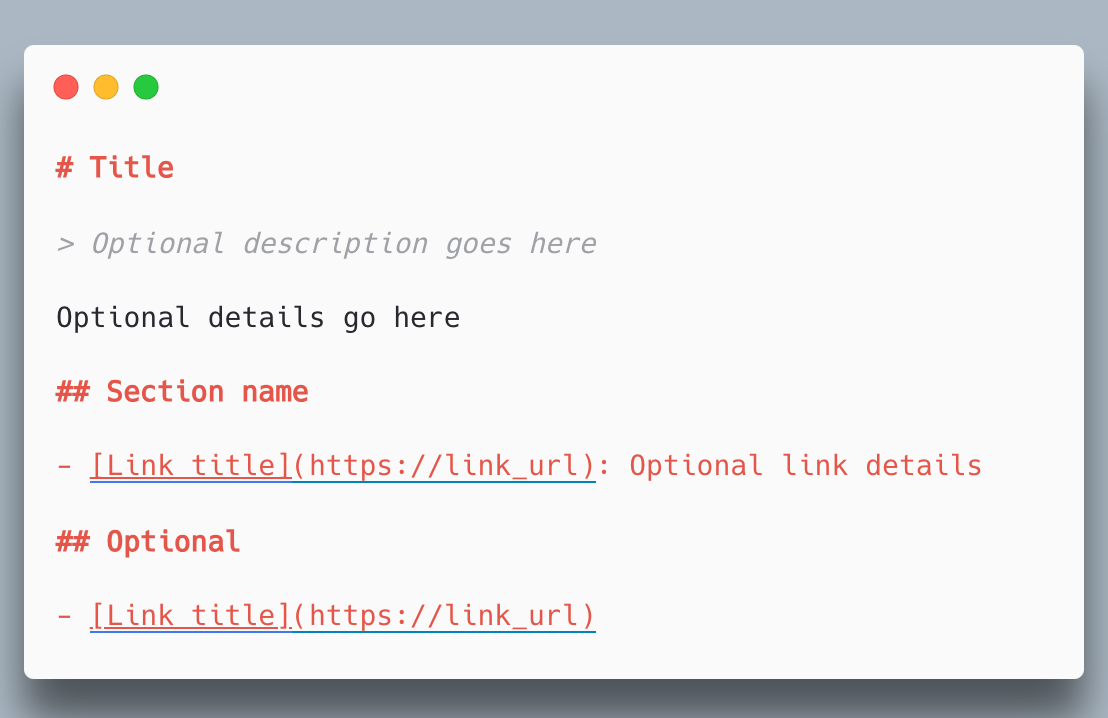
A proposal to standardise on using an /llms.txt file to provide information to help LLMs use a website at inference time.
i can’t help but think we’re far from nailing memory systems this one here is extremely interesting. two LLMs at once, one just managing and surfacing memory for the other

Asa ⭔
I'm not a fan of the decoupled 'memory retrieval → task execution' loop, so my agent has a subconscious background thread that looks for relevant, unique memory context in its experiential database while it runs and injects it on top of the live context window.
something that has come up fairly recently with LLMs - for coding, specifically - is that it’s become a lot easier to burn stupefying amounts of tokens on stuff very fast, with agents running 24/7 or managing more agents (see: Yegge’s Gas Town) even with low inference costs that adds up in a hurry

Jesse Felder
‘While some cling to the promise of an AI “revolution,” the cost of adoption is proving a stubborn bottleneck. These developments also suggest that the economics of replacing human labor with AI may be more complicated than some early forecasts originally implied.’ fortune.com/2026/05/22/microsoft-ai-cost-…
This is really really cool. Sense is being made @semble.so

Semble
Annoucing Semble Connections: A new way to organize, curate and discover content in the open social web 💥


