

Fraudulent citations, blamed on AI hallucinations, are becoming more common in research papers
“Fabricated” citations that do not reference real academic papers are spreading in the literature, polluting the public record of science, a new study found

Fabricated citations: an audit across 2·5 million biomedical papers
Scientific literature depends on the integrity of its references. Each reference implicitly asserts that a verifiable source exists and supports the claims being made. When references point to non-existent studies, readers, reviewers, and policy makers are unable to evaluate the evidence.

Fabricated citations: an audit across 2·5 million biomedical papers
Scientific literature depends on the integrity of its references. Each reference implicitly asserts that a verifiable source exists and supports the claims being made. When references point to non-existent studies, readers, reviewers, and policy makers are unable to evaluate the evidence.
A Delphi survey on attitudes to serious research misconduct: Exploring convergence vs. polarization of views of research “sleuths” and research integrity experts
Research fraud is often seen as a rare event, but evidence from self-report surveys indicates that fabrication and falsification of data are common enough to be a problem. This study assessed attit...

Introducing COSIG: The Collection of Open Science Integrity Guides
Investigating the integrity of published scientific papers is key to the scientific process, but the necessary knowledge is in short supply. We present COSIG, an open collection of meta-scientific guides enabling anyone to perform forensic peer review.
“Paging Dr. Fraud”: The Fake Publishers That Are Ruining Science
For years, spurious journals have proliferated online, promising academic credibility in exchange for cash.

A response to: Should universities investigate questionable papers students and faculty wrote elsewhere?
Editor’s note: We recently published a guest post on universities’ responsibility for investigating misconduct allegations related to work by staff and students conducted and/or published while the…

False authorship: an explorative case study around an AI-generated article published under my name
The proliferation of generative artificial intelligence (AI) has facilitated the creation and publication of fraudulent scientific articles, often in predatory journals. This study investigates the extent of AI-generated content in the Global International Journal of Innovative Research (GIJIR), where a fabricated article was falsely attributed to me.
Scientific sleuths come in from the cold
Research integrity investigators are starting to organize, but the field, and the people, remain idiosyncratic

Is the scientific paper still a fraud?
How we write scientific papers does not reflect how we do science. Their formal structure infers a pre-ordained linear process rather than reflecting the messy creativity of research. This matters in the AI age because it masks the human in the process.
The review mills, not just (self-)plagiarism in review reports, but a step further
Review mills sum up a new category of reviewer misconduct that flies in the face of reviewer ethics and integrity. A pattern of generic, vague, and repeated affirmations (identical or very similar boilerplate phrasing) is noted in the analysis of 263 review reports, regardless of the scientific content of the papers under review, coupled with coercive citation (perhaps among the main reasons for such behavior), which when combined produce fake reviews. The misconduct associated with review mills is unlike mere plagiarism (self-plagiarism) of reviewer comments. It is important to quantify the problem and to take urgent measures: (a) to identify the review millers; (b) to rectify the published literature; and (c) to determine procedures for journals and publishers on procedures to counter this new type of misconduct.
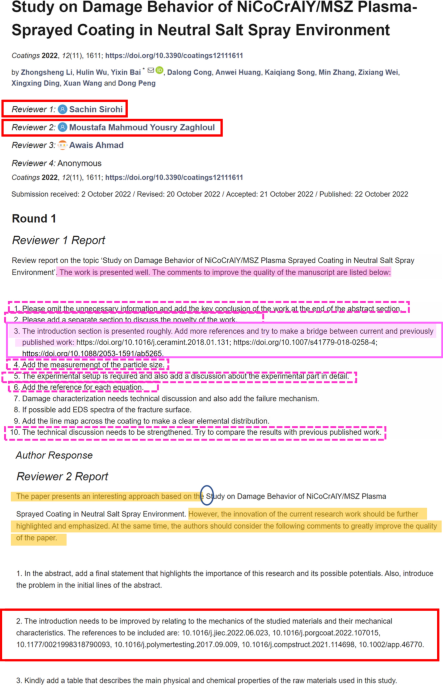
When Nature Calls: The Enshittification of Science and Its Enablers
Proof-of-work papers, policy laundering, and the collapse of self-correction
Itai Yanai on Twitter / X
Is the scientific paper a fraud? Peter Medawar (Nobel Prize winner) suggested that publications are overly structured and formal, giving only a sanitized version of the discovery without revealing the thought process that actually led to it. pic.twitter.com/E3ttRPzcfL— Itai Yanai (@ItaiYanai) October 27, 2024

The junkification of research - Carl Rhodes, Martina K Linnenluecke, 2025
This essay considers the emergent phenomenon of ‘junkification’ in academic research publishing. The term junkification was originally coined to describe the in...


