

"We should be able to have an open discussion about what's good science and freely critique bad research. No not you! You shouldn't be having an open discussion about what's good metascience or freely critique bad metaresearch. That's censorship." Idk about you folks but I'm tired of the bullshit.
Jun 12, 2025 at 6:45 AM
Breaking the silence
Research on science communication has largely focused on teaching scientists how to describe their studies in ways that interest the public while deepening their understanding of scientific exploration. However, there is another, often overlooked side to science communication—how scientists respond when questions arise about the integrity of their research. Often, the tendency has been to stay silent and wait for any controversy to pass or be resolved in professional forums. But in an age of growing, intense attacks on science, silence can be detrimental to both public trust and the careers of scientists who are under scrutiny. For better or worse, journalists, social media professionals, and the public may take a response of “no comment” as a concession that the critics are correct, so forthright communication about research questions is more urgent than ever.

Jay Van Bavel, PhD on Twitter / X
I think it’s extremely unhealthy for any academic field to make it taboo to critique publications from senior or junior scholars or to critique certain popular methods. This makes the field worse or makes us look bad to people outside our field (including the public). It erodes…— Jay Van Bavel, PhD (@jayvanbavel) October 13, 2024
The Problem With Promoting ‘Gold Standard Science’
Opinion | Branding scientific research with a simplified label risks misleading the public and harming scientific literacy.
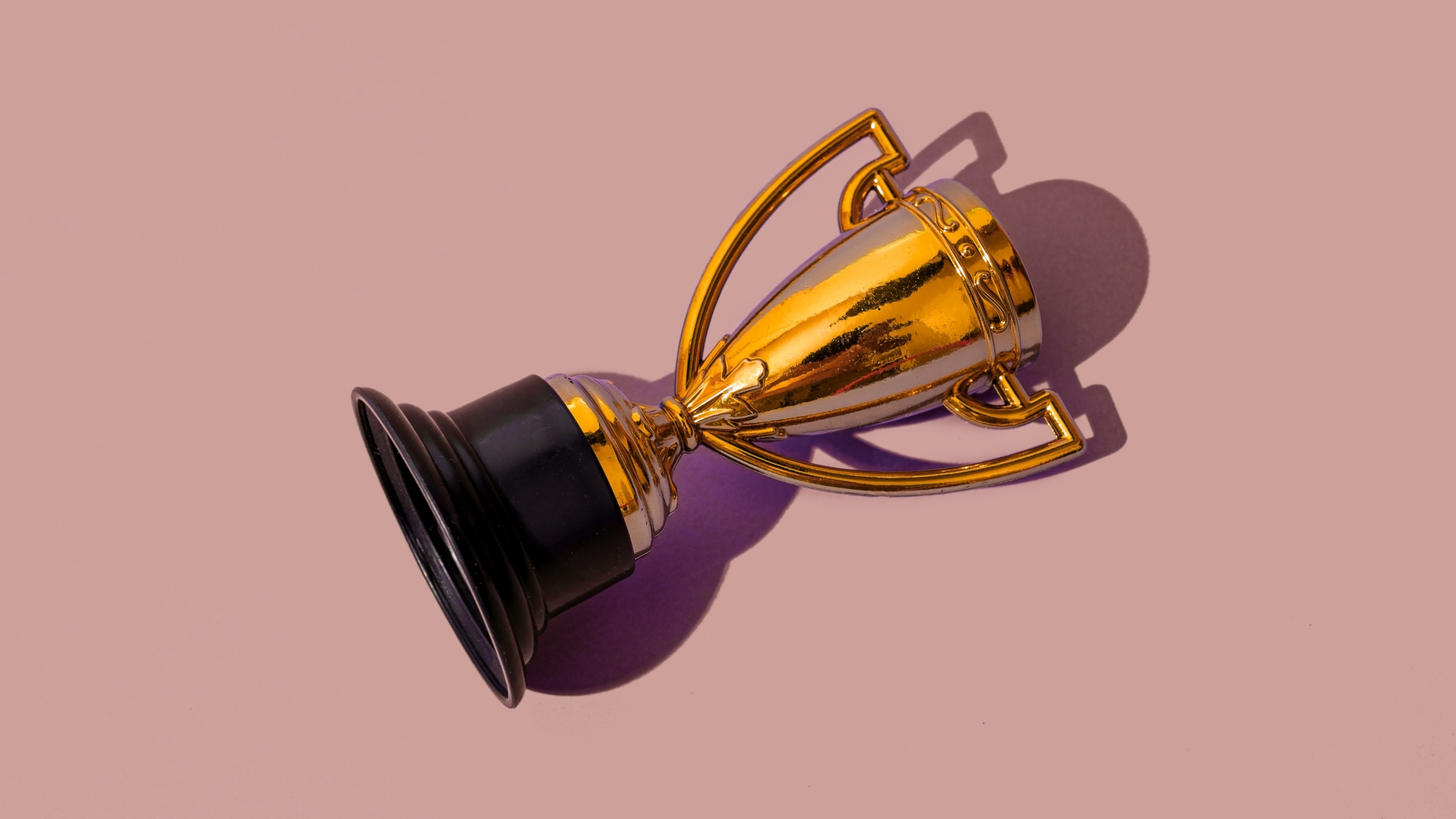
Dark-Moneyed Denialists Are Running 'Fixing Science' Symposium of Doubt
The “Fixing Science” symposium, which is hosted by the National Association of Scholars and kicks off today in Oakland, California, includes credible speakers who want to improve some areas of science hurt by the use of poor statistical methods or making irreproducible claims. Unfortunately, they are outnumbered by people who have often cast doubt on mainstream climate, environmental, and health sciences. For […]
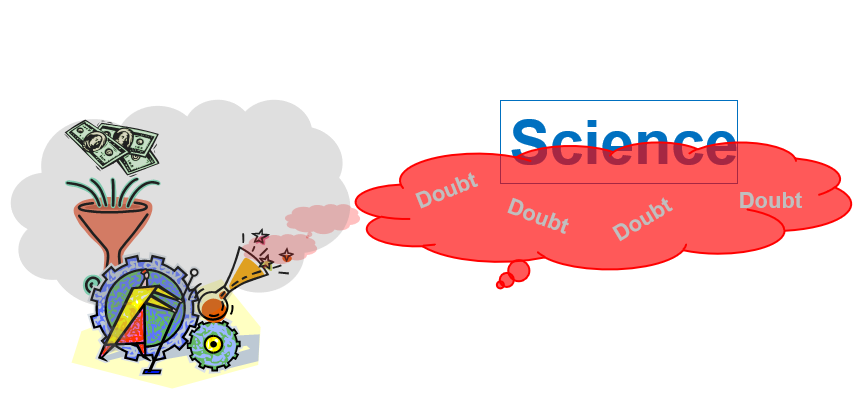
Guest post: If you’re going to critique science, be scientific about it
Loren K. Mell Editor’s note: This post responds to a Feb. 13 article in The Atlantic, “The Scientific Literature Can’t Save Us Now,” written by Retraction Watch cofounders Adam Marcus and Ivan Oran…
Why do we do astrophysics?
At time of writing, large language models (LLMs) are beginning to obtain the ability to design, execute, write up, and referee scientific projects on the data-science side of astrophysics. What implications does this have for our profession? In this white paper, I list - and argue for - a set of facts or "points of agreement" about what astrophysics is, or should be; these include considerations of novelty, people-centrism, trust, and (the lack of) clinical value. I then list and discuss every possible benefit that astrophysics can be seen as bringing to us, and to science, and to universities, and to the world; these include considerations of love, weaponry, and personal (and personnel) development. I conclude with a discussion of two possible (extreme and bad) policy recommendations related to the use of LLMs in astrophysics, dubbed "let-them-cook" and "ban-and-punish." I argue strongly against both of these; it is not going to be easy to develop or adopt good moderate policies.

Decolonising Science Reading List
In the last couple of weeks, a lot of people have been asking me about what I’ve been reading as reference points for my commentary on the…
Open Science Network
Reclaim scientific discourse with federated digital spaces where researchers shape their own conversations, data, and collaborations

interfluidity » Consensus not censorship
We’ve become obsessed over the past few years with the problem of misinformation. And for good reason. “Flood the zone with shit” is now standard operating procedure for a variety of interests and factions. Groups who pretend to be above that kind of thing let confirmation bias do the same work, elevating conjectures they find convenient to believe far beyond the evidentiary basis for believing them, and transmuting concurrence among prestigious groups whose biases are aligned into “authority” to which they demand deferrence. Casual information consumers become divided into two camps, the “do your own research” types who imagine, mistakenly, that they are capable of seeing through all this (and so succumb to their own confirmation bias), and those who more accurately understand that they cannot reliably distinguish truth from bullshit (and so opt out of democratic deliberation with a shrug, other than perhaps to vote for the candidates whose political party they distrust less).
The Faux Free Speech Warriors Attacking Free Speech
There’s a particularly insidious and cynical form of censorship gaining prominence in America: the weaponization of “free speech” rhetoric, combined with abuses of the judicial sy…

Sharing Knowledge Openly: Author Gender, Race/Ethnicity, and Feminist Science
Open science is an increasingly important movement in contemporary social science. Many funders have begun to mandate open practices, newer journals like Socius are open access, and preprint servers have increased readership of paywalled articles. Feminist scholars have written about the values and pitfalls of open research. In this paper, we put those ideas in conversation with each other and empirical data on open-access publishing to develop a feminist framework for thinking about feminist knowledge, data, publishing, and audience. Using a survey of 19,462 social scientists, linked with their entire Web of Science publication history from 2000 to 2023 and all papers posted to SocArXiv, we replicate past work showing that articles by women are less likely to be some types of open access. We extend these findings to scholars of color and feminist scholarship, while also demonstrating a few surprising null results for all three groups.

Discourse is Not Going Closed Source
Cal.com just closed their source code, arguing AI has made open source too dangerous. After 13 years of building Discourse in public, we're staying open. Here's why.
A Vision of Metascience
How does the culture of science change and improve? Many people have identified shortcomings in core social processes of science, such as peer review, how grants are awarded, how people are selected to become scientists, and so on. Yet despite often compelling criticisms, strong barriers inhibit widespread change in such social processes. The result is near stasis, and apathy about the prospects for improvement. People sometimes start new research institutions intended to do things differently; unfortunately such institutions are often changed more by the existing ecosystem than they change it. In this essay we sketch a vision of how the social processes of science may be rapidly improved. In this vision, metascience plays a key role: it deepens our understanding of which social processes best support discovery; that understanding can then help drive change. We introduce the notion of a metascience entrepreneur, a person seeking to achieve a scalable improvement in the social processes of science. We argue that: (1) metascience is an imaginative design practice, exploring an enormous design space for social processes; (2) that exploration aims to find new social processes which unlock latent potential for discovery; (3) decentralized change must be possible, so outsiders with superior ideas can't be blocked by established power centers; (4) ideally, change would align with what is best for science and for humanity, not merely what is fashionable, politically popular, or media-friendly; (5) the net result would be a far more structurally diverse set of environments for doing science; and (6) this would enable crucial types of work difficult or impossible within existing environments. For this vision to succeed metascience must develop and intertwine three elements: an imaginative design practice, an entrepreneurial discipline, and a research field. Overall, it is a vision in which metascience is an engine of improvement for the social processes and ultimately the culture of science.
Improving scientific mentorship with "Open Labs" — science better
Open Labs would be a place for experienced scientists to post their open questions and curiosities — a list of the ideas they don't have time to pursue personally but wish someone would.
1/ Scholarly publishing spent thirty years arguing about access. It has barely started arguing about what readers do with the paper once they have it. That second argument is turning into a field, forming around how science gets read and judged. Here is the map as I see it: aris.pub/blog/scholarly-interface-desi…
A budding discipline around how science gets read and judged - Aris
aris.pub

