

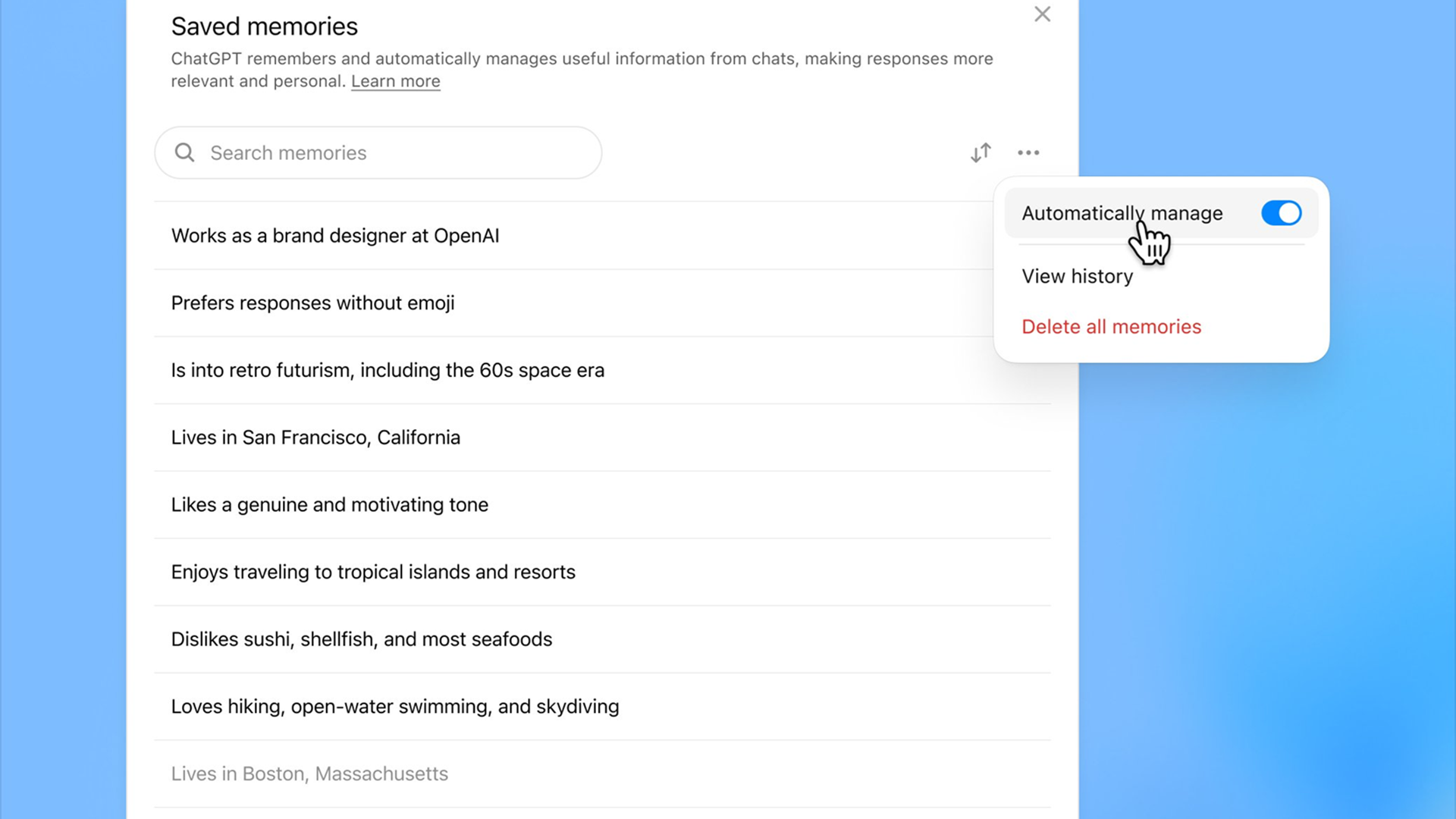
ChatGPT is smarter now that it's learned to forget - a huge memory upgrade is coming
The AI chatbot will remember what matters most and quietly let the rest fade
ChatGPT talks too much and it’s ruining learning
How the UX of AI chat can hijack our brains to compromise learning in schools and beyond

Can ChatGPT Be Addictive? A Call to Examine the Shift from Support to Dependence in AI Conversational Large Language Models
The rapid rise of ChatGPT has introduced a transformative tool that enhances productivity, communication, and task automation across industries. However, concerns are emerging regarding the addictive potential of AI large language models. This paper explores how ChatGPT fosters dependency through key features such as personalised responses, emotional validation, and continuous engagement. By offering instant gratification and adaptive dialogue, ChatGPT may blur the line between AI and human interaction, creating pseudosocial bonds that can replace genuine human relationships. Additionally, its ability to streamline decision-making and boost productivity may lead to over-reliance, reducing users' critical thinking skills and contributing to compulsive usage patterns. These behavioural tendencies align with known features of addiction, such as increased tolerance and conflict with daily life priorities. This viewpoint paper highlights the need for further research into the psychological and social impacts of prolonged interaction with AI tools like ChatGPT.

WinGPT
Do you use Windows 3.1? Do your friends send you jokes and haikus written by ChatGPT, and make you feel left out? Do you wish you had the sum of all human knowledge at your fingertips? Or wish you had your very own AI chatbot on your trusty 386?
The fall... and rise and rise and rise of chat networks
From CompuServe to Telegram, chat has come a long way—and it's just getting started.

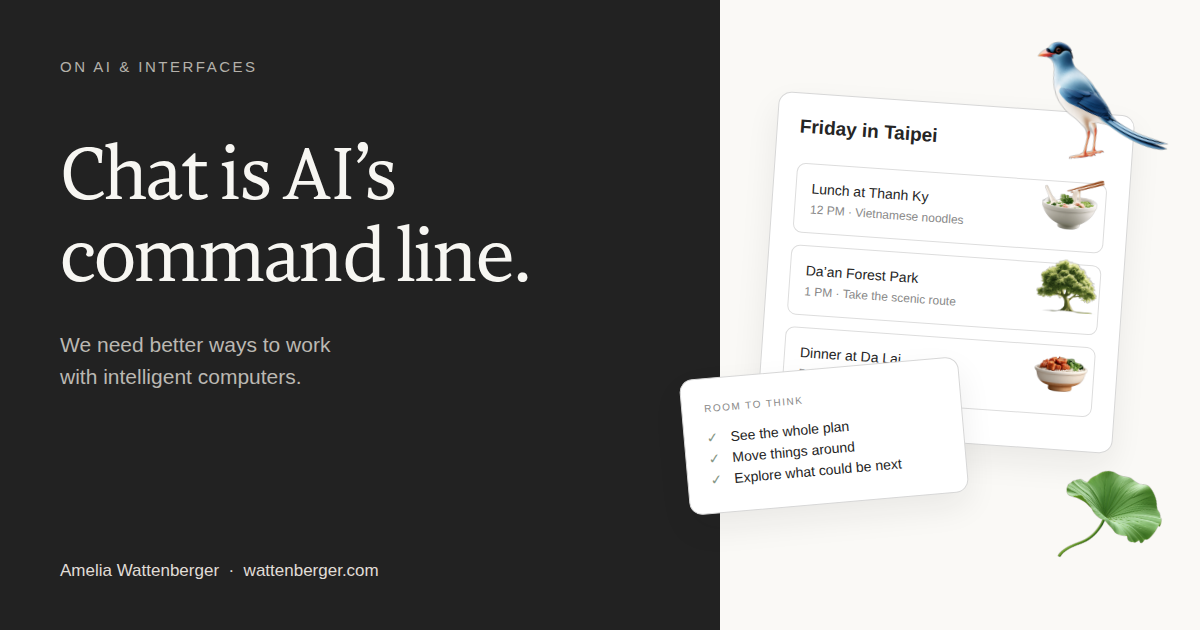
Chat is a bad UI pattern for development tools
You don’t want to have a conversation with your computer, you want to build.
Something Bizarre Is Happening to People Who Use ChatGPT a Lot
ChatGPT "power users," or those who use it the most, are becoming dependent upon — or even addicted to — the chatbot.

Opinion | The Sad and Dangerous Reality Behind ‘Her’
At least a quarter of the more than 100 billion messages sent to our chatbots are attempts to initiate romantic or sexual exchanges.

Dock — Team chat that doesn't suck
Team chat without the bloat. Unlimited search, even on free. No AI tax. No feature overload. Built for startups who ship.

Humans are social creatures. We crave bonding and social connections. In our digital world, our common social space is a campfire, which is the group chat.
How People Use ChatGPT
Despite the rapid adoption of LLM chatbots, little is known about how they are used. We document the growth of ChatGPT’s consumer product from its launch in November 2022 through July 2025, when it had been adopted by around 10% of the world’s adult population. Early adopters were disproportionately male but the gender gap has narrowed dramatically, and we find higher growth rates in lower-income countries. Using a privacy-preserving automated pipeline, we classify usage patterns within a representative sample of ChatGPT conversations. We find steady growth in work-related messages but even faster growth in non-work-related messages, which have grown from 53% to more than 70% of all usage. Work usage is more common for educated users in highly-paid professional occupations. We classify messages by conversation topic and find that “Practical Guidance,” “Seeking Information,” and “Writing” are the three most common topics and collectively account for nearly 80% of all conversations. Writing dominates work-related tasks, highlighting chatbots’ unique ability to generate digital outputs compared to traditional search engines. Computer programming and self-expression both represent relatively small shares of use. Overall, we find that ChatGPT provides economic value through decision support, which is especially important in knowledge-intensive jobs.

Do You Speak ChatGPTese? Beyond Writing, AI Is Also Flattening The Way We Talk
A study of hundreds of thousands of YouTube videos and podcasts reveals that AI isn’t just changing how we write, it’s subtly altering our spoken language too, raising new concerns about cultural homogenization and who controls the words we use. A study of hundreds of thousands of lectures and podcasts reveals that AI isn’t just changing how we write, it’s subtly altering our spoken language too, raising new concerns about cultural homogenization and who controls the words we use.
Group chats rule the world
Most of the interesting conversations in tech now happen in private group chats: Whatsapp, Telegram, Signal, small invite-only Discord groups. Being part of the right group chat can feel like having a peek at the kitchen of a restaurant but instead of food, messy ideas and gossip fly about in real time, get mixed, remixed, discarded, polished before they show up in a prepared fashion in public.
Group Chats Are Making the Internet Fun Again
The triumphant return of aimless digital chatter.

thought i'd chat about this a bit.

Dipping a Toe into the Fediverse (Again) - Ewan’s Blog
blog.ewancroft.uk
