

Every post, like, and blog entry on atproto sits in your Personal Data Server (PDS) as structured data you own, which means building experiences that are extremely customized to you has never been easier. atproto + AI is incredibly powerful! #atproto

Atproto Is the Context Window You Own - The Tropopause
pckt.blogAug 21, 2026 at 10:38 PM
crate.social — publish structured records to your ATProto PDS
Crate is a custom-lexicon publishing service for ATProto. Define your record types, import from anywhere, query from everywhere.
This blog is on ATProto
This blog and its posts are now on ATProto, the data backend that powers Bluesky. To what end, I couldn't say just yet. I'm just playing around. This didn't involve any changes whatsoever to the website that you're looking at. It just means that when I publish a new post I also write a new record into my Personal Data Server (PDS) which includes the post's title, publication timestamp, and a URL. This gets slurped off by ATProto relays that subscribe to me and if there's anybody who cares about my posts, they get to find out about it more or less in realtime.
Decentralisation and blogging on atproto - Connected Places
The space for blogging and long-form writing on atproto is rapidly developing, and it gives some interesting insight in what decentralisation on atproto looks like
Automatically syncing your blog to atproto and standard.site | jola.dev
Kicking off a little side project for automatically discovering content through blog post feeds and syncing to atproto and standard.site.

Embracing ATProto, part 1: Setting up a PDS
In this series of posts, I'll explore my journey into setting up my workflows and services for atproto. The first step is setting up my PDS. Let's start with a bit of explanation for all this lingo.

at · Aesthetic Computer
A self-hosted ATProto Personal Data Server for the Aesthetic Computer community — paintings, moods, code, tapes, papers, and more.
some thoughts on atproto as a post-app paradigm

Ecosystem Plugins
notes.wesleyfinck.orgI love that the design of atproto was in part inspired by big social Kafka and ScyllaDB server backends and @martin.kleppmann.com's Designing Data-Intensive Applications and the community immediately used it to implement thousands of apps with no backend lol
I recently got super into the ATProto spec and how different services use PDS to store the data, I put together a quick client-only website that presents all those records in a single, consolidated feed of all my activity: at.diego.codes
at.diego.codes — Diego Vicente
at.diego.codesthe single most important part of atproto is the PDS as a user-controlled auth and storage layer to which clients can connect directly. death to appviews

Authenticated Transfer Enables Orchestration - nekomimi
blog.nekomimi.petOne thing I look for in a blogging platform (whether atproto or otherwise): a way of backing up/exporting my content. This is more important to me than being able to tweak design/fonts etc. Have learned this from hard experience; I've used manymany blogging platforms over the decades.
My "Introduction to #ATProto" blog post that I've been working on for some time is ready 🙂 It goes through things like records, lexicons, DIDs, then PDS/AppView etc. and how it all works together. Let me know if anything is wrong! More parts later, with the Fedi comparisons & misconceptions etc.

Introduction to AT Protocol
mackuba.euImagining atproto as a post-app protocol starts with materializing the social filesystem – decomposing apps and their data into materials and instruments. For the time being, this guestbook is a good example where the display element is a material and the sign element is an instrument.

dan
in any case, the end game is composing these little guys, whatever goes on behind the scenes. social components
atproto-reads

blogs and writing about atproto (maybe also open social generally)

The Bluesky ecosystem has the juice (ATProto for normies) - Nate Spilman

nothin' but blue skies from now on
What It Means for Universities to Run Their Own PDS: The Potential of DID as Academic Infrastructure - Nightflight
From Attention to Intention - The Open Garden
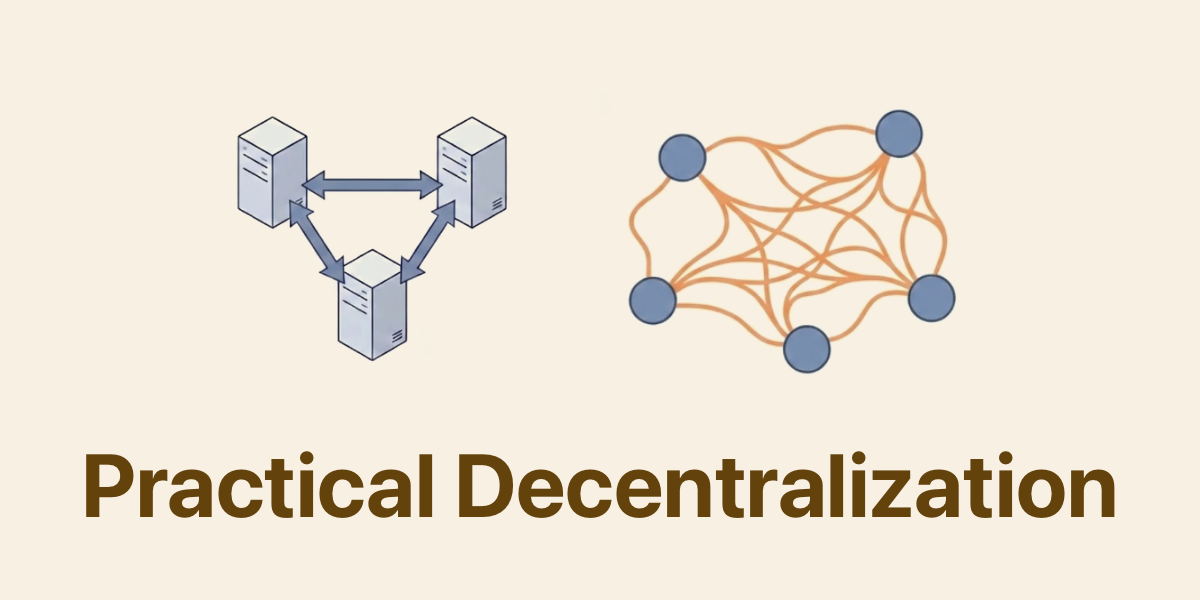
Practical Decentralization


