

Architectural mismatch: why reuse is so hard
Why isn't there more progress toward building systems from existing parts? One answer is that the assumptions of the parts about their intended environment are implicit and either don't match the actual environment or conflict with those of other parts. The authors explore these problems in the context of their own experience with a compositional approach.<>
Enshittification, Despotification, and the Open Internet
It’s not about whether technology is inherently good or bad, liberating or oppressive. Architecture shapes incentives; incentives shape outcomes.

The open source community that embraces designers most, wins.
That’s my theory. Here’s my reasoning:

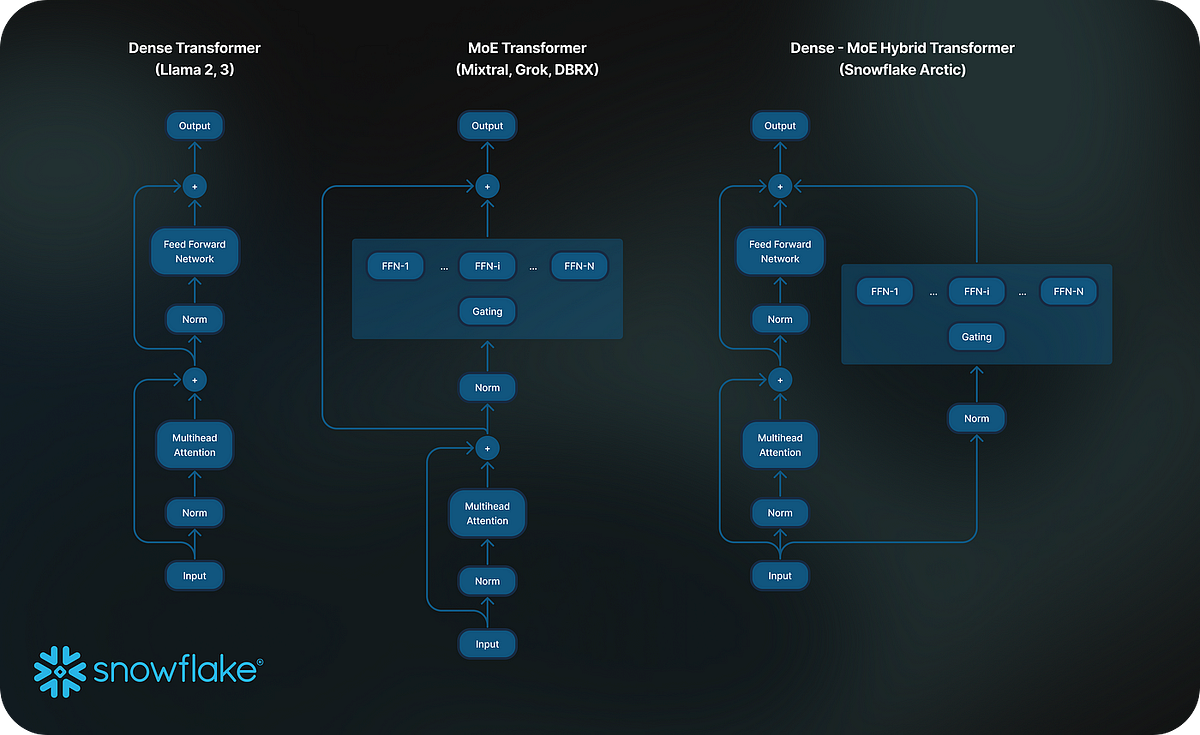
LLM Architecture Gallery
A gallery that collects architecture figures from The Big LLM Architecture Comparison and related articles, with fact sheets and links back to the original s...

Why Browsers Get Built - Infrequently Noted
There are only two-and-a-half reasons to build a browser, and they couldn't be more different in intent and outcome, even when they look superficially similar.

Architecture and the Internet: Designing places in cyberspace
Cyberspace, as the information space is called, has become accessible in the past decade through the World Wide Web. And although it can only be experienced through the mediation of computers, it is quickly becoming an alternative stage for everyday economic, cultural, and other human activities. As such, there is a potential and a need to design it according to place–like principles. Making places for human inhabitation is, of course, what architects, landscape architects, and town planners have been doing in physical space for thousands of years. It is curious, therefore, that Cyberspace designers have not capitalized on the theories, experiences, and practices that have been guiding physical place–making. While most 3D environments closely mimic physical spaces, they are, by and large, devoid of the essential characteristics that differentiate a ‘place’ from mere ‘space.’ And only rarely are they sensitive to, and take advantage of, the peculiarities of Cyberspace. We believe that this state of affairs is temporary, characteristic of early adoption stages of new technologies. As the Web matures, and as it assumes more fully its role as a destination rather than as means of communication, there will be a growing need to design it according to place–making principles. By looking at physical architecture as a case study and metaphor for organizing space into meaningful places, this paper explores the possibility of organizing Cyberspace into spatial settings that not only afford social interaction, but, like physical places, also embody and express cultural values. At the same time, because Cyberspace lacks materiality, is free from physical constraints, and because it can only be ‘inhabited’ by proxy, these ‘places’ may not necessarily resemble their physical counterparts.
Thinking about other industries like we think about data centers shows how impoverished the debate is
Clumsy, arbitrary environmental ideas ignore the incredible complexity of the systems modern society depends on

Design From the Margins
In an age of virtual connectivity and increased reliance on the internet for daily functions, including by marginalized groups, can companies and technologists reframe their features or standards to support the most marginalized users’ needs? Can the modes of resilience within digital spaces from some of the most marginalized groups be listened to, learned from, and centered when creating technology? Design from the Margins (DFM), a design process that centers the most impacted and marginalized users from ideation to production, pushes the notion that not only is this something that can and must be done, but also that it is highly beneficial for all users and companies. For this to happen, consumer interest conversations need to be framed outside the “biggest use case” scenarios and United States and European Union-centrisms and refocused on the cases often left in the margins: the decentered cases. This report outlines how the DFM method can be used to build our most well-known and relied-upon technologies for decentered cases (often deemed “edge cases” which is atypical or less common use case for a product) from the beginning of the design process, rather than retrofitting them post-deployment to cater to communities with what are perceived to be extra needs.

One of my long held convictions is most people don't care about concepts like "openness" or "decentralization" or "interoperability" (people are busy!) but they do care about what those enable. It's the job of the much smaller number of people who do care to build the experience people will love.
When it comes to our digital lives, too many people care about bigness and an imagined potential to achieve their own bigness, and too few care about connections and the potential to achieve meaningful connections.

Your Internet Doesn't Need to Be Big
www.aaronrosspowell.comEveryone on here is arguing about X and Bluesky again. But no one ever talks about the two major issues with this platform, one cultural and one technical. And until both are solved, people are going to keep arguing about whether its relevant or not! garbageday.email/p/safe-and-cozy-in-your-dooms…
Don't want to start Discourse, but tbh it kinda annoys me when every time something is launched here, some people complain: meh, this is stupid, bad design, vibe coded, you can tell by the colors it's from Claude, it relies on app.bsky lexicons, still uses Bluesky AppView, not decentralized enough,


