

People, Not Posts: Part II - Real Housewives of San Francisco
What comes after social media?
People, Not Posts: Part II - Real Housewives of San Francisco
What comes after social media?
Shifts in U.S. Social Media Use, 2020–2024: Decline, Fragmentation, and Enduring Polarization
The social media ecosystem appears to be in flux. Twitter’s rebranding to X has come to symbolize a broader reorganization of online publics – political reshuffling, user attrition, and uncertainty over the role of legacy platforms. Simultaneously, the shift from text-based, networked feeds toward algorithmically curated, short-form video has accelerated, with TikTok setting the pace for the wider ecosystem [18, 14, 16]. At the same time, everyday communication increasingly migrates from large, open networks to semi-private spaces such as group chats and messaging apps. Commentators describe a digital public sphere in transition: smaller, more fragmented, less dominated by traditional social networking sites, and rise of more broadcast-oriented forms of media – with some even suggesting that we are seeing the beginning of the end of the social media era.
New_ Public | After the Feed
What happens after the social media feed? A presentation on the future of conversation, community, and social connection, and how AI will affect the everyday lives of billions.
Recently I’ve been thinking about a couple of... - Adam Wood
Recently I’ve been thinking about a couple of different tech-related things that sort of overlap. One is the (emerging) shape of the new social web; the other is a pull I’m feeling to try and lessen reliance on American companies. I’ve been interested in / concerned by what became of social media for some time.1 Since the sundering of Twitter in 2022, I’ve kept an eye on the various alternatives, with particular interest in Mastodon and Bluesky. Actually, to be more accurate, my interest has been in the protocols behind those platforms: ActivityPub and AT Protocol respectively. Both have their...

My 2024 thoughts on the state of social media
I see a continued fragmentation of social media as people leave X(Twitter).

After the Feed: Trust, connection, and the next era of social technology | New_ Public | May 2026
After the Feed: Trust, connection, and the next era of social technology By Eli Pariser, Co-Director, Angelica Quicksey, Managing Director, Arnobio Morelix, AI Fellow May 2026 Newpublic.org

Social Media Is Now Parasocial Media
When practitioners used the term “social media” to describe the internet tools that emerged in the mid-aughts, they were giving a name to the kinds of platforms and protocols that allowed people to socialize with friends and communities of interest by using digital technologies. Twenty years later, users of social media are far more likely to scroll than post – and the content that they consume is often strategically produced and algorithmically curated. In this essay, I argue that the very essence of social media has changed. To more effectively interrogate what we are witnessing, we need to stop presuming that these tools are “social media” and begin recognizing that they are now “parasocial media.” Doing so raises new questions about digitally mediated sociality, not to mention the politics and governance of these platforms.

After the Feed: Trust, connection, and the next era of social technology | New_ Public | May 2026
After the Feed: Trust, connection, and the next era of social technology By Eli Pariser, Co-Director, Angelica Quicksey, Managing Director, Arnobio Morelix, AI Fellow May 2026 Newpublic.org

RIP social media. What comes next is messy.
As social media splinters, how can we keep the new online spaces from devolving into toxic pits of despair?

🇪🇺🌐 The future of social media may be decided in Europe
A survey of European AT Protocol projects, including 4 mini case-studies
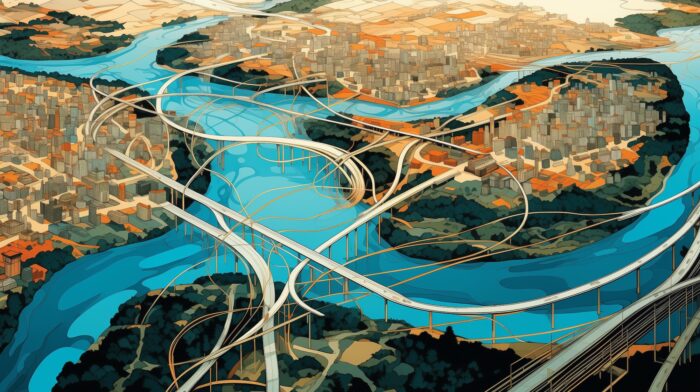
No Sense of Place: The Impact of Electronic Media on Social Behavior
Electronic media present us with a collage of experiences from everyplace. We eat dinner at home while watching starving children thousands of miles away reach out to us for food. From our easy chairs, we stare at blindfolded hostages, and coolly

Social media algorithms can be redesigned to bridge divides — here’s how
"It falls to both the tech companies that built these systems and an engaged public to create technologies designed for social cohesion."
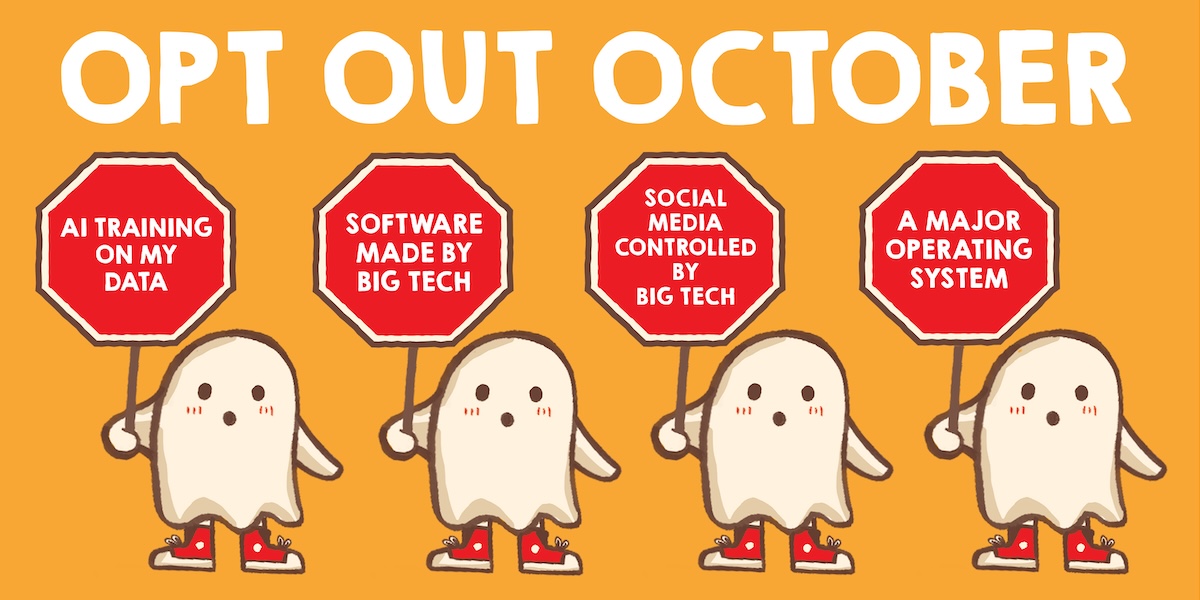
How to Opt Out of Social Media Controlled by Big Tech
It might seem like there are simply no other choices for social media beyond those controlled by big tech companies, but that’s not true at all. In fact, we’re in a golden era of options being built
Social media is no longer social. Most of it is passive viewing of videos and pictures from people we've never met. But we're still studying social media like it's 2010. We've entered the post-social media era — and research needs to catch up. osf.io/preprints/socarxiv/6nue7_v1 preprint w/ Richard Rogers
🐝 Social Media (SB Commentary)

things I said about social media

Bee 🐝 (@sweetbee.vip)
Bee 🐝 (@sweetbee.vip)
Bee 🐝 (@sweetbee.vip)
