Different models of story structure in creative writing: - Three-act Structure (most common in Western works) - Four-act Structure (me: best for live-action) - Five Elements Plot (me: best for novels) - KiShōTenKetsu (most common in CJK works) #writing
Mar 12, 2026 at 11:45 AM
Hero's Journey: Get a Strong Story Structure in 12 Steps
Learn about the Hero's Journey, the most popular story structure in history, in this master guide. Includes a definitive definition and examples.
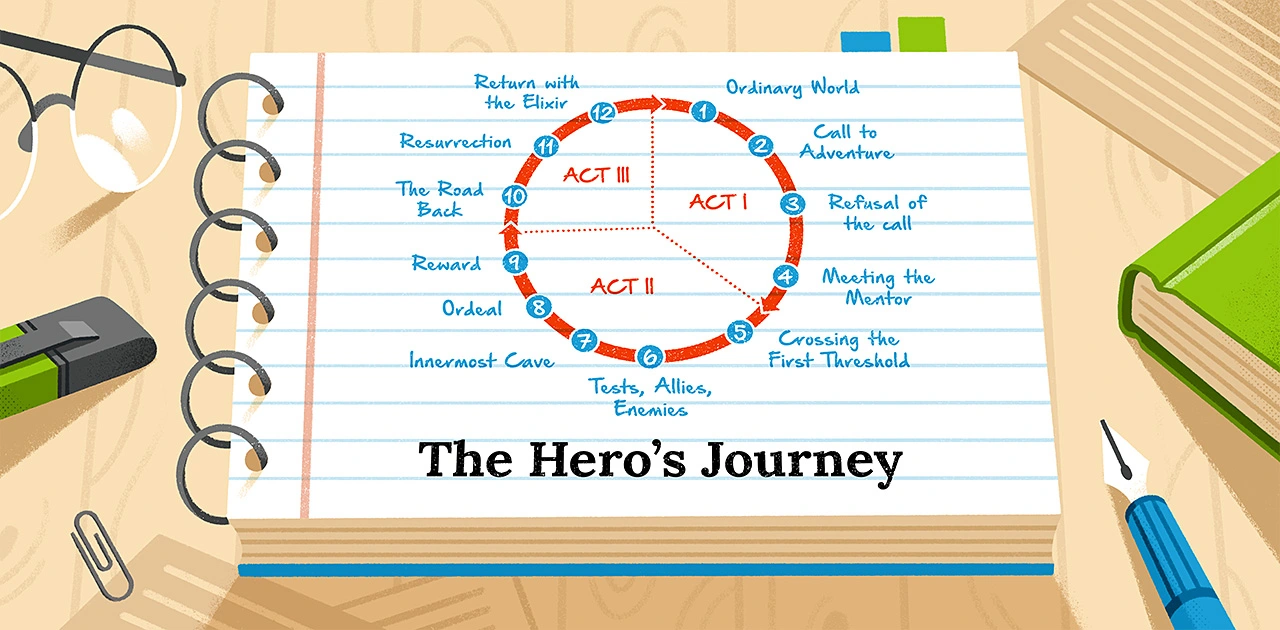
MATT THOMPSON
As part of my EngD project, I am creating ways for story authors to easily write narratives with multiple branches, along the lines of the Choose Your Own Adventure stories from the 1990s. Typically, this kind of story authoring is hard, as the number of material that needs to be written increases exponentially with the number of decision points.
4-Layers, A Narrative Design Approach
Introduction This blog post will be about a new way to approach narrative design in games - the 4 Layers Approach. It is based on a GDC ...

The Anatomy of Story
”The Anatomy Of Story is concrete and practical without resorting to simplistic ‘Three Act Structure’ screenwriting clichés. It will be an indispensable guide to writing your first great script.” —Larry Wilson, co-writer /co-producer of Beetljuice and co-writer of The Addams Family THE ANATOMY OF STORY 22 STEPS TO BECOMING A MASTER STORYTELLER Faber & Faber launches John Truby’s The Anatomy of Story: 22 Steps to Becoming a Master Storyteller—a new Bible not just for screenwriters, but for any writer crafting the perfect story. Taking as his examples Jaws, Adventures of Huckleberry Finn, Tootsie, The Great Gatsby, The Godfather, Chinatown, and A Christmas Carol, among many others, Truby illustrates in The Anatomy of Story (Faber & Faber/Farrar, Straus and Giroux) what makes a great story and how to create that story, focusing on plot and premise, theme, characters, moral development, and crafting the kind of ending that brings readers and audiences back again and again. Additionally, Truby offers seven key story structure steps, which are the major stages of a story’s development and of the dramatic code under its surface. The Anatomy of Story is a step-by-step guide to constructing the best story possible—be it a screenplay, short story, or novel. Truby, who has taught his twenty-two-step Great Screenwriting and Genre classes to more than 20,000 students worldwide, is available to discuss: Top 10 mistakes writers make about story. Five best and worst questions about screenwriting. How the 22-step-approach is different from the 3-act structure. Five unique story elements of blockbuster films. Five best techniques of character and plot. John Truby is Hollywood’s premier story consultant and founder of Truby’s Writers Studio. He has worked as a story consultant and script doctor for Disney Studios, Sony Pictures, FOX, and HBO, among others. Booklist “ Hollywood story consultant Truby commits his vast knowledge of screenwriting and storytelling to the page in this handy guide for aspiring writers of all types. Truby delves into the setup, from basic structure to the premise and the depth behind it. From there, he moves into character, emphasizing the importance of not only the hero but also the characters in the story who aid and oppose him. Truby illustrates the importance of setting to the story and how careful plotting is needed to weave the elements of the story together. He cautions that plot is not incidental and requires careful management and timely revelations. Although most of his examples are from movies, such as Tootsie, The Godfather, and Star Wars, Truby also draws from novels and plays, and his advice is applicable not only to the hopeful screenwriter but to the aspiring novelist as well. A comprehensive guide to writing stories of all kinds, Truby’s tome is invaluable to any writer looking to put an idea to paper.” —Kristine Huntley Tweet
On Writing #3
Periodically I like to gather various observations about writing, and share my perspective.

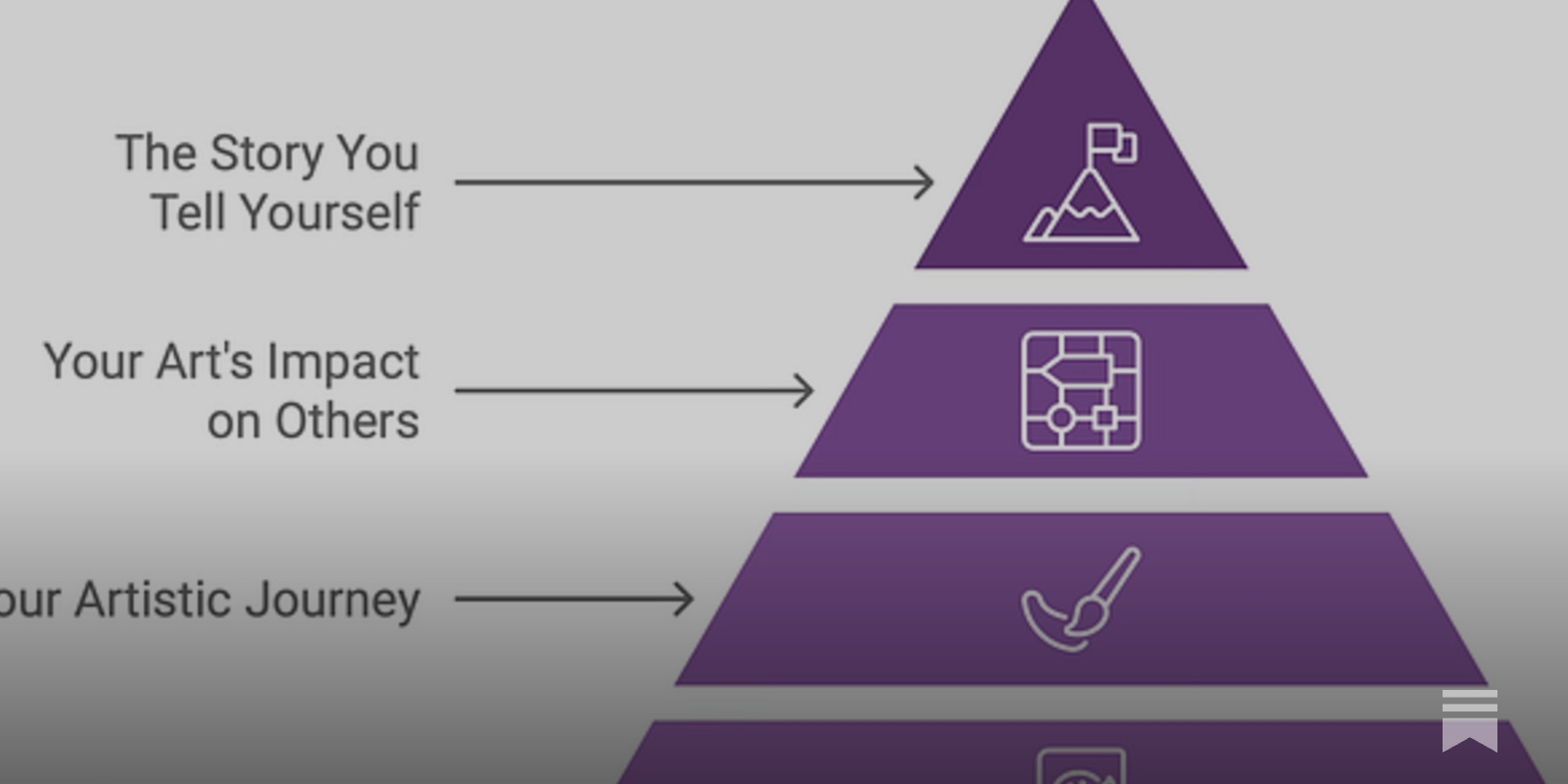
Master 4 Layers of Storytelling to Make Your Art Unforgettable
You think storytelling is just for writers? Wrong. The story you craft—not just on canvas, but in your journey, your impact, and in your own mind—could make your art impossible to ignore.
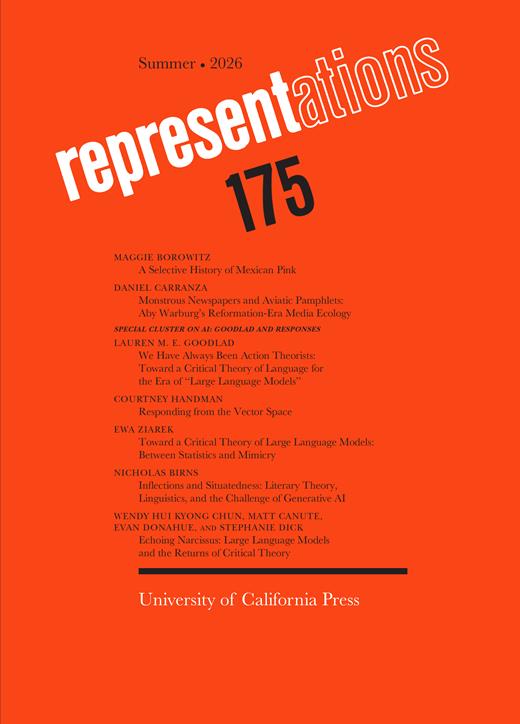
We Have Always Been Action TheoristsToward a Critical Theory of Language for the Era of “Large Language Models”
Scholars of literature and culture understandably place themselves among the world’s premiere experts on matters of language. But they also know that fields like linguistics and communication have their own ways of studying how people express themselves through speech and written media. A key difference concerns the theories and methodologies...
Fundamentals of Interactivity | Interactive Storytelling Tools for Writers | Chris Crawford
Page 4: POW+TREE Writing Strategy
As Ms. Lin reflects on the trouble her students are having with writing, she realizes that many of her students need help incorporating the four elements of the writing process (i.e., planning, organizing, writing, and editing and revising) into their essays. She concludes that they need a guide or strategy to follow as they write.[.....]
Weaving Narratives into Procedural Worlds
Examining the value, characteristics, and methods of integrating static narratives into otherwise procedurally generated environments.
If You’ve Only Ever Played D&D, You’re Missing Out - Aaron Ross Powell
Tabletop RPGs are story engines. Why would you want to tell only one kind of story?
Japanese writing system basics
Explains how the Japanese writing system works by comparing it to expanding the English alphabet.

Large language models are cultural technologies. What might that mean?
Four different perspectives
(PDF) The Four-C Model of Creativity: Culture and Context
PDF | In this chapter, we highlight the Four-C Model of creativity, which traces creative development from mini-c (personal creativity) to little-c... | Find, read and cite all the research you need on ResearchGate